

Used Crawler Cranes Factory: What to Look for When Buying Pre-Owned Lifting Equipment
2026-05-24
Buying a used crawler crane can feel like a minefield—hidden wear, patchy service records, and the nagging doubt that you’re inheriting someone else’s problem. Whether you’re expanding your fleet or taking on a short-term project, the stakes are high, and cutting through the noise takes more than a checklist. At JILIANG CHI, we see firsthand how the right inspection approach and factory-backed transparency separate a smart investment from a costly mistake. This guide unpacks what seasoned buyers really look for: from undercarriage health and load moment indicators to the factory refurbishments that often fly under the radar. Let’s get beyond the basic spec sheets and into the details that matter.
Inspecting the Undercarriage and Track System for Hidden Wear
When examining the undercarriage of heavy machinery, obvious damage like cracks or missing bolts is easy to spot, but it's the subtle signs of hidden wear that often lead to costly downtime. Start by looking beyond the surface rust and dried mud — pay close attention to areas where metal components rub together under pressure, such as the link joints and sprocket teeth. A slight polish or discoloration might indicate uneven contact, which can accelerate degradation if left unchecked.
Don't rely solely on visual checks; use a pry bar to test for excessive play in the track pins and bushings. Listen for unusual creaking or grinding as you rotate the track manually, and note any areas where the track seems to bind. Over time, internal wear in the bushings can create oval-shaped holes that are invisible from the outside but drastically shorten the life of the entire track assembly. Run your hand along the track's inner surface — deep scratches or a stepped contour on the rail are red flags for advanced internal wear.
Finally, track tension is more than just a quick adjustment; it can mask hidden problems. If you constantly need to tighten the track, there's a good chance the rollers or idlers are wearing unevenly. Check for thin spots on the roller flanges or scalloping on the idler face. A flashlight and a small mirror can help you inspect behind guards and into tight crevices where debris traps moisture, leading to corrosion that eats away metal from the inside out.
Assessing the Boom and Jib Condition Beyond Surface Rust
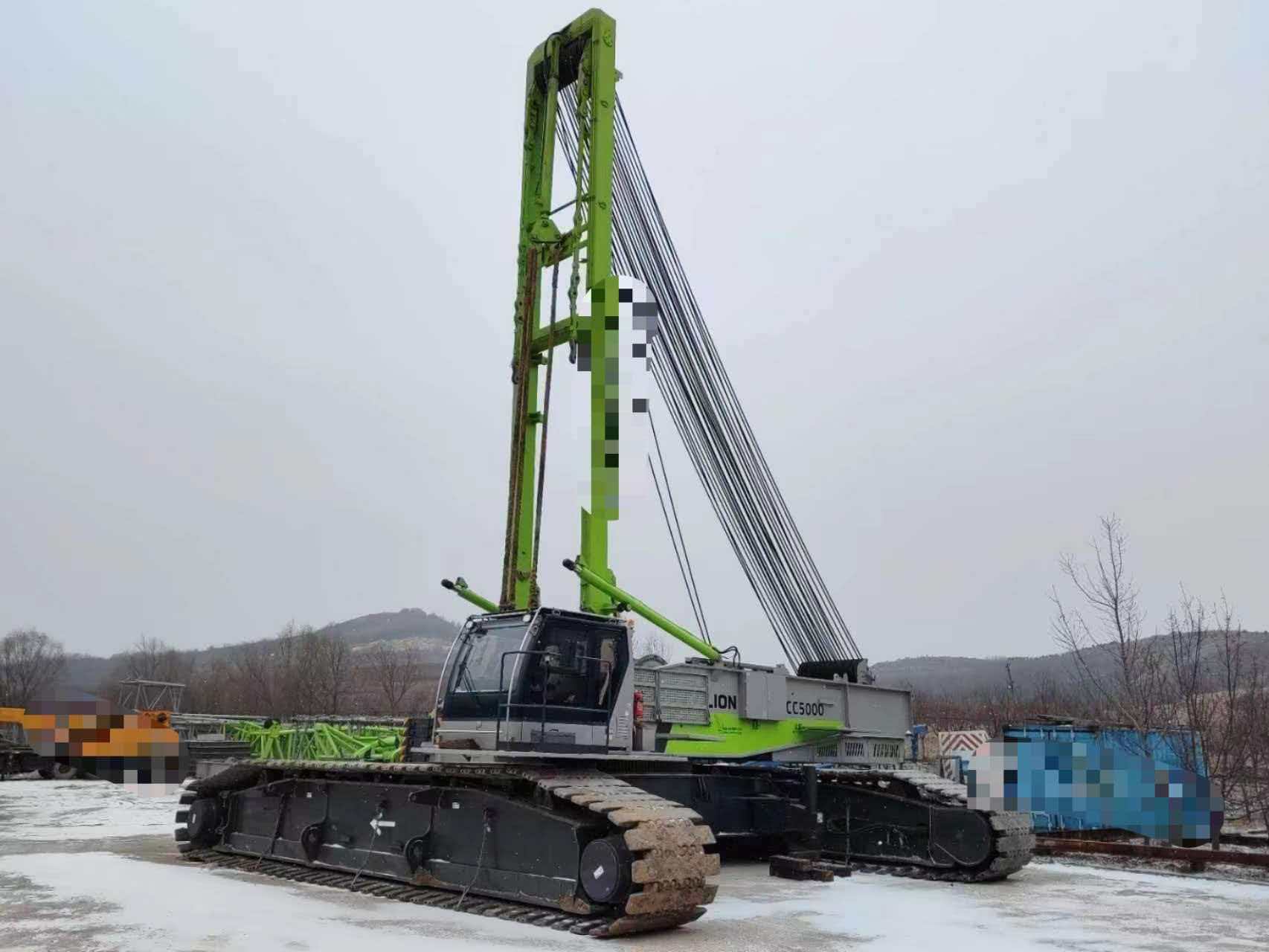
A quick glance at a boom or jib might reveal little more than surface rust, but what lies beneath the flaking paint and orange streaks is often the real concern. Surface corrosion can act as a gateway for deeper structural decay, especially in older equipment or machinery subjected to harsh environments. Rather than judging the component by its cosmetic appearance alone, a thorough assessment demands a closer look at the thickness of load-bearing plates, the integrity of welds, and the presence of hidden cracks that could propagate under stress.
Technicians routinely go beyond visual checks by employing ultrasonic thickness gauging to measure remaining metal at critical sections, particularly around pivot points and chord members where fatigue is common. Magnetic particle inspection helps expose tiny surface cracks that are invisible to the naked eye, while dye penetrant testing can reveal flaws in non-magnetic alloys. Pay special attention to areas where water or debris tends to collect, such as boom foot pins, jib heel connections, and overlapping splice plates, because these spots are prime incubators for corrosion pitting and stress risers.
Documentation of past repairs is equally vital; a weld overlay meant to reinforce a gouged section may have introduced heat-affected zone weaknesses or left trapped slag beneath the surface. If any section loss exceeds a few percentage points of the original thickness, engineering calculations or a load test may be warranted to ensure the boom or jib still meets safe working load limits. In short, treating rust as a symptom rather than the disease prompts a more diligent inspection that can catch structural issues before they become catastrophic failures in the field.
Decoding Engine and Hydraulic Health Through Fluid Analysis
Fluid analysis reads the hidden story inside your machinery—every drop of oil carries clues about wear, contamination, and impending failure. By tracking elements like iron, copper, and silicon, you catch abrasive particles long before they become a seized bearing or a scored cylinder. Viscosity shifts flag thermal breakdown or fuel dilution, while water presence hints at seal leaks or condensation cycles. It’s not just data; it’s a timeline of component interaction that lets you schedule downtime on your terms, not the machine’s.
In hydraulic systems, the stakes are just as immediate. A sudden spike in chromium or aluminum often points to pump cavitation or valve erosion, while acid number trends reveal fluid oxidation that silently attacks seals and hoses. Pairing routine spectroscopy with ferrography gives a full picture: the first quantifies wear metals, the second reveals particle shape and size, distinguishing normal rubbing wear from dangerous cutting or fatigue debris. Interpreting these signatures turns fluid into a diagnostic medium, allowing you to act on root causes—not just symptoms—and extend component life cycles well beyond the manual’s predictions.
Verifying Crane History: Hours, Past Repairs, and Previous Owners
When you're looking at a used crane, the hour meter might seem like a straightforward benchmark, but it rarely tells the whole truth. Meters get replaced, disconnected, or simply wear out. Instead of fixating on that single number, dig into maintenance logs and job site records—these often reveal how many hours the engine has truly worked and under what conditions. A crane that spent years on repetitive lifts in a quarry will have a different kind of fatigue than one used episodically for commercial roofing.
Past repairs are another chapter of the crane's story that needs careful reading. A thick file of invoices might scare off some buyers, but detailed repair records actually show conscientious ownership. Look for patterns: repeated hydraulic cylinder reseals could point to chronic overloading, while a single major engine overhaul might simply reflect a planned investment in longevity. Don't just skim the paperwork—talk to the mechanics who turned the wrenches if you can. They'll tell you things no invoice ever will.
A crane's previous owners shape its mechanical legacy in ways you might not anticipate. A machine that moved through a series of short-term fleet leases may have seen less dedicated care than one held by an owner-operator who treated it like a livelihood. Check lien and title histories, but also ask around—the lifting community is tighter than you'd think, and word gets around about equipment that's been mistreated or patched up cosmetically for sale. Knowing who ran the crane and how they managed their jobs can be just as revealing as an oil analysis.
Load Charts and Capacity: Matching the Crane to Your Real-World Jobs
A crane’s lift chart isn’t just a spec sheet—it’s the difference between a smooth pick and a dangerous guess. Every job brings its own puzzle: tight access, awkward load shapes, or uneven ground that slashes capacity faster than you’d expect. The numbers on paper only tell half the story; real-world conditions like wind, rigging weight, and how far the boom actually has to reach often rewrite the limits. Smart operators don’t just memorize the chart—they learn to read between the lines, factoring in side loads, dynamic swings, and the way a load reacts once it leaves the ground.
Matching a crane to a job means looking past the maximum lift capacity and zeroing in on what the machine can do at the radius and height you’ll actually be working. A 50-ton crane isn’t really a 50-ton crane when you’re stretched out 80 feet with the boom at a low angle. Sometimes a smaller, nimbble crawler with better chart numbers at radius beats a bigger truck crane that can’t get close enough. It’s about finding the sweet spot where capacity, reach, and site constraints line up without forcing you to run the load at 100% of the limit.
The trick isn’t just picking the right tonnage—it’s understanding how the chart was built. Capacities are often based on ideal conditions: firm level ground, no dynamic forces, and lifting from directly over the outriggers. Real jobs throw in surprises like buried utilities that limit outrigger spread or loads that shift during rotation. Experienced crews know that padding the chart with a healthy buffer isn’t paranoia—it’s how you keep the load steady and the crew safe without white-knuckling every lift.
Why the Factory Setting Matters for Service and Spare Parts Access
Factory settings are not just default numbers or arbitrary thresholds—they are the result of rigorous testing and calibration that balance performance, safety, and longevity. When service teams or operators bypass these original parameters without fully grasping their interdependence, they risk triggering cascading failures that may not surface until the equipment is under peak load. The factory configuration ensures that every spare part, from a simple gasket to a complex drive module, works within its intended operating envelope, preventing premature wear and ensuring that subsequent service interventions are built on a stable, predictable baseline.
Access to the correct spare parts also hinges on the machine running its original settings. Many components are validated for specific voltage ranges, pressure profiles, or lubrication intervals that are coded into the factory parameters. Deviating from these can turn a standard off-the-shelf part into a mismatch, forcing technicians to improvise or wait for custom fabrication. Keeping the factory setting intact means the parts you order are the parts that actually fit and function as intended, reducing downtime caused by trial-and-error replacements and eliminating the hidden costs of emergency re-engineering.
Beyond immediate functionality, factory settings serve as a reference point for all future maintenance. When troubleshooting, the first question a seasoned engineer asks is whether anything has been altered from the original state. Restoring factory parameters becomes a reliable reset strategy, cutting diagnostic time and preventing unnecessary part swaps. It also protects the warranty and support agreements, as many manufacturers void coverage if unauthorized modifications are detected. In essence, honoring the factory setting is a practical safeguard that streamlines service workflows and keeps the full ecosystem of spare parts viable and predictable.
FAQ
Request detailed service records from the factory. Look for regular inspections, oil changes, and part replacements. A well-documented logbook often indicates responsible ownership and can reveal potential recurring issues.
Examine the undercarriage for wear on tracks and rollers. Inspect the boom for cracks or weld repairs. Test the swing mechanism and all hydraulic cylinders for leaks. Don’t skip the operator’s cab—check for responsive controls and clear gauges.
Absolutely. Load test documentation proves the crane can perform at rated capacities. Ask for recent test reports performed by certified technicians. If none exist, negotiate for a test as a condition of purchase.
Factory-refurbished cranes typically undergo rigorous reconditioning: engines and hydraulics get overhauled, structural components are inspected and repaired, and worn parts replaced. They often come with a limited warranty, unlike as-is private sales.
Excessive rust on structural members, uneven track wear, hydraulic fluid contamination, and unusual noises during operation. Check for mismatched paint on critical joints—it could hide previous accident damage.
Both matter, but a well-maintained higher-hour machine can outperform a low-hour crane that sat idle. Focus on comprehensive maintenance rather than just meter readings. Idle machines may have seal dryness or corrosion issues.
Inquire about the crane’s prior working conditions, the reason for sale, and any factory upgrades performed. Also ask about post-purchase support and availability of replacement parts for that specific model.
Conclusion
When considering a used crawler crane from a factory or dealer, the first steps go far beyond a quick visual once-over. The undercarriage and tracks can hide serious trouble—worn pins, stretched chains, or cracked rollers that only reveal themselves under close, hands-on scrutiny. Don't let a fresh coat of paint fool you; structural components like the boom and jib demand a deep inspection for fatigue cracks, previous repairs that might compromise integrity, and corrosion that has worked its way beneath the surface. To truly understand what's happening inside, take fluid samples from the engine and hydraulic system. Oil analysis can pinpoint internal wear, coolant contamination, or metal particles that signal looming failures—saving you from buying a time bomb dressed up as a bargain.
Beyond the physical machine, its background story matters just as much. Dig into the crane's logs: How many real working hours does it have? What major repairs were done, and were they performed by qualified technicians? A check on previous owners can reveal if the crane was used in harsh environments, like dredging or demolition, that accelerate wear. Then, line up the load charts with your actual job requirements. A crane that looks capable on paper might fall short when you need to lift at a specific radius with a certain boom configuration. Finally, never underestimate the value of buying from a recognized factory setting. It's not just about the initial purchase; ongoing access to spare parts, technical support, and service bulletins can make or break your long-term ownership experience. A factory-backed used crane often means less downtime and easier sourcing of critical components, even years down the line.
Contact Us
Contact Person: Sally Xiao
Email: [email protected]
Tel/WhatsApp: 086-18221477398
Website: http://www.shjiliangchi.com/