

Top VoWiFi & VoLTE Deployment Strategies for Seamless Connectivity
2026-10-31
In the race to deliver uninterrupted voice services across every network boundary, VoWiFi and VoLTE have moved from nice-to-have to must-deploy. Yet many operators still struggle with handover complexity, device fragmentation, and core network readiness. This blog unpacks the deployment strategies that actually close the coverage gap—without adding operational drag. From IMS integration to ePDG placement, we look at what separates smooth rollouts from costly stalls. Along the way, you’ll see how IPLOOK helps operators turn these strategies into revenue-ready services.
Building Core Readiness Before Launching Voice Services
Before flipping the switch on voice, the team runs through dozens of unscripted call simulations where the dialog breaks in realistic ways—background noise, mumbled requests, mid-sentence changes of direction. These sessions surface gaps in the intent library that generic test suites miss, and each gap gets converted into a concrete training example or a fallback prompt before launch day.
A core piece of readiness is teaching the system how to recover when a user interrupts or contradicts a previous turn. Voice interactions carry almost no visual cues, so the system has to actively track what it believes the user wants and re-anchor when the conversation drifts. We build out a lightweight state manager that logs each recognized intent with a confidence score, then rehearses handoffs and corrections until the average recovery time stays under two seconds.
Infrastructure tests run continuously in the weeks before rollout, using audio captured from different microphones, room sizes, and network latencies. The goal is not just to recognize words correctly, but to keep the end-to-end response feeling immediate and natural. Any component that adds more than 300 milliseconds of perceived delay gets flagged for tuning, because a voice service that hesitates even slightly tends to lose user trust faster than a text-based fallback.
Reserving Dedicated Network Lanes for Call Traffic
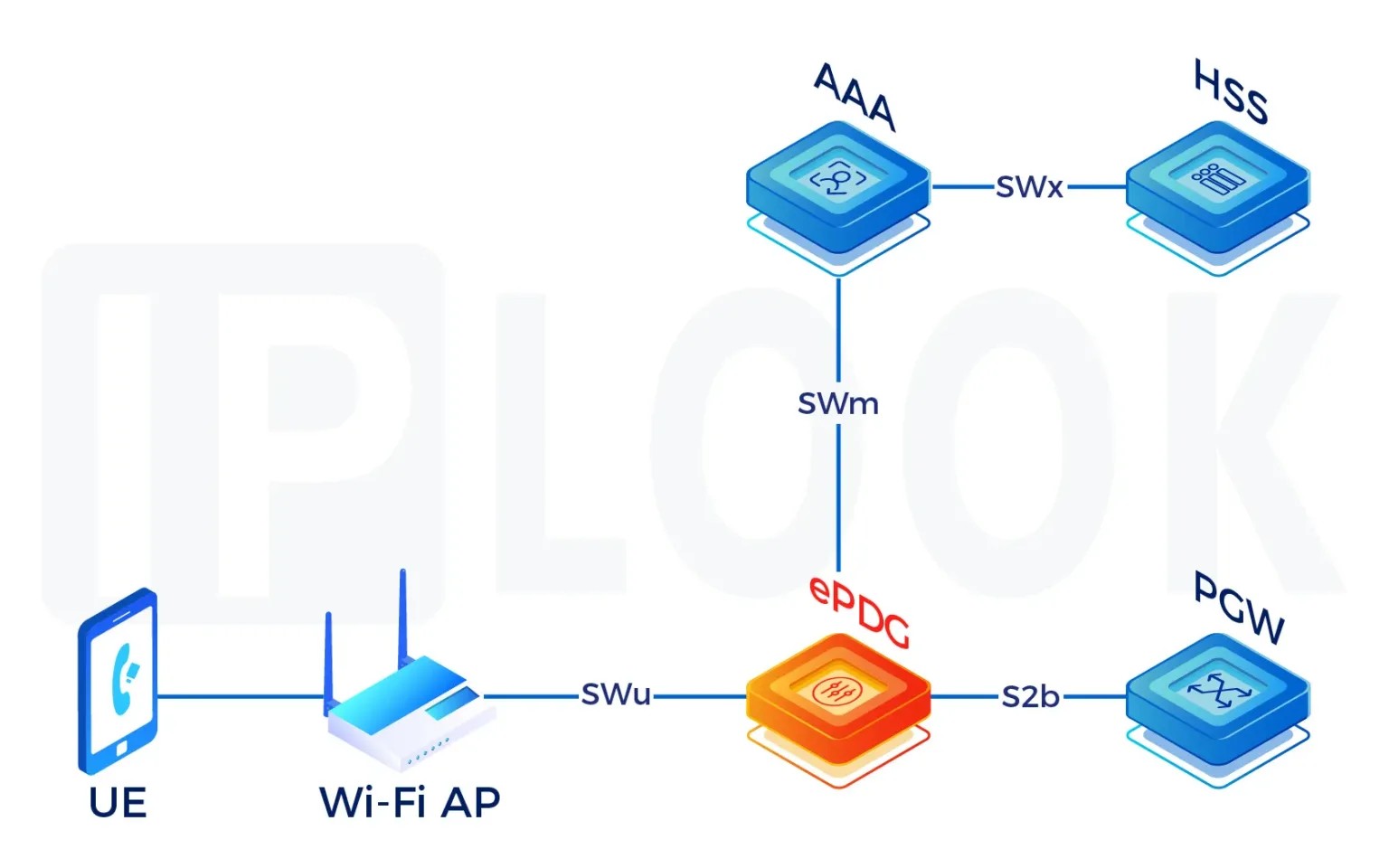
In a busy office where video conferences, file transfers, and cloud backups compete for the same connection, voice calls often suffer first. Reserving dedicated network lanes for call traffic means giving real-time voice packets their own bandwidth allocation, so a sudden large download doesn't turn an important client conversation into a choppy mess. This is typically done by tagging SIP or RTP traffic with a higher priority class on the router, then instructing the network to place those packets in a separate queue that gets served before bulk data.
The practical benefit shows up quickly in remote and hybrid work setups. When an employee uses a softphone over the same internet link as their laptop's background sync, without a reserved lane the call can pick up delay or jitter that makes words overlap or drop out. By carving out a small, steady slice of upstream and downstream capacity exclusively for call traffic, you create a predictable path for audio. Even under heavy load, the voice stream stays intelligible because it never has to wait behind a large email attachment or a system update.
Implementing this reservation rarely requires new hardware. Most managed switches and business-grade routers support QoS rules that identify call traffic by port, protocol, or the IP address of the phone system. The key is to reserve only what the voice service actually needs—often 100 kbps or less per concurrent call—and leave the rest for normal data. Over-provisioning the reserved lane can waste capacity, while under-provisioning just recreates the original problem. A careful measurement of peak call volume before setting the rules keeps the setup effective without starving other applications.
Designing Handover Logic That Feels Invisible
The best handovers never announce themselves. A device drifting between coverage areas should not stutter, reconnect, or pause mid-sentence. That means the decision layer has to look beyond a single signal strength reading. It weighs the trend, the noise, the cost of switching too early against the cost of holding on too long. When the math is right, the transition is just another packet, not an event.
Most handover failures come from treating thresholds as absolutes. A fixed -70 dBm trigger ignores the fact that one environment is a concrete basement and another is an open plaza. Invisible logic adapts. It learns how fast a user moves, which nodes tend to flap, and when a candidate is only briefly attractive. That kind of context prevents the ping-pong effect where clients bounce between access points.
There is also a human side. The user should not need to know what a handover is. If a call drops only after a poor handover, the logic failed silently in the worst way. So the design must bias toward preserving the session over optimizing a single metric. Sometimes that means waiting an extra few hundred milliseconds before committing to a new path, because the smoothest handover is the one that never needed to happen.
Tightening Voice Security Without Slowing Setup
Voice security used to mean extra enrollment steps—repeating phrases, waiting for verification, dealing with false rejections. But recent shifts in how authentication runs on-device have changed that. Instead of forcing users through a separate setup routine, the system can now learn vocal patterns passively during everyday interactions, like when you ask for directions or dictate a message. That means the security layer tightens without ever asking you to sit through a formal training session.
A big part of this comes down to processing audio locally rather than shipping it off to a server. When voiceprints are extracted and matched entirely on the device, there's no round-trip latency and no need for a lengthy cloud enrollment flow. The necessary voice data gets collected in small, natural moments—a quick command here, a short reply there—and the model refines itself quietly in the background. Setup stays as fast as turning on a feature toggle, while the protection becomes more granular over time.
The practical result is that security no longer competes with convenience. You don't have to choose between a voice assistant that responds instantly and one that actually knows it's you. The guardrails are built into the existing interaction loop, so they harden with use instead of adding friction upfront. For anyone who's ever abandoned a voice feature because the initial setup felt tedious, this approach removes the tradeoff entirely.
Aligning Device Profiles and Firmware Early
Early alignment of device profiles and firmware prevents costly integration surprises down the road. When the hardware profile is defined in parallel with the firmware architecture, teams can catch mismatches in memory maps, peripheral configurations, and power states before they become embedded in the product. This approach means the firmware team isn't forced to write workarounds for a fixed silicon definition, and the hardware team can adjust register layouts or interrupt priorities based on real software feedback. The result is a cleaner interface layer, fewer last-minute patches, and a shorter bring-up cycle.
A practical way to achieve this alignment is to treat the device profile as a living contract rather than a static document. For example, defining a machine-readable header that both the hardware design tools and the firmware build system consume ensures that any change to a register address or bit field propagates automatically. Weekly sync meetings where the firmware lead reviews the latest pin muxing and clock tree drafts can reveal issues like a missing wake-up source or an incompatible boot mode. These early conversations also help prioritize which peripherals need driver support first, avoiding the common trap of discovering that a critical sensor is on a bus the firmware team didn't plan to bring up until late in the project.
What makes this practice stand out is not just the technical tools but the mindset shift: instead of treating firmware as a downstream consumer of a fixed hardware spec, both profiles evolve together. This reduces the need for costly silicon respins or awkward software workarounds. It also enables parallel development, where the firmware team can start writing and testing drivers against an emulated or FPGA-based profile weeks before the first silicon arrives. Ultimately, aligning device profiles and firmware early turns a common source of project friction into a collaborative checkpoint that keeps the whole system on track.
Stress-Testing Real-World Mobility Scenarios
Every mobility system works flawlessly in a demo, but the real test happens when a delivery rider cuts across a bike lane at dusk while a truck blocks the intersection camera. We simulate these exact everyday frictions—variable lighting, occluded sensors, sudden pedestrian dashes, and uneven road surfaces—to see where navigation logic actually breaks. The goal isn't just to record failures, but to understand the cascade: how a single missed detection of a curb ramp can propagate into route recalculation that strands an autonomous wheelchair user mid-crossing.
Our stress tests don't rely on canned obstacle courses. Instead, we pull live footage from dense urban corridors, augment it with adversarial edge cases (think fog rolling into a roundabout or a child's ball bouncing behind a parked car), and replay them across different vehicle types—scooters, low-speed shuttles, delivery bots. Each run logs not just pass/fail, but the exact frame where confidence dropped, the fallback behavior triggered, and the recovery time. This exposes brittle assumptions like 'pedestrians always use crosswalks' or 'curb cuts align with map data.'
What emerges is a resilience scorecard per scenario, weighted by real-world frequency and consequence. A near-miss with a skateboarder at a shaded bus stop may matter more than a perfectly handled highway merge. OEMs and fleet operators use these profiles to prioritize sensor fusion updates or retrain perception models on underrepresented edge cases. The output isn't a certificate of safety—it's a map of failure modes you didn't know you had, with enough replayability to verify that a fix doesn't just move the problem three frames later.
FAQ
Start by auditing the IMS core, since both services lean on it heavily. If the core isn't robust enough to handle concurrent sessions from LTE and untrusted Wi-Fi, adding ePDG or slicing won't rescue call quality.
Placing ePDG close to the packet core reduces latency for IPsec tunnel setup and keeps handover signaling snappy. Operators who centralize ePDG in one location often see more dropped calls during peak Wi-Fi roaming periods.
On LTE, the operator owns the radio and can enforce QCI/5QI end to end. Wi-Fi is often unmanaged or shared, so DSCP tags get stripped or ignored. A smart policy server that maps Wi-Fi multimedia priorities to the same bearer class as VoLTE helps, but only if the home router or access point cooperates.
The handover should be invisible to the user. That means anchoring sessions in IMS and using techniques like SRVCC or ePDG-based handover only when signal thresholds are tight. Too early or too late triggers lead to mid-call silence or double ringing.
Treat every untrusted Wi-Fi network as hostile. Enforce IPsec from the UE to ePDG, use certificate-based authentication instead of SIM-only where possible, and monitor for abnormal signaling spikes that suggest account takeover or toll fraud through spoofed SIP identities.
Bundling usually wins. When VoWiFi is turned on by default for VoLTE users, adoption climbs and users stop thinking about which network they're on. Standalone launches often stall because users don't see an immediate benefit until they hit a coverage dead zone.
Focus on call setup time, handover success rate, and mean opinion score (MOS) per access type. Also track IMS registration failures on Wi-Fi versus LTE, because a spike on Wi-Fi usually points to ePDG capacity or NAT traversal issues rather than core problems.
It gets riskier. Wi-Fi location is unreliable, so operators need to either fall back to cellular for emergency calls when possible or use location from the device plus manual address confirmation. Regulations often require sending an emergency callback number and best-effort location with the SIP INVITE.
Conclusion
Launching carrier-grade voice over Wi-Fi and LTE rarely fails because of a single missing feature—it fails when the groundwork is treated as an afterthought. Before the first test call goes out, the packet core has to be ready for IMS anchoring, QoS profiles, and emergency call routing. Operators who skip this step end up chasing registration failures and one-way audio for months. A cleaner approach is to reserve dedicated bearers for voice traffic from day one, so a congested data session never squeezes out a VoLTE call. On top of that, handover logic needs to feel invisible: ePDG to LTE transitions, SRVCC fallbacks, and Wi-Fi-to-cellular switches must be tuned against real signal thresholds, not lab averages. Otherwise, users notice the seam every time they walk through a doorway.
Security deserves the same attention without becoming a setup tax. Early alignment on device profiles and firmware—especially for enterprise Wi-Fi and carrier bundles—removes a huge chunk of field issues before they appear. But the real test is mobility stress: walking between floors, driving through patchy coverage, hopping from one access point to another mid-call. Simulating those scenarios with real devices, not just simulators, reveals the handover jank and codec renegotiation problems that static benches miss. When core readiness, dedicated lanes, invisible handovers, tight security, device consistency, and mobility stress testing are treated as one continuous workflow, VoLTE and VoWiFi stop being lab demos and start behaving like plain old phone calls—just better.
Contact Us
Contact Person: Shimmy
Email: [email protected]
Tel/WhatsApp: 85253392231
Website: https://www.iplook.com