Top Precast Concrete Buildings Supplier for Modern Construction Solutions
2026-11-16
The construction world is racing toward faster, smarter, and greener solutions—and precast concrete is leading the charge. But not all suppliers are built the same. When precision, durability, and speed matter, leading developers turn to GETO, a name reshaping how modern buildings rise from the ground up.
Redefining Speed and Precision in Modern Construction
Modern construction demands a fusion of velocity and exactness that was once unimaginable. Where traditional methods faltered under the weight of complex geometries and compressed timelines, new approaches harness automated fabrication, real-time data synchronization, and advanced materials to compress delivery schedules without compromising structural integrity. Every stage, from ground-breaking to final inspection, benefits from workflows where millimeter-level accuracy is achieved as standard—not as a costly afterthought.
The integration of intelligent earthmoving machinery, laser-guided formwork, and self-healing concrete exemplifies how precision engineering reshapes site operations. Excavation and foundation work now proceed with sub-centimeter tolerances, minimizing rework and waste. Simultaneously, modular systems scaled back in climate-controlled factories arrive on site ready for rapid assembly, turning months-long structural phases into days. The result is a quieter, safer, and remarkably faster build process that consistently meets the tightest architectural specifications.
Underpinning this transformation is a shift in mindset: speed is no longer the enemy of quality, but its accelerator. By leveraging predictive modeling and digital twin technology, project stakeholders can identify clashes and optimize sequencing long before physical work begins. This proactive coordination slashes idle time on site and allows precisely timed just-in-time deliveries, keeping the project tempo at its peak while eliminating the errors that typically plague accelerated schedules.
How Precast Concrete Translates to Greener Building Practices
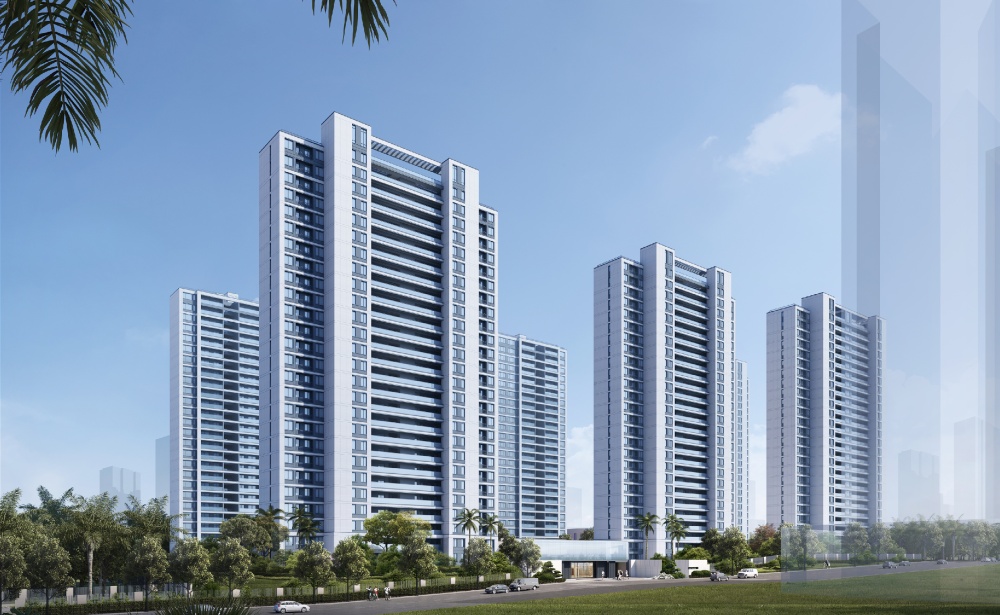
The shift toward precast concrete isn't just about speeding up construction schedules—it quietly redefines how a project interacts with the environment from day one. Because the elements are cast in controlled factory settings, material batching is far more precise. This means less raw material waste right at the source, and any leftover concrete or slurry can be recycled back into the production cycle instead of ending up in a landfill. You also sidestep the chaotic onsite mixing that often leads to over-ordering and piles of hardened waste tucked behind site hoardings.
Beyond waste reduction, the thermal mass of precast panels does a lot of heavy lifting once the building is in use. During the day, the dense concrete absorbs heat, slowing down temperature swings inside. At night, that stored heat gradually releases, trimming the spikes in heating and cooling demand. When designed thoughtfully, this passive regulation can shrink a building's mechanical system requirements and cut operational energy consumption over decades—long after the construction crews have left.
There's also a less obvious advantage tied to logistics. Precast components arrive on site exactly when needed, slashing the number of deliveries and the idling time of heavy vehicles. Fewer trips translate directly to lower emissions from transport. And because assembly moves faster with large-format panels, the overall site disturbance shrinks. Soil compaction, dust, and noise are all compressed into a shorter window, which matters if you're building near sensitive ecosystems or established neighborhoods that don't want a construction site lingering for months.
Custom Mold Capabilities That Bring Bold Architectural Visions to Life
Every standout structure begins with a detail that refuses to be ordinary. Our custom mold process starts where standard catalogs end—by transforming complex sketches, irregular geometries, and material experiments into repeatable, precision-crafted formwork. We work directly with architects and fabricators to engineer molds that capture the exact texture, undercut, or organic curve the design demands, no matter how unorthodox it seems on paper.
What separates a striking façade from a forgettable one often comes down to surface. Our team builds multi-part molds for large-scale architectural panels, sculptural columns, and intricate lattices that hold crisp definition pour after pour. By blending traditional mold-making techniques with adaptive CNC toolpaths, we create surfaces that shift from matte to gloss in a single panel, or integrate embedded channels for lighting and drainage—turning functional constraints into expressive features instead of afterthoughts.
Beyond the initial casting, we think in lifecycle. Our molds are engineered for reusability across phased projects, preserving visual continuity while controlling costs. Whether you're working with glass-fiber-reinforced concrete, ultra-high-performance mixes, or custom pigmented plasters, we tune the mold design to the material's behavior—minimizing warping, allowing for intentional patina, and ensuring the finished assembly looks as deliberate on site as it did in the renderings.
Uncovering the Resilience Behind Factory-Crafted Structures
Factory-built spaces often carry an unfair reputation for being temporary or flimsy, but walk through one during a storm and you might rethink that assumption. The real backbone of these structures lies in how every beam, bolt, and panel is engineered to handle stress long before it ever reaches the site. Controlled indoor production eliminates the wildcards of weather-damaged materials, uneven curing, and rushed on-site fixes. Instead, repeated quality checks at each station make certain no weak joint slips through, giving the finished building a kind of quiet toughness that surprises people who still equate speed with compromise.
What truly sets these factory-crafted structures apart is the way material science and assembly precision fuse into one seamless system. High-grade steel frames, layered composite walls, and fusion-bonded fasteners share the workload of high winds, shifting ground, and daily wear in a way that stick-built methods rarely replicate. Because every connection is mapped out digitally and executed with millimeter accuracy, the final product dissipates force evenly rather than concentrating it in a handful of vulnerable spots. It’s the difference between a structure that merely stands and one that actively resists failure, year after year.
Resilience here isn’t just a buzzword; it’s embedded in the repetitive testing cycles most people never see. Full-scale mock-ups endure simulated earthquakes, fire exposure, and countless load cycles before a design is approved for real-world use. That accumulated data feeds back into the manufacturing line, sharpening weld patterns, adjusting insulation density, and even refining the roof pitch to shed snow more efficiently. By the time a building arrives on a foundation, it carries the lessons of dozens of trial failures—each one a small price paid inside the factory so the structure outside holds firm when it matters most.
Streamlined Logistics for Projects Across Any Terrain
Moving heavy equipment across mountain ridges or through soft desert sand isn't just about having the right vehicles—it's about orchestrating every step so supplies arrive before the crew even wonders where they are. We've learned that real terrain-agnostic logistics means seeing the route not as a single line on a map, but as a chain of micro-decisions adjusted daily by local conditions.
Our approach heavily depends on pre-staging critical materials in flexible hubs that can shift location when a river suddenly rises or a pass gets washed out. Instead of fighting the landscape, we work with its rhythms, timing convoys with seasonal dry spells or using temporary ice roads where permanent infrastructure doesn't exist. It's surprising how often a simple pontoon system, deployed ahead of time, saves days compared to waiting for a bridge inspection.
What keeps this frictionless is the human layer: logistics coordinators who've personally driven the alternate routes and know which local supplier keeps spare track pads in a dusty warehouse off the highway. No dashboard replaces that, but we blend it with real-time load tracking so everyone—from the site manager to the crane operator—sees the same picture and can adapt without a flurry of phone calls.
A Century of Concrete Expertise Without the Cookie-Cutter Approach
Concrete work often falls into predictable patterns, with firms leaning on the same mix designs and finishing habits across every project. But when a team has spent a hundred years in the field, that depth of experience quietly reshapes the ordinary. It shows up in the way a driveway subtly channels rainwater without drawing attention, or how a polished floor in a busy workshop stays slip-resistant without extra coatings—not because a manual said so, but because failure taught better lessons than any recipe book.
Longevity in this craft doesn't breed rigidity; it teaches which rules can be bent. A crew that's seen coastal salt eat through standard reinforcement doesn't reach for the same spec they used inland. They blend local aggregates the way a chef adjusts for humidity, and they time the finishing work to the micro-climate of a job site rather than the clock. This isn't innovation for its own sake, just quiet adjustments that prevent the same crack from ever showing up twice.
What gets handed down across a century isn't a franchise playbook—it's more like a shared instinct for when to wait an extra hour before troweling, or which sealer actually holds up against pine needles and freeze-thaw cycles. The result feels less like a pour and more like a settlement between what the client wanted and what the material wanted to do all along.
FAQ
A leading supplier combines deep material science expertise with flexible design-to-delivery workflows. They don't just manufacture panels; they collaborate early with architects and structural engineers to optimize layouts, reduce on-site labor, and accelerate schedules without compromising on finish quality or thermal performance.
Since components are cast in controlled factory environments, concurrent site preparation and production eliminates weather delays. Precision-made elements arrive ready for rapid assembly, which can cut the overall project timeline by 30% or more while maintaining higher strength and consistent quality.
Structures demanding repetitive yet aesthetically distinct designs—like multi-family housing, student residences, hotels, and mixed-use towers—gain enormous value. Precast adapts equally well to data centers, industrial facilities, and sleek office buildings where thermal mass and fire resistance are critical.
Absolutely. Advanced formwork techniques create textures resembling wood grain, stone, or custom geometric patterns. Pigment integration, acid etching, and photo-engraved surfaces allow for distinctive façades that would be impractical or extremely time-consuming to produce using cast-in-place methods.
They use rigorous quality control that goes beyond code minimums: real-time monitoring during batching, 3D laser scanning of every element, and full-scale mock-up testing. Engineering teams simulate connections for seismic, wind, and thermal loads, ensuring each joint performs as a unified system rather than an afterthought.
Early involvement transforms the building process. By joining the team during schematic design, the supplier helps shape floor plans, MEP coordination, and panelization strategies—avoiding clashes and rework. This proactive approach turns the precast package into a value driver rather than a simple material substitution.
Yes, beyond durability and low maintenance, the local sourcing of raw materials reduces transportation emissions. Precise batching lowers cement use, factory recycling of excess concrete cuts waste, and the thermal mass of panels can help regulate interior temperatures, reducing HVAC loads over the building's lifespan.
Conclusion
True speed in construction is never just about pouring faster—it’s about arriving on site with components that lock together with forensic precision and slash months from a programme before a single crane lifts. By shifting critical work into controlled factory bays, we eliminate weather delays and rework loops that plague traditional pours, while baking in energy performance from the very first panel. This tight marriage of speed and accuracy also opens a direct path to greener outcomes: less formwork waste, drastically reduced on-site dust and noise, and thermal mass that tempers a building’s energy appetite for decades. And because no two architectural dreams are alike, the same off-site process feeds a custom mould capability that refuses to flatten creativity. Whether a façade needs sweeping curves, deep reveals, or a stone-like finish that fools the eye, the manufacturing setup adapts without punishing the budget or the timeline.
Behind every factory-crafted element sits a logic of resilience that field construction simply cannot replicate—dense, low-porosity concrete cured under ideal conditions, reinforced with a discipline that turns a structure into a fortress against fire, seismic shifts, and punishing weather. That inherent durability translates directly into safer, lower-maintenance buildings, but it means little without a logistics network that treats geography as a detail rather than an obstacle. The same planning rigour that ensures a column arrives dimensionally perfect also maps routes across mountain passes or congested city grids, synchronising just-in-time deliveries so cranes never wait. Underpinning all of this is a century of concrete know-how that actively rejects the “catalogue copy” mindset; each project draws from deep material science and an archive of lessons learned, ensuring that every beam, hollow-core slab, and sandwich panel is genuinely fit for purpose—not just a repeat of yesterday’s solution.
Contact Us
Contact Person: Quanhui Nian
Email: [email protected]
Tel/WhatsApp: 8618070545691
Website: https://www.getoglobal.com/