

Top Distillery Equipment for Craft Distillers: A Complete Guide
2026-05-09
Setting up a craft distillery is an art, and the heart of that art lies in your equipment. Whether you're producing small-batch whiskey or experimenting with gin botanicals, the right still, fermenter, or column can make all the difference. But with so many options out there, how do you choose what truly fits your craft? That's where DYE comes in—offering innovative, high-quality distillery equipment designed for artisans who refuse to compromise. In this guide, we'll walk you through the top picks, from compact pot stills to modular systems, so you can turn your distilling dreams into award-winning spirits.
Essential Stills for Small-Batch Spirits
Choosing the right still shapes the soul of a small-batch spirit. Pot stills, with their copper curves and patient heat, preserve depth and texture—ideal for whiskey or rum where character matters more than speed. Column stills, on the other hand, strip flavors to a clean, high-proof canvas, often favored for vodka or gin. Hybrid setups let distillers toggle between richness and purity, bending tradition without breaking it. The key isn’t complexity; it’s matching the tool to the taste you’re chasing.
Scale matters in ways beginners overlook. A 50-gallon still might sound modest, but its batch rhythm—heating, distilling, cooling—dictates production flow and aging decisions. Small operators often pair a stripping run for volume with a spirit run for finesse, layering cuts that reflect their palate rather than industrial norms. Temperature control and cooling water tweaks become instinct, not just settings. Mistakes here aren’t failures; they’re the quiet origin of a signature profile that no mass-market label can copy.
Copper isn’t optional folklore—it binds with sulfur compounds, scrubbing unwanted funk without stripping identity. Beyond metal, still shape influences reflux: a tall swan neck returns more vapor, lightening the spirit; a squat onion head lets heavier esters through. Build materials, weld quality, and even gasket choice shift what ends up in the glass. For the small-batch maker, the still isn’t just equipment. It’s a collaborator that teaches, resists, and finally yields something worth sharing.
Fermentation Vessels That Maximize Flavor
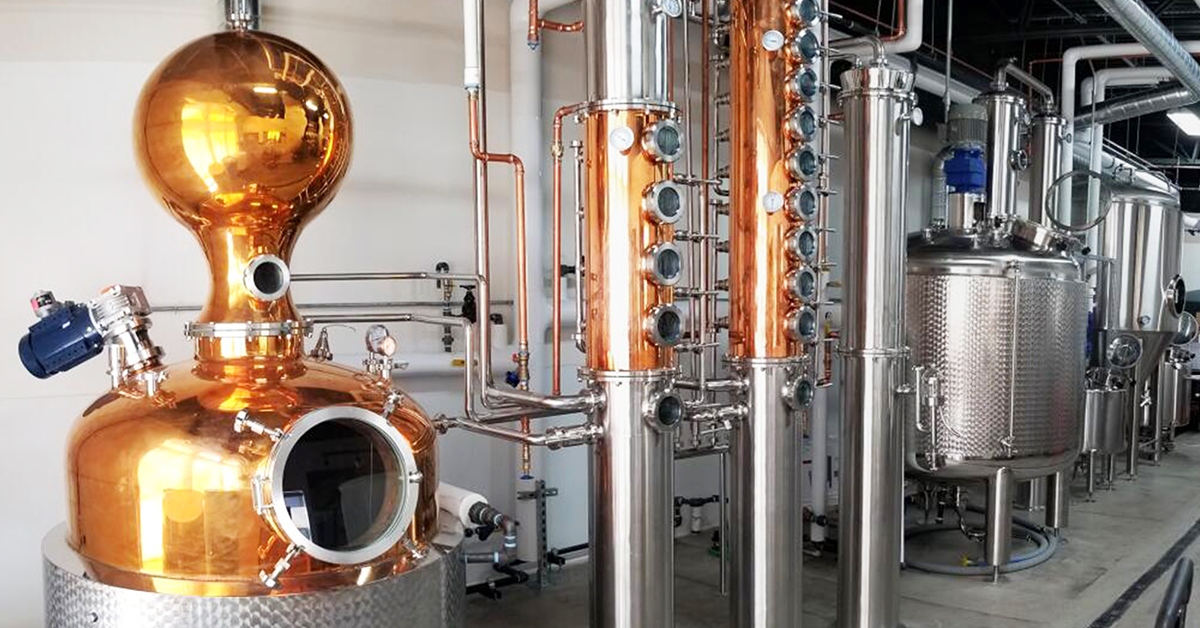
The choice of fermentation vessel can turn a decent batch into something exceptional. It’s not just a container; it’s a collaborator that interacts with the fermenting liquid in subtle ways. Porous materials like unglazed clay or wood allow micro-oxygenation, gently coaxing out deeper, more rounded flavors over weeks or months. Stainless steel, on the other hand, is the purist’s choice—it vanishes into the background, letting the raw, vibrant character of the ingredients shine without interference. Even the shape matters: wide, shallow vessels expose more surface area to oxygen for rapid yeast activity, while tall, narrow ones encourage a slow, layered development. Finding the right vessel is about matching the personality you want to amplify.
Temperature control is where neutral vessels can still become flavor powerhouses. A simple stainless tank paired with precise cooling can preserve delicate aromatics that would otherwise be lost in a warmer, more unruly ferment. Meanwhile, traditional amphorae buried in the earth tap into natural geothermal stability, creating an environment where malolactic fermentation happens gradually, adding creamy textures and nutty undertones. Even barrel size influences the outcome: larger casks offer a gentle whisper of oak, while smaller barrels deliver a more intense, spicy dialogue. It’s not just science—it’s a rhythm you learn, a feeling for how the vessel breathes with the batch.
Modular Systems for Distillery Growth
Growth in distilling often arrives faster than infrastructure can keep pace. Rather than committing to a single massive expansion, many producers are turning to modular setups that let them add capacity in bite-sized increments. These systems arrive pre-engineered and ready to connect, slashing the months of construction and downtime that usually come with scaling up. For a craft distiller watching demand spike, that kind of agility turns a potential bottleneck into a controlled, profitable rollout.
Beyond the initial build-out, modular equipment reshapes how a distillery experiments. A gin producer might bolt on a vapor infusion basket one season, then pivot to a continuous column for vodka the next, without gutting the entire production floor. This flexibility encourages dialing in niche recipes or limited releases without gambling on permanent alterations. The result is a lineup that can shift with consumer tastes, making the brand feel responsive rather than reactive.
Maintenance and future-proofing become simpler too. Isolating a single module for repairs doesn’t halt the whole operation, and upgrading technology — like swapping in a more efficient heat exchanger — doesn’t mean scrapping the core system. Staff quickly master the modular logic, so training overhead drops. Over time, this approach weaves resilience into the distillery’s DNA, allowing steady growth that feels organic rather than forced.
Heat Sources and Energy-Saving Innovations
Traditional heat sources like furnaces and boilers have long dominated home and industrial heating, yet their standard efficiencies often hover around 65–70%, letting precious energy slip through exhaust pipes. Condensing models flip that script by capturing latent heat from water vapor in flue gases, routinely hitting 90% efficiency or more. This jump isn’t just about lower bills—it’s a quiet revolution that trims fuel use and shrinks carbon output without demanding new infrastructure.
Heat pumps have taken the spotlight as a smarter way to move thermal energy instead of creating it. Air-source and ground-source units deliver three to five units of heat for every unit of electricity they draw, effectively slashing consumption by two-thirds compared to resistance heaters. Their dual role in heating and cooling, coupled with renewable power, can nearly zero out emissions, which is why incentives are popping up worldwide to offset upfront costs.
On the controls side, adaptive thermostats and thermal storage are rewriting the rules of efficiency. Modern systems learn household rhythms to avoid warming empty rooms, while phase-change materials bank excess heat during cheap-rate hours for slow release later. In factories, waste heat recovery rigs grab thermal byproducts from machinery to preheat water or incoming air—turning a disposal problem into a free energy stream that tightens overall process economics.
Automation Tools That Preserve Craft
In an era where mass production often overshadows meticulous handiwork, a new breed of automation tools has emerged, specifically designed to elevate rather than replace human skill. These aren't the clunky, one-size-fits-all machines of the past; they act as intuitive partners that handle repetitive strain, refine micro‑adjustments, and free the artisan’s hands for the irreplaceable touches. By subtly embedding assistive logic into familiar workflows, they let the maker stay absorbed in the grain of the wood, the texture of the clay, or the weave of the fabric—never breaking that fragile thread of concentration.
What sets these tools apart is their quiet intelligence. A smart spindle that learns a turner’s pressure curves and compensates for fatigue. A programmable loom that remembers complex sequences without demanding attention from the weaver’s eye. Such devices don’t shout for acknowledgment—they simply preserve the rhythm of craft while absorbing the drudgery. They’ve been shaped by conversations with artisans, not boardrooms, so their interfaces feel like an extension of the bench rather than an intrusion of the digital world.
The magic happens when the line between tool and maker blurs. An engraver’s stylus quivers less, a potter’s wheel holds exact speed through sentiment‑laden curves, and an embroiderer’s machine assists in thread management without dictating pattern. These tools are not about doing more, faster; they’re about letting the craftsperson remain deeply present, coaxing out the subtle variations that define true mastery. In the right hands, they become invisible—a quiet affirmation that technology, guided by empathy, can protect the very soul of making.
Finishing Equipment for Unique Profiles
When standard finishing machines fall short, purpose-built equipment steps in to handle unconventional cross-sections and intricate geometries. These systems are often engineered from the ground up to accommodate sweeping curves, sharp corners, or hollow chambers that would jam or damage generic machinery. By adapting brush arrangements, spray patterns, and material handling paths, they deliver consistent coating removal, deburring, or surface refinement without compromising the structural integrity of the part.
In many cases, the secret lies in modular fixturing and tooling that can be rapidly reconfigured as production needs shift. Rather than forcing the profile to fit the machine, the machine conforms to the profile—using servo-driven heads, custom media formulations, or precisely controlled abrasive belts that follow the contour. This flexibility not only extends tool life but also slashes setup time, making short runs of extrusions or custom moldings economically viable.
Beyond mechanical adaptability, the latest designs integrate in-line inspection sensors that map surface finish in real time, adjusting parameters on the fly. Whether it’s a delicate aluminum sash or a heavy steel rail, the equipment learns from each pass, minimizing rework while preserving the micro-edge qualities that downstream processes demand. The result is a finish that looks and performs as though each piece was individually hand-worked, even at production speeds.
FAQ
Every craft distillery begins with a few non-negotiables: a mash tun to convert grains, a fermenter for yeast to do its magic, and a still for distillation. You’ll also want a heat source (steam or direct fire), a cooling system for condensers, and storage vessels. Don’t overlook pumps, hoses, and cleaning gear—they keep things flowing and sanitary. Small details like a quality hydrometer or alcohol meter make a big difference in consistency.
Think about the spirit you want to create. Pot stills hold onto more congeners, giving you a richer, more flavorful product—ideal for whiskey or rum. Column stills can reach higher proofs and strip out more flavors, which works well for vodka or gin. Many craft distillers end up with both or a hybrid setup to expand their versatility without doubling their footprint.
Match your fermenter volume to your still capacity. A good rule of thumb: aim for a fermenter that holds at least three times the volume of your still’s boiler. If you run a 100-gallon still, you’ll want fermenters in the 300-gallon range. Scale up in multiples rather than one giant tank to keep fermentation schedules flexible and reduce downtime.
Copper does more than look beautiful. It reacts with sulfur compounds during distillation, removing off-aromas that could ruin a smooth spirit. It also conducts heat evenly, giving you better control over the process. Many distillers insist on copper for the still body and condenser, even if they use stainless steel for fermenters or storage.
A mash tun is where you cook grains and convert starches to sugars. If you’re doing all-grain mashing, you need precise temperature control and a way to separate the liquid from the grain bed. A well-designed tun with a false bottom or lauter system saves hours of manual straining. Using a basic pot over a burner works for tiny test batches, but scaling up demands the right tool.
Without efficient cooling, your condenser can’t turn vapor back into liquid, and your yield drops. Many craft distillers start with a closed-loop water system that recycles coolant through a chiller or cooling tower—this conserves water and keeps temperatures stable. Sizing it to your still’s maximum output prevents bottlenecks on busy production days.
People often forget about storage. You’ll need food-grade barrels or stainless tanks for aging and blending. Then there’s a bottling setup—even a simple gravity filler beats filling by hand. Add in a proofing tank, plenty of graduated cylinders, and a robust sanitation routine. These extras keep your product consistent and your workflow sane.
Conclusion
Selecting the right equipment sits at the very heart of crafting small-batch spirits with confidence. Copper pot stills remain the go-to for many, not merely for their timeless look but for the way they interact with sulfur compounds, yielding a cleaner, more refined distillate. But for those chasing bold character, hybrid stills with rectification columns offer remarkable flexibility—allowing a distiller to toggle between rich, textured spirits and pristine neutrals without swapping hardware. Equally critical are fermentation vessels that do more than just hold a wash. Open-top fermenters invite wild yeasts and oxygen into the dance, building layered fruit and funk notes, while jacketed conical units give precise temperature control that can steer ester formation in delicate fruit brandies or whiskey mashes. Then there is the quiet genius of modular designs: frame-mounted systems where mash tuns, stills, and tanks click together like building blocks. This approach means a young distillery can start compact and later bolt on additional columns or fermenters without ripping out plumbing, keeping growth organic and cost predictable.
Beyond the core setup, heat sources and energy recovery are reshaping the craft landscape quietly. Direct-fire gas burners bring a certain romance and Maillard complexity to rum and whiskey, whereas steam jackets or electric elements deliver repeatable precision for vodkas and gins. Progressive distilleries now capture waste heat from condensers to pre-warm incoming wash, slashing fuel bills without altering flavor. Automation, often feared as the death of craft, actually protects it when applied thoughtfully. Programmable logic controllers can handle mundane cycling tasks while logging temperature, pressure, and flow with a consistency no human can match, giving head distillers the freedom to focus on sensory decisions—the cuts, the blending, the art. Finally, finishing equipment turns raw spirit into a signature. Small toasted oak barrels, terra-cotta aging vessels, or ultrasonic reactors can accelerate maturation and coax out vanilla, spice, or nutty tones. Carbon filtration pods and blending tanks fitted with gentle agitators ensure every bottled drop holds a unique, repeatable personality. In the end, each piece of kit, from mash tun to bottle filler, shapes a distiller’s voice—and choosing wisely makes that voice unmistakable.
Contact Us
Contact Person: Ada Xu
Email: [email protected]
Tel/WhatsApp: 0577-86806088
Website: https://www.dayuwz.com/