

Top Carbon Steel Valve Company Features That Drive Industrial Success
2026-11-16
Few components shoulder as much silent responsibility as the carbon steel valve. In refineries, chemical plants, and power stations, these unassuming devices control flow, pressure, and safety—yet their reliability often goes unquestioned until a failure halts production. What separates a top-tier manufacturer from the rest isn't just metallurgy or machining tolerances; it's a combination of engineering foresight, rigorous testing, and responsive support that keeps operations running year after year. At the forefront of this discipline stands ZMV, a company whose approach to carbon steel valve design and manufacturing has become a benchmark for industrial success. In the following sections, we'll break down the key features that drive that success—from material traceability to smart valve integration—and examine why these details matter more than most buyers realize.
How Carbon Steel Grade Selection Changes Valve Life in the Real World
Carbon steel valves look alike on a spec sheet, but their real-world lifespan often hinges on grade selection that nobody notices until a leak shuts down a line. A standard WCB casting might handle a clean water system for decades, yet the same valve in a slightly acidic condensate return will pit within two years. The difference comes down to how the alloy balances carbon content, manganese, and residual elements against the actual service environment—not just the design pressure and temperature on the drawing.
In practice, moving from WCB to LCC or even a modified low-carbon grade changes the corrosion mechanism. Higher carbon levels can lead to carbide precipitation at grain boundaries, especially after welding or heat treatment, which creates local weak spots. Those spots become initiation points for stress corrosion cracking or preferential corrosion. Many field failures that get blamed on poor installation or water chemistry actually trace back to a grade that was marginally acceptable on paper but lacked the toughness or corrosion resistance needed for daily thermal cycling.
Real-world valve life also depends on how the grade interacts with coatings, trim materials, and seat hardness. A carbon steel body with a low-grade trim will still fail early, but if the body itself starts to corrode from the inside, no internal upgrade helps. Operators who track valve replacement intervals often find that a seemingly expensive upgrade from standard WCB to a normalized low-carbon grade pays for itself within two or three maintenance cycles—not because the material is exotic, but because it stops the small, progressive damage that accumulates unnoticed until a critical failure occurs.
Why Tight Machining Tolerances Matter More Than the Price Difference
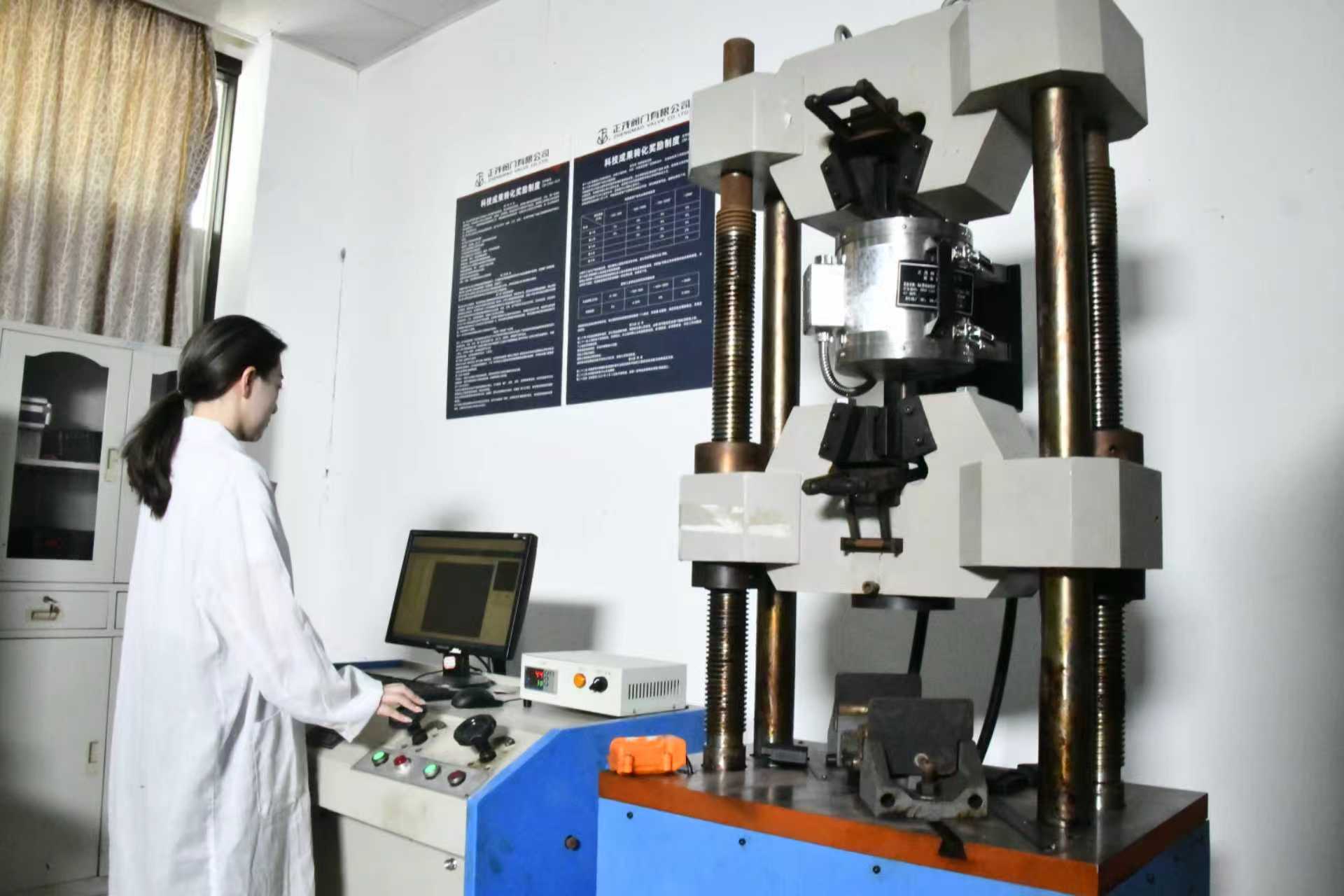
When sourcing machined parts, it's easy to let unit price drive the decision. But a few cents saved per piece can evaporate quickly if tolerances slip. Tight tolerances aren't a luxury—they're the difference between a component that seats perfectly in an assembly and one that causes premature wear, vibration, or outright failure downstream.
Think about what actually happens when a bore is machined a couple thousandths over spec. Bearings lose their press fit. Seals start weeping. In hydraulic or pneumatic systems, that tiny deviation becomes a persistent leak that costs far more in downtime and rework than the initial price gap ever saved. The real expense isn't the machining—it's the field failure, the line stoppage, or the customer complaint that follows.
Shops that hold tolerances consistently invest in better equipment, inspection, and process control. That overhead shows up in the quote, but it also shows up in parts that fit the first time, every time. Over the life of a product, paying slightly more for predictable geometry is usually the cheaper path.
What a Pressure Test Can Reveal That a Spec Sheet Cannot
Spec sheets might list a valve's rated pressure, material grade, and dimensional tolerances, but they can't tell you how a casting behaves after it has been sitting at 90% of its yield strength for six hours. A pressure test pushes the component into conditions that blueprints never cover. Hairline cracks in a welded seam, tiny porosities in a cast body, or a slow leak at a threaded joint become impossible to ignore once the gauge starts climbing.
The test also exposes how an entire assembly cooperates under real stress. A gasket that looked fine on the shelf may compress unevenly. A flange might rotate a fraction of a degree when the bolts are torqued in sequence. These are interaction failures, not material failures, and no individual spec sheet can predict them.
Perhaps most importantly, a pressure test reveals fatigue history that paperwork cannot. A part that has survived years of thermal cycling or vibration may pass a visual inspection but fail the moment it is asked to hold 1.5 times its working pressure. In that sense, the test is not just about finding leaks—it is about uncovering the accumulated damage that quietly erodes a system's safety margin.
Which Coatings Actually Hold Up in Corrosive Process Lines
Any plant engineer who has watched a standard epoxy coating blister and peel off a pipe rack within six months knows the frustration: not all coatings are created equal when acids, chlorides, and hot condensate are constantly attacking the steel. The short answer is that high-build novolac epoxies, fluoropolymer systems like PVDF or ECTFE, and certain inorganic zinc-rich primers tend to survive where generic epoxies and alkyds fail almost immediately. These systems work not because they are simply “thicker” but because their resin chemistry resists permeation by aggressive ions and maintains adhesion even when the pH swings wildly from acidic to alkaline.
Among the true workhorses, novolac epoxy stands out for immersion service in sulfuric or hydrochloric acid tanks at temperatures up to 120°F. Its dense crosslinked structure slows the diffusion of water and chloride ions, which is the primary mechanism behind underfilm corrosion. For lines carrying mixed solvents or oxidizing acids like nitric, fluoropolymer coatings offer a different advantage: near-zero porosity and chemical inertness. A 30-mil PVDF spray-and-bake lining, for instance, has held up for over a decade in a chlor-alkali plant where stainless steel itself was pitting within two years. The downside is cost and the need for precise surface prep, but when downtime is measured in dollars per minute, the premium pays for itself.
What often gets overlooked is the role of the primer beneath the topcoat. A zinc-rich epoxy primer can provide sacrificial protection at scratches and edges, but if the zinc loading is too low or the topcoat is too brittle, the whole system fails from the inside out. Field data from chemical processing facilities shows that a three-coat system — inorganic zinc silicate, high-build epoxy intermediate, and a chemically resistant urethane topcoat — outperforms a single thick coat of “chemical resistant” epoxy in areas with frequent thermal cycling or mechanical abrasion. The key is to match the coating not just to the chemical list, but to the actual service conditions: temperature swings, flow rates, and the presence of trace contaminants that can accelerate permeation.
What Custom Modifications Cost Less Than You Would Expect
Plenty of people assume any custom work starts with a four-figure bill, but that's rarely the case once you look past full body kits. A set of tinted side markers or smoked tail light overlays can completely change the rear end for less than the cost of a tank of gas. Even things like custom shift knobs, aluminum pedal covers, or a leather steering wheel wrap sit in that thirty-to-eighty-dollar range and take under an hour to fit. The visual payoff is immediate, and none of it requires specialty tools or a trip to a shop.
Another overlooked area is vinyl. A hood or roof wrap in a matte or carbon-look finish usually lands between a hundred and two hundred dollars installed, which is shockingly cheap compared to repainting. Interior trim wraps are even more affordable—think brushed metal or wood-grain overlays for the dash and door panels. They're forgiving to work with because you can peel them off if you mess up, and the material itself costs less than a decent dinner for two.
Suspension and exhaust tweaks can also come in under budget if you skip the big-name kits. Upgraded sway bar bushings, a short-throw shifter, or a resonator delete at a local muffler shop often costs less than what people expect—sometimes under a hundred and fifty bucks total. These little mods don't just look the part; they change how the car feels every time you drive it, which is far more satisfying than a glossy catalogue part that sits in the garage.
Why Fast Spare Parts Access Keeps Production Lines Moving
When a single bearing seizes on a packaging line, every minute of downtime ripples outward. Operators idle, downstream stations starve, and delivery schedules slip into costly overtime. Fast spare parts access isn't just about convenience—it's the difference between a 45-minute swap and a three-day shutdown. Lines that keep critical components within arm's reach, or backed by same-day local suppliers, absorb these failures without breaking rhythm.
The hidden cost of slow parts rarely shows up in a purchase order. It lives in the compounding delays: a technician waiting for a courier, a shift supervisor reshuffling labor, a plant manager explaining missed shipments. By contrast, teams that treat spare parts like an emergency service—with tracked inventory, pre-negotiated vendor SLAs, and even duplicate wear items on high-risk assets—turn potential disasters into routine maintenance. Production doesn't just resume faster; it barely pauses.
What separates resilient lines isn't budget, but mindset. They map failure points before they happen and stock accordingly. When a gearbox or sensor fails, the part is already in a labeled bin, not a warehouse across the country. That foresight keeps throughput steady, preserves customer trust, and avoids the frantic scramble that drains morale. In the end, fast access to spares isn't a logistics detail—it's the quiet engine of uninterrupted output.
FAQ
The best ones combine metallurgical expertise with continuous field feedback, so their valves survive thermal swings, abrasive media, and pressure spikes without needing constant rework.
Because repeated open-close testing under rated conditions exposes seat wear patterns early, letting them adjust tolerances or trim materials before a valve ever reaches a customer's pipe rack.
When every heat number, test coupon, and pressure report is linked to a specific valve serial, inspectors can verify compliance in minutes instead of digging through disconnected paper trails for days.
A valve that fits the pipe but not the actuator torque curve will underperform or fail early, so strong suppliers match gear ratios, spring settings, and mounting interfaces to the actual control system.
When a critical line goes down, waiting six weeks for an overseas shipment multiplies downtime costs, whereas a supplier with nearby inventory can deliver a replacement in days and keep production running.
They matter only when backed by consistent third-party audits and real fugitive emission test data, but in practice they filter out shops that cut corners on stem sealing or fire-safe design.
Beyond spare parts, they provide torque charts, installation torque sequences, and failure analysis reports based on returned units, helping plants avoid repeating the same packing or seat failures.
Live-loaded packing, graphite-filled gaskets, and extended bonnets with proper stem finishes are common, but top manufacturers go further by leak-testing every assembly with helium rather than relying on sample audits.
Conclusion
In real industrial settings, the difference between a carbon steel valve that lasts and one that fails early often comes down to choices made long before installation. Grade selection is a prime example: specifying the right carbon steel for the actual pressure, temperature, and media can add years to service life, while a generic WCB casting may crack or erode sooner. Machining tolerances play an equally overlooked role—tight dimensional control keeps seats aligned and reduces internal leakage, which matters far more than a small upfront price gap. A thorough pressure test, carried out with the valve fully assembled and under conditions close to actual operation, exposes weak points that no polished datasheet will ever show.
Beyond the core valve body, coatings and custom features determine how well a unit survives in corrosive process lines. The right coating—whether electroless nickel, epoxy, or a specialized fusion-bonded layer—must be chosen for the specific chemical exposure, not just the cheapest option. Custom modifications such as extended bonnets, special trim materials, or non-standard end connections often cost less than buyers assume, especially when they prevent a costly mismatch after installation. Finally, a supplier with readily available spare parts and local stock can keep a production line running during an unexpected shutdown, turning what could be a week-long outage into a same-day repair. These practical strengths, rather than marketing claims, are what set top carbon steel valve companies apart.
Contact Us
Contact Person: Lucas Lin
Email: [email protected]
Tel/WhatsApp: +8613968913000 / +8613868610141
Website: https://www.zhengmaogroup.com