

OEM Zinc-Nickel Alloy Plating Equipment Delivers Superior Corrosion Resistance and Cost Savings
2026-09-19
Corrosion quietly drains millions from industrial budgets every year—but what if your plating line could turn that loss into a competitive edge? Zinc-nickel alloy plating delivers up to 10 times the corrosion resistance of standard zinc, and with Junda OEM equipment, that protection comes with a surprisingly lean price tag. Discover how Junda redefines alloy plating performance and cost efficiency—without compromise.
Why Zinc-Nickel Beats Standard Zinc in Corrosive Settings
Standard zinc coatings have long been the default for protecting steel, but their sacrificial behavior works against them once chlorides and moisture hang around. The zinc dissolves steadily, forming bulky white corrosion products that eventually expose the base metal. Zinc-nickel, with roughly 12–15% nickel in the deposit, shifts that dynamic. The alloy corrodes at a much slower rate and tends to form a thinner, denser oxide layer that stays put instead of flaking away. In practice this means fasteners and brackets survive far longer in marine or road-salt conditions before red rust shows up.
Another overlooked advantage is how the nickel alters the electrochemical potential of the coating. Pure zinc is so active that it sacrifices itself quickly, especially in acidic or high-humidity environments. Zinc-nickel sits closer to steel on the galvanic series, so it still provides cathodic protection but without the rapid burn-through. That balance matters in tight assemblies where rework is costly and where excessive zinc corrosion can seize threads or clog mating surfaces.
Durability differences become obvious in salt spray testing: a standard zinc-plated part often shows visible red rust after 100–200 hours, while a well-passivated zinc-nickel part can exceed 1,000 hours without base metal attack. The alloy also holds up better around edges and in recessed areas, where conventional zinc tends to thin out and fail first. For components exposed to de-icing salts, coastal air, or industrial fallout, that extra margin is not just a spec-sheet upgrade—it changes replacement intervals and warranty risk.
Custom OEM Plating Lines Built Around Your Parts
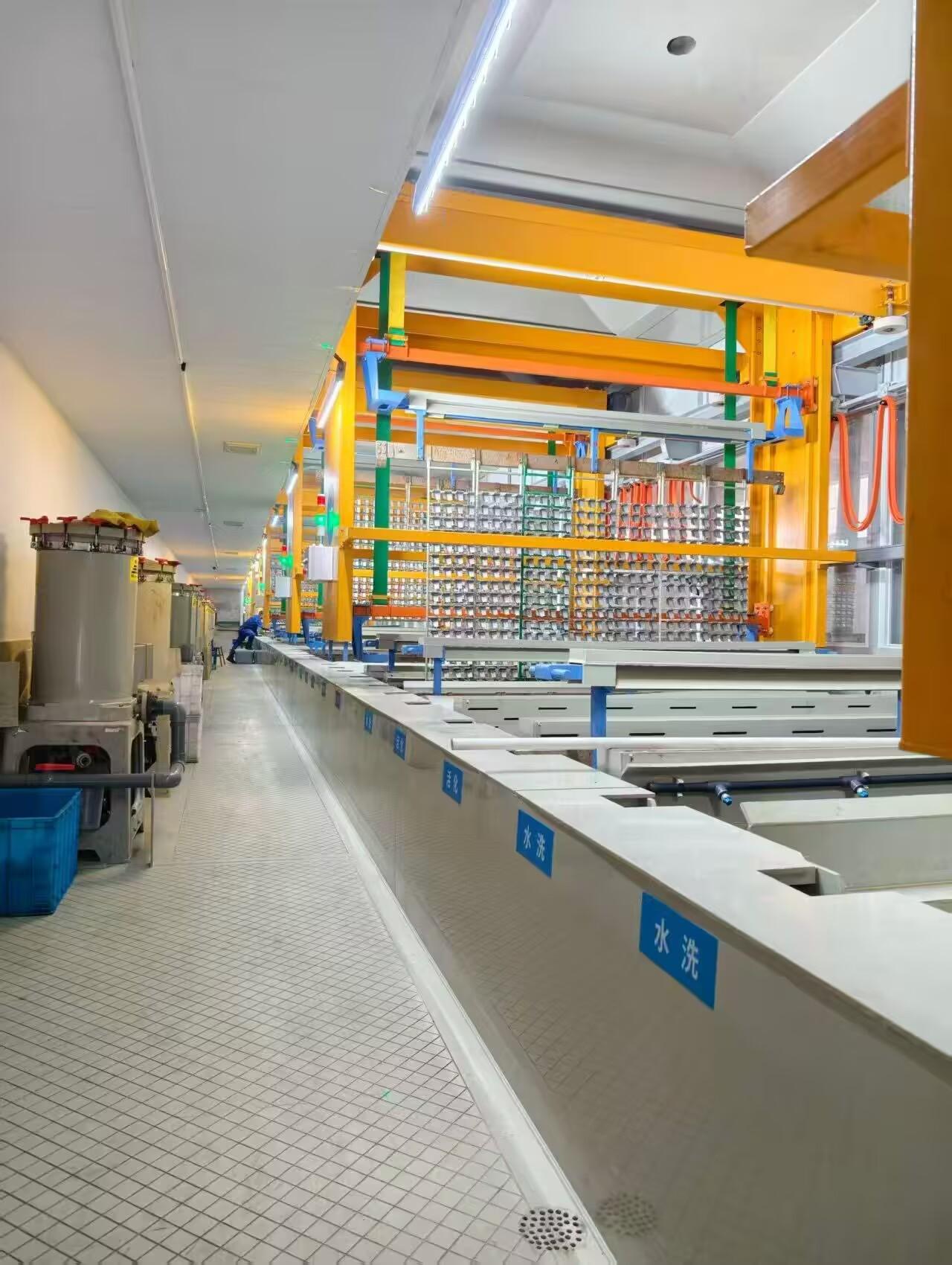
Instead of forcing your components into a standard machine layout, we start with the part itself. Our engineers map out every critical surface, racking point, and drainage path before a single tank is placed. That means the line's tank sequence, agitation method, and rectifier sizing all follow from your geometry and coating specification—not from a fixed catalog.
This part-first approach also changes how the line grows with you. Need to add a chromate conversion step after zinc? Adjust dwell times for a heavier deposit on a new bracket design? Because the initial layout is modular and documented around your current parts, these changes become reconfigurations rather than expensive rebuilds. You get a plating system that fits your production floor and your part tolerances instead of asking your parts to adapt.
The Real Cost of Coating Failures After Installation
A coating that fails after installation rarely announces itself with a dramatic event — most breakdowns start as hairline cracks, micro-blistering, or a subtle loss of gloss. What follows is a slow erosion of the asset’s protective envelope, and with it, the assumption that the original specification was saving money. When field repairs require containment, access equipment, and repeated shutdowns, the per-square-meter cost can easily exceed the initial coating budget several times over.
Beyond direct remediation, failed coatings trigger operational ripple effects. Production pauses, idle crews, and unplanned scaffolding turn a weekend touch-up into a multi-week disruption. In corrosive environments, unprotected substrate degrades quickly, so a delay in recoating often translates into steel replacement or structural strengthening — costs that were never part of the original project estimate.
Warranty disputes and documentation gaps compound the financial hit. If inspection records are thin or the failure mode is poorly characterized, owners and contractors can spend years arguing over responsibility while the asset continues to deteriorate. The real cost, then, is not just the price of new paint; it is the accumulated liability of a system that failed when no one was looking.
Alloy Chemistry That Extends Service Life Without Extra Spend
The real trick to longer component life isn't always a pricier material—it's in the subtle shifts of alloy chemistry. Adjusting trace elements like molybdenum, vanadium, or even small amounts of nitrogen can alter how a metal responds to stress, corrosion, and thermal cycling. These tweaks don't demand a new production line or exotic raw materials; they simply refine what's already in the melt. The result is a part that holds its shape under load, resists pitting in harsh environments, and keeps performing well past the point where a standard grade would have been swapped out.
Consider the case of bearing steels. By tightening the specification for oxygen and sulfur content, and nudging the chromium-to-carbon ratio, metallurgists can dramatically reduce the formation of brittle inclusions that initiate cracks. No extra heat treatment, no added cost for the foundry—just a smarter recipe. The same logic applies to aluminum alloys for structural parts: a minor increase in copper or magnesium can lift fatigue strength enough to delay replacement by months, even years, in demanding applications. It's not about making the metal stronger in a crude sense; it's about making it fail less predictably, more gracefully.
What often gets overlooked is how these chemical adjustments interact with existing maintenance schedules. A well-chosen alloy doesn't just postpone the next failure—it can reduce the frequency of inspections, lubrication, and part swaps. That's where the real savings hide. The upfront cost per kilogram might be nearly identical, but the lifecycle cost per operating hour drops sharply. For anyone managing fleets, rotating equipment, or structural assets, the message is blunt: stop paying for downtime and labor that a slightly different alloy could have prevented. Sometimes the best upgrade is the one no one can see.
Handling Complex Geometries With Uniform Alloy Coverage
Achieving even alloy deposition on intricate part geometries often comes down to how well current distribution is managed across the surface. Sharp edges, deep recesses, and internal channels naturally attract or repel current at different rates, leaving some areas starved while others build up excessive thickness. Rather than relying on a single adjustment, experienced finishers combine conforming anodes, pulse waveforms, and auxiliary cathodes to redirect the flow where it is needed most. These adjustments are rarely standardized; each part family demands its own trial runs to map thickness variation before production parameters are locked in.
Bath movement also plays a larger role than many assume. Simple air agitation can create dead zones inside blind holes or narrow slots, so mechanical oscillation or eductor-driven flow is often added to keep fresh electrolyte reaching the surface. At the same time, the alloy bath itself may need targeted organic additives that adsorb preferentially on high-current-density regions, slowing deposition there and letting recessed areas catch up. The result is a more balanced coating without resorting to excessively long plating times or oversized anodes, which introduce their own edge buildup problems.
Maintenance Intervals That Stretch Further With Zinc-Nickel
A zinc-nickel coating doesn't just add a thin protective layer—it fundamentally changes how often components need attention. In corrosion-heavy environments like coastal industrial sites or road-salt zones, standard zinc plating might demand recoating or replacement within a few years. Zinc-nickel, typically at 12–15% nickel content, pushes that timeline out by a factor of three or more, with some field studies showing white rust resistance exceeding 1,500 hours in neutral salt spray. This means pumps, fasteners, and chassis parts can run through multiple seasonal cycles without the usual teardown and reapplication routine.
The real savings show up in scheduled downtime. Maintenance teams often build their calendars around predictable failure points—brake calipers corroding, hydraulic fittings seizing, or electrical connectors losing ground. With zinc-nickel, those failure points shift far to the right. European automotive manufacturers have documented wheel hub assemblies going from a 60,000-mile service interval to well over 100,000 miles purely by switching the coating spec. For fleet operators, that's not just a longer oil-change-like cycle; it's fewer unscheduled roadside repairs and a much looser grip on the wrench.
Field feedback from heavy equipment and marine applications tells a similar story. A zinc-nickel plated anchor chain link, for instance, shows minimal pitting after five seasons where a zinc-only link would already show deep rust blooms. The alloy's sacrificial behavior is slower and more uniform, which means it protects the base steel longer while wearing away in a predictable pattern. That predictability lets engineers extend maintenance windows with confidence—no guesswork, just a coating that stretches the time between interventions without crossing into risky territory.
FAQ
The alloy typically contains 12-15% nickel, which shifts the corrosion potential and slows red rust formation dramatically. Salt spray testing often shows 500-1000+ hours to white rust, far beyond conventional zinc.
They are engineered for efficient bath usage, reduced sludge generation, and lower energy consumption per rack or barrel load. Many systems also include automated dosing that keeps nickel concentration stable, cutting waste and rework.
Yes, OEM systems are usually built around your specific throughput needs—barrel, rack, or high-speed reel-to-reel configurations. Tank dimensions, rectifier capacity, and material handling can all be tailored without a complete redesign.
Depending on substrate, pretreatment, and alloy makeup, neutral salt spray results commonly range from 720 hours to over 1,500 hours to red rust. This makes it suitable for automotive underbody, marine, and heavy equipment applications.
Absolutely. The alloy surface accepts trivalent passivates well, especially clear, black, and silver variants. Many shops add a thin organic topcoat to further boost friction control or extend protection.
Automated analysis and dosing are the most effective. The system samples the bath, measures zinc and nickel concentrations, and adjusts replenishment accordingly. Regular anode cleaning and solution filtration also prevent metallic contamination.
By extending component lifespan in harsh environments, the coating lowers field failures linked to corrosion. Fewer replacement parts and less corrosion-related downtime directly cut warranty exposure and support costs.
Many systems use closed-loop rinsing and waste treatment that minimize heavy metal discharge. Nickel is typically complexed and recovered rather than released, helping facilities meet stricter wastewater limits and reduce hazardous waste volumes.
Conclusion
In demanding environments where salt spray, moisture, and road chemicals attack metal surfaces, standard zinc plating often falls short, leading to premature rust and frequent rework. Zinc-nickel alloy plating changes that equation by forming a denser, more tightly bonded barrier that withstands corrosive conditions far longer. For manufacturers, the real advantage lies in custom OEM plating lines designed around each part's shape, size, and exposure profile. Rather than forcing components through a generic process, these systems are engineered to match production volumes and material requirements, which means stronger adhesion and fewer rejects. The hidden cost of coating failure after installation is not just the warranty claim; it's the downtime, replacement labor, and damaged reputation that follow. Zinc-nickel shifts the economics by preventing those failures before they occur.
Alloy chemistry is the core of this durability. A controlled nickel content (typically 12-15%) transforms the coating structure, improving hardness and sacrificial protection without raising raw material costs dramatically. This means components last longer in the field without pushing the plating budget higher. Complex geometries, such as threaded fasteners, brackets, and stamped housings, also benefit from the bath's throwing power, which ensures uniform alloy coverage even in recesses and sharp edges where standard zinc tends to thin out. The result is fewer touch-ups and a more consistent protective layer. Maintenance intervals naturally stretch further, reducing the frequency of plating line shutdowns and part replacements. For OEMs and job shops alike, investing in purpose-built zinc-nickel equipment pays back through longer service life, fewer warranty issues, and a lower total cost per protected part.
Contact Us
Contact Person: hayyr
Email: [email protected]
Tel/WhatsApp: 8613082110525
Website: https://www.jundaelectroplating.com