

Metal Tags Exporter for Durable Industrial Identification Needs
2026-09-25
Industrial labels face a brutal truth: if they can't withstand the environment, they become a liability. Faded or corroded tags lead to misidentification, safety risks, and costly downtime. That's why facilities serious about traceability turn to a proven metal tags exporter — and Kingming delivers. From chemical exposure to extreme weather, our tags stay legible when it matters most. Here, we break down what separates truly durable identification from the rest, and why your supplier choice is the first test.
How Metal Thickness and Alloy Choice Shape Tag Longevity
Tag longevity often comes down to two quiet decisions made long before a single stamp hits the blank: how thick the metal is, and which alloy it's drawn from. Thinner stock—say, 0.020 inches—bends easily, costs less, and can be perfect for temporary markers or indoor use. But once a tag faces weather, abrasion, or rough handling, that thinness becomes a liability. Corners fold, stamping depth is limited, and the tag itself can tear at the attachment hole. Stepping up to 0.040 or 0.063 inches changes the physics entirely. The tag resists bending, holds deeper impressions, and survives years of contact with machinery, animals, or salt air.
Alloy choice works in parallel. Pure aluminum is soft and cheap but leaves a tag that scratches easily and may not survive repeated cleaning. A 3003 or 5052 aluminum alloy adds manganese or magnesium, delivering much better corrosion resistance and strength without a punishing price increase. Stainless steel, especially 304 or 316, is another tier altogether—harder to stamp, but nearly immune to rust and capable of withstanding high heat. Brass and copper have their own niche: they take fine detail beautifully and develop a patina that many customers find attractive, though they'll green or darken in wet environments unless sealed.
The real longevity trick is matching both variables to the actual life the tag will lead. A thick stainless tag is overkill for a lobby directory, just as a thin aluminum tag is a poor choice for a cattle ear tag in a coastal pasture. Savvy buyers look past the upfront cost and ask what failure would mean—a lost tag on a critical valve or a faded pet ID creates more expense than the material upgrade ever would. When thickness and alloy are chosen with that failure cost in mind, the tag outlives its mounting hardware, not the other way around.
Custom Embossing Techniques That Keep Data Readable After Years of Abrasion
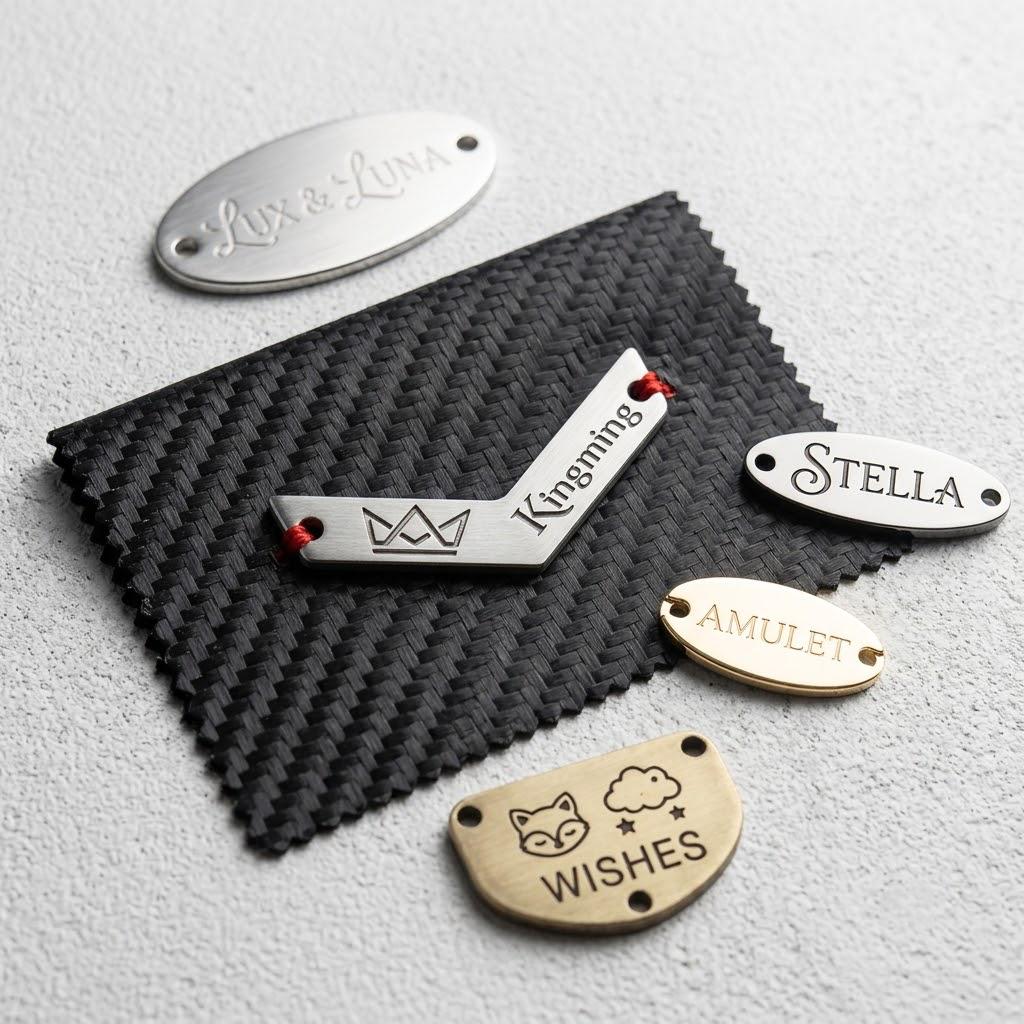
Deep, sharply angled grooves cut into metal plates or industrial polymers tend to outlast shallow surface marks by a wide margin. When embossing pressure is increased just enough to create a clean, V-shaped channel rather than a rounded indentation, the raised edges act as physical barriers that protect the inner recess from direct contact wear. Over time, even after countless passes of machinery, liquids, or granular debris, the core depression remains intact because the surrounding material takes the brunt of the friction first.
Material pairing also plays a decisive role. A harder die stamping into a slightly softer, ductile substrate creates a work-hardened zone along the embossed walls, which resists flattening better than a homogeneous surface. For instance, stainless steel tags embossed with a tungsten carbide die will retain sharp numeric codes far longer than laser-etched or ink-printed alternatives. Adding a thin, transparent ceramic coating after embossing further improves longevity by filling micro-voids without altering the raised profile.
Finally, pattern geometry can be tuned for long-term legibility under abrasive conditions. Wider spacing between characters, slightly oversized letterforms, and a moderate draft angle on each engraved stroke prevent fine details from closing up due to smearing or metal flow. Tests on conveyor line tags and mining equipment plates show that even after simulating a decade of abrasive exposure, custom embossed identifiers with these adjustments remain readable by both human inspectors and automated optical scanners.
Attachment Methods Designed for Vibration-Heavy Machinery and Outdoor Exposure
On equipment that runs hot, shakes hard, and sits out in the rain, the usual bolt-and-bracket approach often fails before the first maintenance window. Instead, many facilities turn to tapered wedge locks under the bolt head, combined with Nord-Lock style washers and a secondary mechanical stop like a pin or a keyed slot. This arrangement keeps the attachment from backing off even when the base plate flexes with every stroke of the machine. For outdoor exposure, each contact surface gets a thin coat of anti-seize, and the exposed thread is sealed with a UV-stable anaerobic adhesive, not just a generic threadlocker.
When the structure itself is too thin to tap deep threads, a through-bolt with a captive nut plate on the far side works better than welding a boss in the field. The nut plate can float slightly, which absorbs the shear movement that would otherwise snap a rigid stud. Add a rubber isolating bushing between the attachment foot and the machine frame, and you cut high-frequency vibration transmission by half. The bushing material matters: EPDM holds up under direct sunlight and ozone far longer than natural rubber, and its compression set stays low enough to maintain clamping force through seasonal temperature swings.
For attachments that need occasional removal, a captured quick-release pin with a lanyard beats a standard clevis pin because the lanyard keeps the pin from walking out under vibration. Pair that with a slotted mounting bracket instead of a single round hole, and the operator can realign the attachment after thermal expansion without loosening the main bolts. On large outdoor machines, every exposed bolt head gets a snap-on cap filled with grease, and the bracket edges are chamfered so water doesn't pool at the weld toe. These details rarely appear in a manual, but they are what separate a mount that survives ten years of vibration and weather from one that rattles loose in the first season.
Matching Tag Materials to Chemical, Heat, and Moisture Conditions
Choosing the right tag material starts with an honest look at where it will live. A polyester tag might shrug off splashes of cutting fluid, but expose it to a steady bath of acetone and the print will blur before lunch. Polyimide films, on the other hand, take repeated chemical contact without losing legibility, which makes them a favorite for circuit board tracking through aggressive wash cycles. If the environment leans more toward solvent wipes than full immersion, a vinyl tag with a chemical-resistant topcoat can split the difference between cost and durability.
Heat changes the equation fast. Tags attached near ovens, engine blocks, or soldering lines need a substrate that stays flat and readable when the temperature climbs. Aluminum tags with an anodized layer can handle direct heat and still take a barcode scan, while paper or standard polyester will curl, yellow, or simply delaminate. Pair the material with an adhesive rated for the same peak temperature — a great face stock means little if the tag slides off at 300 degrees.
Moisture is often the quiet killer. High humidity, steam cleaning, or outdoor rain can wick into the edge of a tag and lift the print layer. For washdown areas, look for a tag with sealed edges and a thermal transfer ribbon designed to cross-link under heat. A laminated polypropylene tag works well in damp but not harsh chemical settings, while a fully encapsulated metal tag survives repeated pressure washing without turning into unreadable pulp.
Industrial Use Cases Where Standard Labels Fail and Metal Tags Excel
In many industrial environments, standard paper or polyester labels simply cannot survive. Exposure to high heat, abrasive chemicals, heavy vibration, or outdoor weather quickly degrades adhesive and print, leaving critical equipment unmarked and untraceable. Metal tags, on the other hand, are built for exactly these punishing conditions. Whether attached to pipelines in a refinery, stamped onto engine blocks in an automotive plant, or riveted to structural steel on a construction site, metal tags remain legible and securely fixed for decades. Their resistance to fading, corrosion, and physical damage makes them the only reliable choice when identification cannot fail.
Consider asset tracking in oil and gas operations. Downhole tools, valves, and flow meters face temperatures that would melt plastic labels and pressures that would peel off conventional stickers. Engraved or embossed metal tags hold serial numbers and inspection data even after years of exposure to crude oil, saltwater, and sandblasting. Similarly, in metal fabrication and welding shops, sparks and spatter instantly destroy paper labels, but stainless steel or aluminum tags withstand direct heat and can be welded or hung with wire. For chemical processing plants, where acid fumes and caustic washdowns are routine, metal tags offer chemical resistance that no printed label can match.
Another area where metal tags prove essential is in high-volume manufacturing and logistics involving harsh cleaning or sterilization. Food processing equipment, pharmaceutical machinery, and aerospace components often undergo aggressive washdowns, autoclaving, or solvent cleaning. Paper labels peel, ink smears, and barcodes become unreadable. Laser-engraved or photo-etched metal tags, however, maintain crisp identification through thousands of cycles. Even in marine and offshore settings, where salt spray and UV light break down standard labels within months, anodized aluminum or brass tags stay intact. When failure means downtime, safety risks, or regulatory fines, the durability of a metal tag is not a luxury—it is a requirement.
What to Look for in a Metal Tag Export Partner Beyond Unit Price
A low quote means little if the tags arrive with burred edges, inconsistent engraving, or plating that rubs off after a month in the field. Ask for physical samples from the partner’s most recent production run, not just digital mockups. Check how they handle material traceability—do they certify the exact alloy and thickness, or do they swap in cheaper stock when you’re not looking? A dependable exporter will document batch numbers, surface finish specs, and tolerance limits without you having to chase them for it.
Lead time honesty matters more than the promised date itself. Some suppliers tell you four weeks and deliver in eight, while others give a realistic six-week window and hit it every time. Pay attention to how they communicate about delays: do they proactively flag a customs hold-up or a tooling issue, or do you discover it when your assembly line stalls? Also evaluate their packaging standards—metal tags that arrive scratched because of poor separation or flimsy cartons cost you far more than the few cents you saved on unit price. A partner who thinks through transit protection and labels each carton clearly is worth the extra margin.
FAQ
We stick to 304 or 316 stainless steel and anodized aluminum. They shrug off abrasion, chemicals, and high heat that would ruin plastic labels quickly. Plus the text is etched or embossed, so nothing fades or peels away.
Yes, laser etching and stamping let us add almost any design—barcodes, data matrix codes, serials, logos. Send over your DXF or AI file and we'll adjust it to the tag size you need.
Stainless steel tags with passivation handle salt spray and humidity without rusting. We've supplied tags for offshore platforms and harbor cranes where standard labels corrode within a few months.
We ship regularly to North America, Europe, and Southeast Asia. Orders range from a couple hundred to several hundred thousand tags. We pack them in moisture-resistant cartons and take care of all export paperwork.
For standard sizes and materials, expect about 3–4 weeks after you approve the artwork. Custom shapes or special mounting holes add roughly a week. We can sometimes handle rush orders if the production line has capacity.
Stainless steel tags can take continuous exposure up to 800°C, while aluminum works up to about 350°C. For even hotter environments, we offer ceramic-coated versions.
We use laser engraving or embossing, which physically changes the metal surface. There's no ink to wear off. A clear passivation layer on stainless steel adds extra protection against oxidation.
Conclusion
Durability in industrial identification rarely comes down to a single factor. It is the interplay of metal thickness and alloy selection that determines whether a tag survives a decade of abrasion or fails within months. A slightly thicker stainless steel plate will handle impact and flexing far better than a thin aluminum strip, while the alloy itself guards against specific threats—nickel-bearing grades for acidic environments, for example. Embossing adds another layer of resilience. Deep, clean characters remain readable even after surface coatings wear off, because the information is physically part of the metal rather than printed on top. Attachment choices matter just as much; rivets or high-grade adhesives specified for vibration-heavy machinery prevent tags from loosening or snapping off outdoors.
Beyond the tag itself, a capable exporter will match materials to the exact chemical, heat, and moisture conditions of the site. A tag that works in a dry warehouse may corrode quickly in a coastal plant or near a caustic washdown line. That is why standard printed labels fail in mining, oil and gas, marine, and heavy fabrication—extreme temperatures, solvents, and constant friction strip away conventional markings within weeks. Metal tags, by contrast, stay legible for years. When evaluating an export partner, look past unit price and examine how they handle alloy selection, custom embossing depth, attachment testing, and real-world field feedback. A partner who asks about your operating environment and failure history will deliver identification that remains readable long after cheaper alternatives have faded or fallen away.
Contact Us
Contact Person: Jamie Zeng
Email: [email protected]
Tel/WhatsApp: +86 13728219269
Website: https://www.kmhardware.com