

High-Voltage Switchgear Manufacturer: Choosing the Right Partner for Reliable Power Systems
2026-11-16
Power systems don't fail politely—they fail in the middle of a heatwave, during a production peak, or just before a critical operation. The switchgear you choose either holds firm in those moments or becomes the reason everything stops. That's why picking a high-voltage switchgear manufacturer isn't just a procurement task; it's a reliability decision. At Lugao, we've seen how the right partner can mean the difference between planned uptime and costly downtime. This guide will help you cut through the noise and find a manufacturer that actually delivers long-term performance—not just a polished datasheet.
What Building a Substation Taught Me About Switchgear Shortcuts
I used to think switchgear shortcuts were just about saving time on cable terminations or skipping a torque check when the schedule got tight. Building a substation changed that. Watching a crew land bus bars under deadline pressure, I saw how a "minor" decision to reuse old insulators cascaded into a partial discharge problem that took two weeks to isolate. The shortcut didn't live in the drawings; it lived in the moment someone decided the spec was negotiable.
The real education came from the testing phase. A panel that passed factory acceptance tests failed on site because a contractor had shortened a bus support to fit around a conduit. That one-inch deviation changed the clearance enough to arc under humidity. Nobody wrote it down. We learned to treat every undocumented modification as a fault waiting for weather.
Now when I hear "value engineering" on switchgear, I ask for the risk register before the cost savings. Shortcuts in substations are rarely about laziness; they're about fragmented responsibility and the belief that someone else will catch it. The substation taught me that switchgear doesn't forgive assumptions, and the most expensive shortcut is the one that survives commissioning.
The Testing Reports You Should Actually Ask to See
Most suppliers are quick to send over a certificate with a big “pass” stamp, but that piece of paper rarely tells the full story. The reports worth your time include raw measurements, test parameters, and the exact standard or method used. If a document only states that a product met some vague requirement without showing the numbers behind it, treat it as little more than a sales handout.
Find out who actually ran the tests. An in-house lab report can be a decent starting point, but it shouldn't be the only thing you rely on. Independent third-party reports are far more useful when they list sample sizes, testing dates, equipment used, and the names of the technicians involved. Ask for the full trail from batch to result. Missing links there usually mean missing confidence in the product.
Be blunt about what you need. Instead of a generic quality document, request the specific reports tied to the exact lot or version you're evaluating. For physical goods, ask for durability, material safety, or load testing. For software, push for performance under stress, security audits, or compatibility results. A supplier that hesitates to share those details is often hiding more than a filing delay.
Why a Manufacturer’s Service Radius Affects Your Downtime
Every hour your equipment sits idle, the cost stacks up. A manufacturer with a tight service radius can have a technician at your door before you finish troubleshooting, while one stretched across a broad region might leave you waiting until tomorrow afternoon. That gap isn't just about convenience—it directly shapes how long your operation stays down. When the nearest field engineer is 400 miles away, even a simple fault can turn into a multi-day event.
Long travel distances also change the economics of service. Manufacturers typically schedule visits in batches to make the trip worthwhile, which means your urgent issue gets slotted into a route that may not prioritize your facility. Parts delivery follows the same logic: a local hub can run a courier over in an hour, but a distant depot often relies on overnight shipping. The result is downtime that stretches far beyond the actual repair time.
There's also a less obvious factor: familiarity. Technicians who work within a smaller radius tend to know the local industrial landscape, common failure patterns, and even your machine's history. That kind of accumulated context reduces diagnosis time and prevents repeat visits. When your manufacturer's service footprint sits close to your site, you're not just buying a faster truck roll—you're buying fewer surprises and shorter recovery windows.
Arc Flash Ratings Are Only Half the Story
A label that shows a high arc flash rating can create a false sense of security. The number refers to how well the fabric resists heat energy under a specific test condition, not how the entire outfit will perform in your gear, your work position, or your fault current scenario. Two jobs with the same reported incident energy can end very differently once you factor in arc gap, enclosure size, and how long the upstream protection takes to clear.
The other half of the story lives in the details that rarely show up on a tag. Layering, face and hand coverage, the condition of the garment, and whether it has been laundered or repaired correctly all shift real-world protection. A jacket that passes a bench test may still leave the neck, wrists, or lower body exposed during actual movement, especially when workers crouch, reach, or turn away from the arc.
You also have to look past the fabric to the work practice itself. De-energizing, remote racking, and adjusting protective device settings often lower risk far more than buying a heavier suit. An arc flash rating is a useful filter, but it should never be the final word on whether a task is safe to perform.
When Customization Becomes a Liability Instead of a Feature
Customization sounds like a gift until it turns into a maze. Teams start with a simple product, then every client asks for a tweak—different workflow, unique reports, custom fields. Soon the codebase becomes a patchwork of exceptions. Each new feature request forces developers to check a dozen if-else branches, slowing down every release. The company that once sold flexibility now spends most of its engineering hours maintaining forks instead of building the core product.
The real cost shows up in places no one measures at first. Customer support teams need twice as long to diagnose issues because no two installations behave the same way. Onboarding new developers takes months instead of weeks because the logic lives in scattered customizations rather than clear documentation. Even sales suffers: prospects hear about the endless options and worry the product is too complex to adopt. A once-compelling differentiator becomes the reason deals stall.
The way out is not to reject customization entirely, but to question its purpose. Ask whether a requested change serves many users or just one. If it's one, consider whether a configuration setting, an API, or a plug-in architecture can handle the need without hard-coding it into the core. The best products offer controlled flexibility—enough to adapt, but not so much that the foundation cracks. Treat every custom request as a debt you'll have to repay later, and you'll start saying no more often than yes.
Smart Sensors Alone Won’t Save a Weak Breaker Design
A smart sensor can track temperature rise, current harmonics, and even early arc signatures, but none of that matters if the trip mechanism can't physically clear a fault. Breakers with weak contact pressure or an undersized arc chute will still fail to interrupt high fault currents, and the sensor may end up recording the event rather than preventing damage.
There's a common pattern in low-cost breaker lines: the manufacturer adds a Bluetooth module or a temperature probe, then trims material from the copper bus, the silver alloy contacts, and the operating spring. Maintenance crews see a thermal alert, spend hours re-torquing connections, and miss the fact that the trip latch is already deformed. When a real short circuit hits, the breaker can't open fast enough, and the "smart" data log becomes a post-mortem report.
A reliable breaker starts with mechanical rigidity, proper contact material, and a proven arc quenching design. Smart sensing should guide preventive maintenance and load management, not stand in for missing interrupting capacity. If the core design can't handle the rated fault duty, no amount of monitoring will stop the arc—it will only give you a timestamped record of the failure.
FAQ
Look beyond the equipment catalog. Check whether the manufacturer has a documented track record with utilities or heavy industry, in-house testing capabilities for partial discharge and temperature rise, and a service team that can support commissioning and emergency repairs. References from existing customers often reveal more than a datasheet.
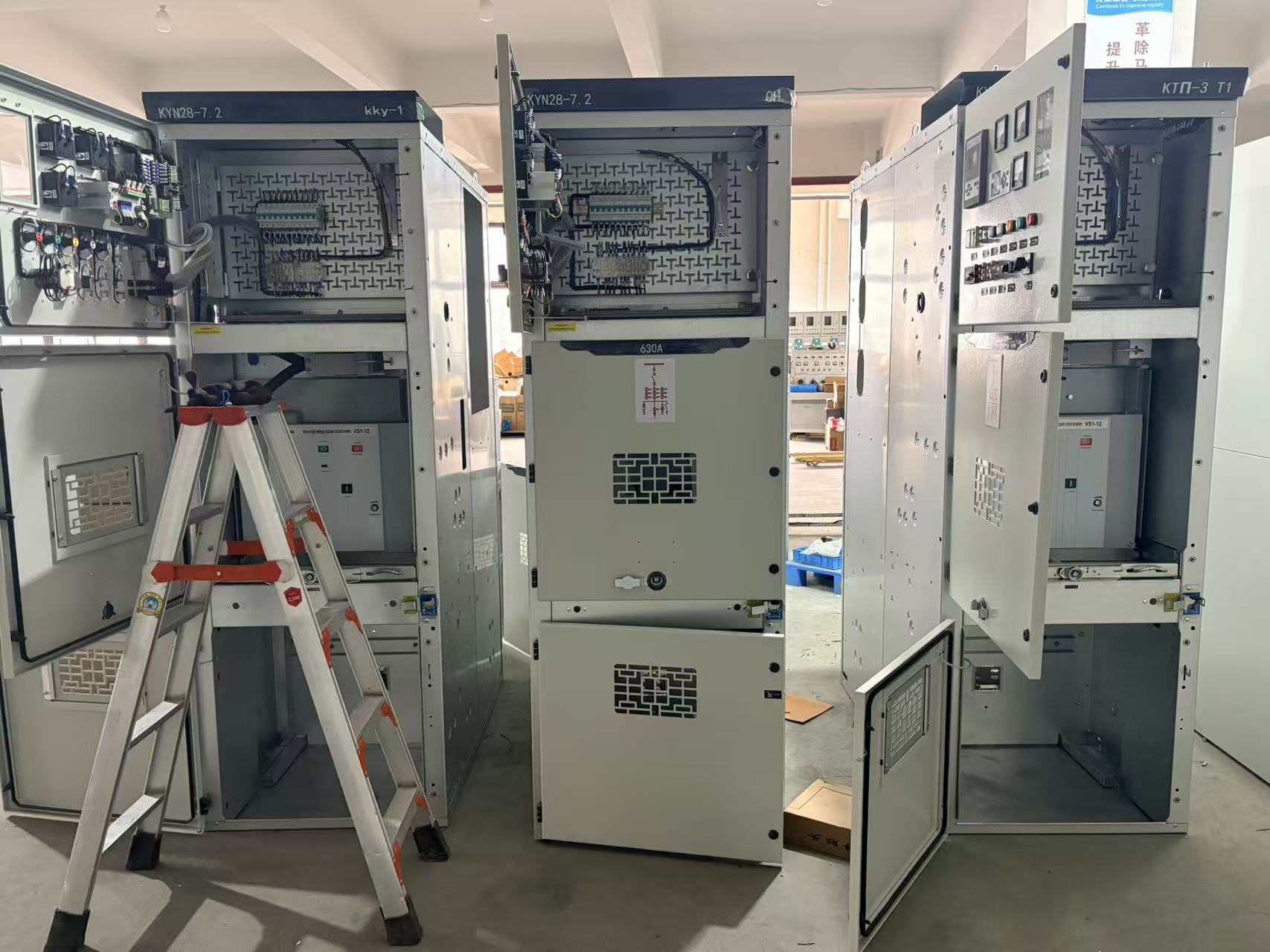
Ask for a factory tour or detailed photos of the assembly area. Pay attention to busbar alignment, weld consistency, and whether they use verified components from reputable suppliers. Request test reports from similar panels, not just a generic type-test certificate.
High-voltage equipment rarely fails on a schedule. A local support team can reduce downtime by offering faster onsite diagnostics, spare parts, and retrofit services. If the manufacturer is overseas, clarify who handles warranty claims and how quickly they can dispatch an engineer.
Standard panels won't fit every substation layout or protection scheme. A capable partner should be willing to adjust busbar ratings, enclosure dimensions, ingress protection, or relay settings without treating every change as a costly special. The right manufacturer asks about your operating conditions before quoting.
Speak with their long-term customers, especially those running equipment in harsh environments like coastal substations or mining operations. Ask for failure rate data and mean time between failures if available. Also check whether their design has been independently reviewed or certified by a recognized body.
Vague answers about testing procedures, reluctance to share reference projects, extremely short lead times that seem too good to be true, and no clear escalation path for technical issues. Another warning sign is a supplier that only wants to talk about price and not about your protection requirements.
A lower purchase price can be offset by delayed spare parts, expensive emergency call-outs, or limited technical documentation. Reliable after-sales support keeps maintenance windows short and prevents small issues from becoming major outages. Factor in service response time and spare parts availability when comparing bids.
In-house testing labs are a strong indicator because they allow the manufacturer to catch insulation weaknesses and thermal issues before shipping. It also speeds up routine and type tests. However, still confirm the lab is accredited or at least follows IEC/ANSI procedures with calibrated equipment.
Conclusion
During a substation build, I learned the hard way that switchgear shortcuts surface only when it's too late. A manufacturer's glossy datasheet means nothing without the right test reports—ask for temperature rise, mechanical endurance, and short-circuit results, not just a type test certificate. Equally critical is their service radius: if a technician has to fly across the country, your downtime stretches from hours to days. A local response team changes the entire reliability equation.
Arc flash ratings are often treated as a badge of safety, but they say little about how a breaker actually clears a fault under real conditions. The same goes for customization—bespoke designs frequently become a maintenance nightmare, while proven standard configurations deliver better long-term performance. And don't be dazzled by smart sensors bolted onto a weak mechanical frame; no amount of digital monitoring fixes a flawed breaker design. Choosing a high-voltage switchgear partner means looking past the marketing and verifying the engineering reality.
Contact Us
Contact Person: Doreen
Email: [email protected]
Tel/WhatsApp: 8618057712366
Website: https://www.liugaopower.com/