

Good Spinning Masterbatch: How to Pick the Right One
2026-07-28
Ever wondered why some plastic products pop with vibrant, long-lasting color while others fade or streak? The secret often lies in the spinning masterbatch. Choosing the right one isn’t just about picking a shade—it’s about compatibility, dispersion, and performance. That’s where Xinwancai comes in: with a focus on high-quality formulations, we help you avoid costly trial and error. Let’s break down what makes a good spinning masterbatch and how to select one that truly delivers.
Spinning Masterbatch Basics You Can’t Overlook
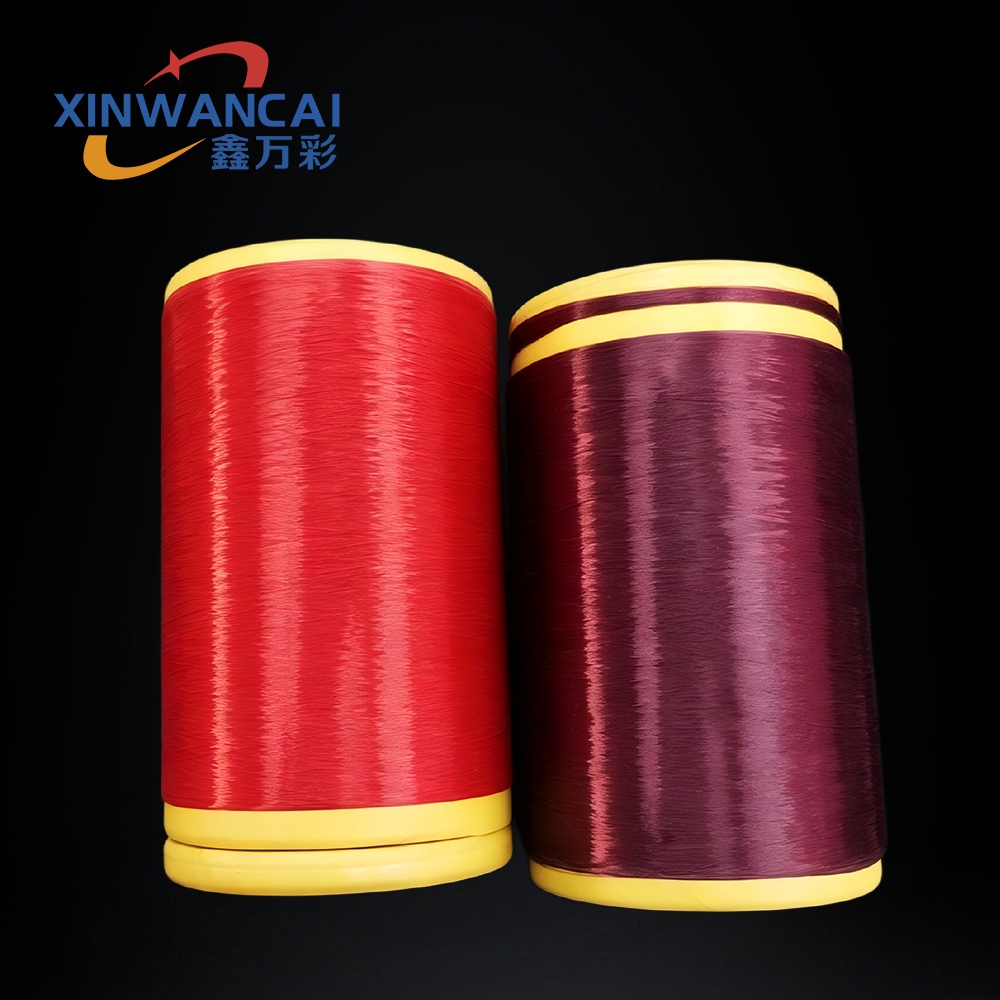
At its core, spinning masterbatch is a concentrated mixture of pigments or additives encapsulated in a carrier resin, designed to be blended with a base polymer before extrusion into fibers. Unlike surface dyeing, the masterbatch disperses evenly throughout the filament, ensuring color fastness and functional properties that won’t wash or wear away. The process starts with selecting a carrier that’s chemically compatible with the main polymer—typically polypropylene, polyester, or nylon—so the final fiber retains its strength and uniformity. Getting this compatibility wrong can lead to breakage during drawing or inconsistent shade, which is why every formulation begins with resin matching.
What makes spinning masterbatch both an art and a science is the demand for absolute dispersion. Agglomerates—tiny clusters of pigment—act like weak points in the fiber, causing snapping on the spinning line or visible speckling in the final textile. To avoid this, masterbatch producers mill the pigment down to sub-micron sizes and treat surfaces to prevent reagglomeration during melt blending. They also balance the melt flow index carefully: too high and the color streaks, too low and the extruder pressure spikes. It’s a tightrope walk that directly impacts productivity, which is why operators obsess over these parameters.
Beyond color, modern spinning masterbatches often carry functional additives—UV stabilizers for outdoor textiles, flame retardants for safety garments, or antimicrobial agents for activewear. Adding these through masterbatch instead of topical finishing embeds the protection deep within the fiber structure, extending the lifespan and performance of the end product. The key is to dose them at just the right let-down ratio, usually between 2% and 6%, to avoid altering the fiber’s mechanical properties. Skimping here might save a few cents upfront but risks returns on quality grounds—a trade-off experienced spinners never make.
Key Performance Factors That Actually Matter
When measuring success, many organizations drown in vanity metrics that look impressive on dashboards but offer little insight into real progress. The factors that truly move the needle are often hidden in plain sight—like consistent customer problem resolution, team adaptability under pressure, and the speed at which lessons from failures are converted into process improvements. These elements rarely make the quarterly report, yet they compound over time to separate industry leaders from the rest.
Another underappreciated factor is decision-making velocity without sacrificing quality. It’s not just about being fast; it’s about reducing the friction between insight and action. Teams that empower frontline employees to make judgment calls, and then systematically review those calls for learning, build a competitive moat that no algorithm can replicate. Similarly, the ability to maintain focus on the few initiatives that truly matter—while gracefully deprioritizing distractions—often decides whether strategy gets executed or simply exists on paper.
Lastly, paying attention to energy and cognitive load across teams has become a leading indicator of sustainable performance. Burnout erodes creativity and decision quality long before it shows up in turnover rates. Balancing intense work with genuine recovery, and designing workflows that reduce unnecessary context-switching, are performance multipliers that traditional KPIs ignore. These human-centered factors aren’t soft metrics—they’re the hardcore drivers of long-term organizational resilience.
Matching Masterbatch to Your Polymer Type
When selecting a masterbatch, the base polymer compatibility is the first thing to check. Not all masterbatches blend well with every resin; mispairing can lead to poor dispersion, surface defects, or even processing issues. Always match the carrier resin of the masterbatch to your main polymer—for polypropylene, use a PP-based masterbatch; for polyamide, use a PA carrier. This ensures the additive or color integrates seamlessly without weakening the material's structure.
Temperature plays a pivotal role too. A masterbatch designed for low-melt polymers like LDPE may degrade if used in high-heat engineering plastics, while a high-temperature carrier might not melt properly in a low-temperature process, causing visible specks. Check the melt flow index and processing window to keep everything aligned.
Finally, consider the masterbatch's purpose. Functional additives such as UV stabilizers or flame retardants must be chosen carefully, as some can react differently depending on the polymer matrix. A little testing goes a long way—run a small batch first to observe color accuracy, dispersion, and mechanical properties before scaling up.
Dispersion Quality and Its Hidden Impact
The way pigments or fillers separate and spread within a base material might seem like a minor detail, but it can quietly reshape the final properties of a product. When dispersion falls short, agglomerates scatter unpredictably, creating weak points that compromise durability, appearance, or performance. This subtle unevenness often stays hidden until stress, weather, or time exposes the flaws—cracks in a coating, faded patches in plastics, or inconsistent strength in composites. What's striking is how often this root cause is overlooked, even by seasoned formulators, simply because the symptoms appear far downstream from the mixing step.
Beyond the obvious mechanical failures, incomplete dispersion has a sneaky economic footprint. Small clusters of undispersed material act as stress concentrators, meaning more high-cost additives are needed to hit the same performance targets. The hidden hit can ripple into energy costs too: longer blending cycles or additional passes through mills burn extra power without achieving the sleek uniformity that was intended. In color-critical applications like automotive paints or cosmetic emulsions, even a tiny fraction of poorly dispersed particles can shift hues or create surface defects that demand rework, quietly eating up margins that could have been preserved with tighter control upstream.
The difficulty here is that dispersion quality rarely announces itself with a single measurable number. It's a pattern formed by countless micro-interactions between particle surfaces, carrier fluids, and mixing energy. When done right, it rewards you with a product that ages gracefully and handles predictably—but its influence stays mostly invisible until you compare a batch where dispersion was an afterthought to one where it was deliberately optimized. That lag between cause and effect is probably why it’s still treated as a backstage issue, even though it often makes the difference between a standard result and something that genuinely holds up.
Color Consistency Without the Guesswork
Chasing consistent color across screens, prints, and fabrics usually feels like gambling with a poorly shuffled deck. You tweak one monitor, only to find the same image looks like a faded photocopy on another. Designers waste afternoons second-guessing their choices, re-sampling swatches that never truly match, and eventually settling for "close enough" because nothing else is practical.
What if your palette didn’t rely on eyeballing hex codes under different ambient light or hoping the printer’s mood is good? Solid color management starts with calibrated hardware, sure, but the real leap is treating color as a language your tools speak natively—not a translation you have to babysit. Using device-independent profiles and pre-built rendering intents means the deep teal you selected on a laptop at 2 a.m. arrives the same on coated stock or cotton, without you micromanaging the journey.
Testing Methods Smart Buyers Use Before Committing
Before making a major purchase, experienced buyers adopt a hands-on approach that goes far beyond reading reviews. They might spend time physically inspecting the product, testing its key features under real-world conditions, or seeking out demo units. This tactile investigation reveals flaws that glossy marketing can easily hide, such as uncomfortable ergonomics, confusing interfaces, or materials that feel cheaper than expected. It’s about trusting what you feel and see, not just what you read.
Many also run comparative tests, pitting the item against similar products they already own or can access. For electronics, this could mean measuring actual battery life away from manufacturer claims; for tools, it might involve tackling a small project to gauge performance and durability. They pay close attention to minor details that signal long-term reliability—how buttons click, how seams are finished, or how the product handles repeated use. This practical scrutiny helps separate clever design from genuine utility.
Finally, smart buyers tap into community wisdom without blindly trusting aggregate ratings. They’ll look for consensus on specific strengths and weaknesses across forums, social media groups, and long-term owner reports. They focus on patterns: if multiple users independently highlight the same defect or praise the same hidden advantage, that’s data worth factoring in. By combining personal testing with targeted research, they build a multi-angle view that no single review or spec sheet can provide.
FAQ
It’s not just about adding color. A good masterbatch ensures uniform pigment distribution, prevents filament breaks, and maintains the mechanical properties of the yarn. The wrong one can lead to clogged spinnerets, inconsistent shades, and weak fibers—basically, a production nightmare.
The best way is a small-scale trial. Run it through your extruder and check the pressure build-up over time—if the filter pressure rises too fast, the dispersion is poor. Also, examine the extrudate for specks or streaks. A reliable supplier will provide dispersion test reports and even let you run a trial batch.
Absolutely. If the carrier resin doesn’t match your base polymer, you’ll have microscale separation that weakens the fiber. For polyester, use a polyester-based carrier; for nylon, use a nylon-compatible one. This isn’t negotiable if you want consistent quality.
Consider your processing temperature. If you’re working with high-melt polymers like nylon or PET, the masterbatch must withstand those temperatures without degrading or causing discoloration. Ask for heat stability curves—a good masterbatch should show minimal color shift after holding at your process temp for the average residence time.
Insist on a pre-shipment sample from the actual production batch—not a lab-made sample. Run a filtration test to measure the filter pressure value (FPV). Also, spin a small amount and check the tenacity and elongation of the resulting yarn. Any drop in these values hints at compatibility or dispersion issues.
Watch out for inconsistent lot-to-lot coloring; if they can’t provide a color measurement report (like Delta E values) for each batch, that’s a warning. Also, if they dodge questions about carrier resin type or seem reluctant to share technical data, walk away. Good suppliers treat your success as their own.
Functional masterbatches—like UV stabilizers, flame retardants, or antimicrobials—carry active additives that must survive processing and still perform. You’ll need to test the end properties: UV resistance via accelerated weathering, flame retardancy via LOI or UL-94, and so on. Don’t just take the supplier’s word; verify.
Not necessarily. Some premium brands charge for reputation, not performance. Factor in the let-down ratio: a cheaper masterbatch that needs 5% loading might cost more overall than a concentrated one used at 2%. Calculate the cost per kilogram of finished fiber, and always weigh it against performance.
Conclusion
Picking a good spinning masterbatch goes far beyond just matching a color chip. It starts with understanding how the carrier resin interacts with your base polymer—if there’s a viscosity mismatch or incompatibility, even a perfectly ground pigment will cause filament breaks and uneven dye uptake downstream. Many overlook the fact that dispersion quality isn’t just about visible specks; poor micromixing can lead to weak points that only show up during winding or knitting. You need to evaluate particle size distribution with a grindometer, yes, but also simulate your actual spinning speed and pressure conditions, because what looks fine on a lab press can clog spinnerets in a high-speed POY line. And don’t assume one masterbatch fits all polyesters or nylons—additive packages, melting points, and crystallinity behavior differ enough that a formulation optimized for PET dope-dyed yarn might fail spectacularly in a PA6 microfilament process.
Consistency is where many suppliers fall short. Smart buyers run accelerated trials not just on fresh samples but on multiple production lots—checking filter pressure rise behavior and measuring colorimetric ΔE with strict tolerances under controlled tension. A subtle shift in pigment concentration or a carrier resin change can ruin an entire knitting or weaving campaign without anyone catching it until the fabric is inspected under daylight. Really thorough testing includes keeping a retained sample chain, so if a shade drift appears months later, you can trace back to which drum or batch was used. Ultimately, the right masterbatch partner doesn’t just sell you pigment pellets; they provide process support, rheology data, and a track record of on-time color matching that proves they understand how their product behaves in your exact extrusion environment.
Contact Us
Contact Person: JACK
Email: [email protected]
Tel/WhatsApp: 86 18650130917
Website: https://www.xinwancai.com/