

Custom Stainless Steel Protective Film Manufacturer: Durable Solutions for Every Surface
2026-11-03
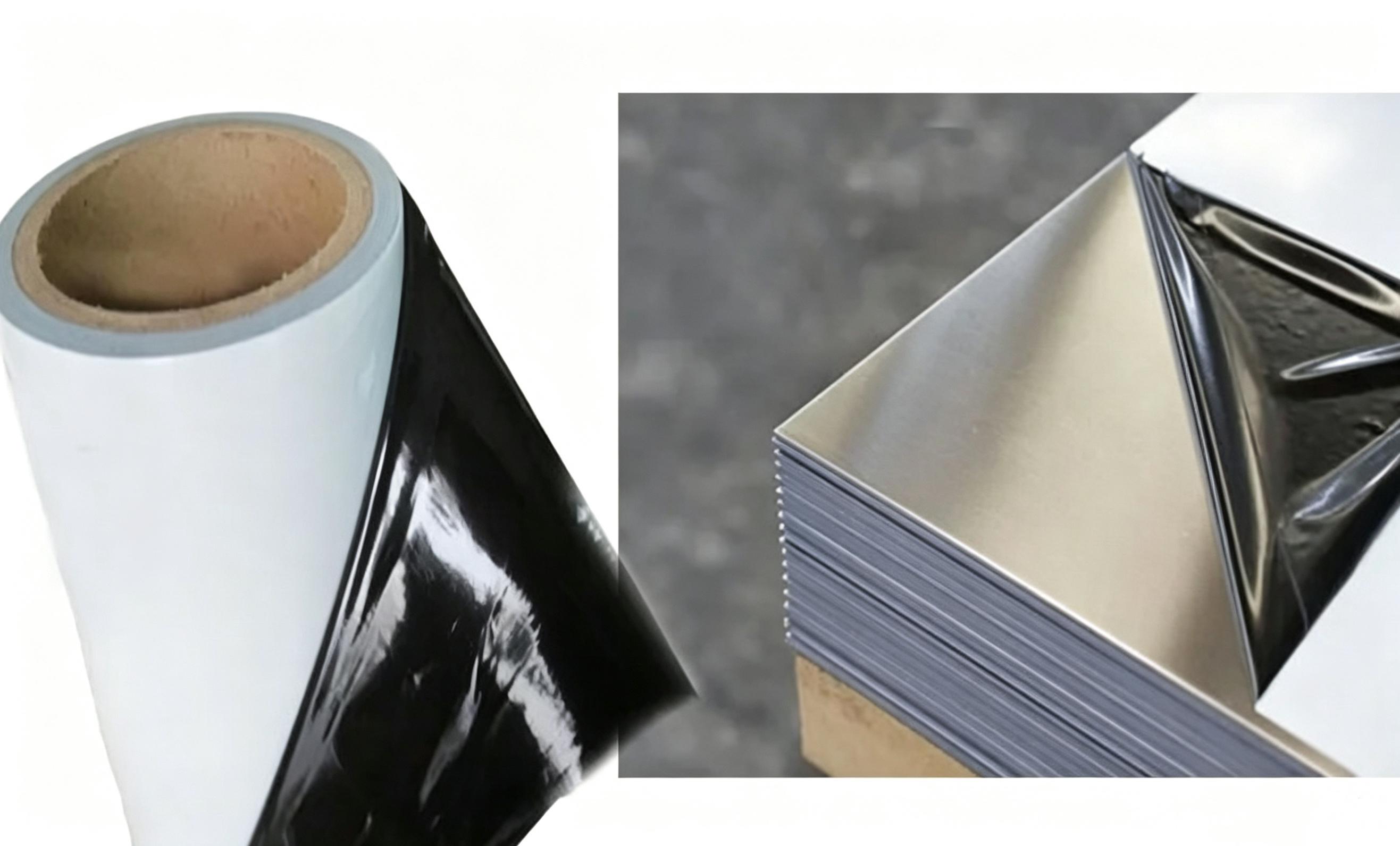
Scratches and stains on stainless steel aren't just cosmetic—they're costly. Shire engineers custom protective films that survive fabrication, transport, and installation without residue or adhesive failure. From mirror finishes to brushed textures and perforated panels, our durable solutions are precision-cut to your exact specs. Ready to see how a tailored film protects every surface and cuts rework costs? Let's dive in.
When Off-the-Shelf Films Fall Short
It’s tempting to reach for a ready-made film, especially when deadlines loom and suppliers promise quick delivery. But standard options often fail in subtle ways—poor adhesion on textured surfaces, limited temperature tolerance, or rapid degradation under UV exposure. These shortcomings don’t just cause immediate failures; they quietly drive up long-term maintenance costs and force frequent replacements.
Designers frequently discover that off-the-shelf films dictate their choices rather than support them. A project that needs a specific thickness, optical clarity, or chemical resistance may end up compromised because the nearest catalog product is “good enough.” Over time, teams adapt their designs to fit available films instead of finding a film that fits the design—a backwards approach that limits innovation and performance.
The real cost of settling for generic films shows up in hidden places: unexpected downtime, inconsistent batch quality, and warranty claims that trace back to a material never intended for the application. Once teams recognize these patterns, they often realize that a custom or semi-custom film—though initially more expensive—pays for itself through reliability and reduced rework. The shift in thinking isn’t just about materials; it’s about refusing to let a stock product define what’s possible.
Matching the Exact Texture, Not Just the Size
The difference between a cake that looks right and one that feels right often comes down to something subtle: the crumb. You can follow every measurement, hit the exact pan size, and still end up with a texture that misses the mark. Instead of chasing the shape, focus on how the batter behaves as you fold, how it pours into the pan, and how the surface springs back under your finger. These small signals tell you far more about the final bite than a ruler ever could.
When you stop comparing your bake to a photograph and start listening to the sounds it makes—the gentle crackle of a cooling top, the soft tear when you pull a slice away—you begin to notice what most recipes leave out. A dense loaf and a light sponge can share the same dimensions, yet they carry completely different moods. Matching the exact texture means training your hands to recognize resistance, your eyes to spot the moment a batter turns from glossy to matte, and your nose to catch the shift from sweet flour to toasted edges.
This doesn't require special tools or a pastry chef's palate. It asks for repetition with attention. Bake the same base three times, altering only one variable: how long you cream the butter, how gently you stir in the dry ingredients, how long you let the batter rest before it hits the heat. You'll quickly build a mental library of textures—tender, tight, airy, fudgy—that no written instruction can fully convey. That's where the real skill lives, and once you have it, the size takes care of itself.
Built to Take Scratches Before They Reach the Steel
Every scrape tells a story, but with this finish, the story ends before it begins. The outermost layer is engineered to absorb the kind of daily abuse that would normally leave a visible mark—keys grazing a pocket, a zipper catching at just the wrong angle, the rough edge of a workbench. Instead of biting into the metal underneath, these encounters glance off a surface that gives just enough to shrug them away.
Think of it as a sacrificial skin, but one that doesn't look sacrificial. It stays intact, maintains its texture, and keeps the steel beneath looking box-fresh. We tested it against the usual suspects: coins, belt buckles, even the occasional dropped tool. The scratches that do appear tend to be shallow, and they blend into the matte grain rather than screaming for attention.
What you get is a piece of gear that ages on your terms. The steel stays protected until you decide it's time to show some character—and because the top layer takes the hit, that character arrives slowly, almost reluctantly. It's the difference between a tool that looks beaten after a month and one that still turns heads after a year.
From Cleanroom Lines to Jobsite Dust
The same precision that keeps semiconductor fabs particle-free ends up scattered across a construction site in ways no one plans for. Cleanroom protocols demand controlled airflow, sticky mats, and head-to-toe coverings, yet once materials leave that bubble, the real world takes over. Sawdust, drywall fines, and concrete slurry don't care about ISO classifications—they drift into every seam and settle on every horizontal surface.
On the jobsite, dust isn't just a nuisance; it's a slow-moving variable that changes how adhesives bond, how coatings cure, and how long equipment lasts. A spec written for a pristine lab rarely survives contact with a windy afternoon or a forklift dragging debris across the floor. The gap between what was engineered indoors and what gets built outdoors shows up in callbacks, warranty claims, and the occasional silent shrug from a crew that's seen it all before.
Bridging that gap means treating dust control as a design input, not a housekeeping afterthought. Temporary enclosures, negative air machines, and aggressive sweeping schedules help, but they only work if someone treats the transition from cleanroom to field as a real boundary to manage. Otherwise, all that careful upstream work just becomes a fine layer of grit on a finished floor.
Prototyping Without the Usual Lead Time
Traditional prototyping waits on tooling queues and supplier schedules. But when you need a tactile part in your hand by tomorrow, those lead times collapse the entire purpose. The shift is to treat prototyping as an internal capability, not a procurement event. Small-scale CNC work, in-house 3D printing, or modular fixturing lets a design team iterate on real geometry within hours. The advantage isn't just speed—it's the freedom to make wrong turns and recover without burning weeks.
What makes this practical is a conscious reduction in surface finish expectations. A prototype doesn't need to pass cosmetic inspection; it needs to answer a functional question. By separating form from finish, you can skip polishing steps, use softer tooling, or accept visible layer lines. The result is a part that communicates the same structural and assembly behavior as the production version, but appears days after the sketch, not months. Engineers who embrace this approach stop treating prototypes as precious artifacts and start using them as disposable learning tools.
The real bottleneck shifts from manufacturing to decision-making. When lead time drops to a single day, teams can run multiple design loops in a week. That pace forces clearer test criteria and faster failure analysis. It also exposes weak spots in assembly logic early, before expensive tooling commits you to a path. Prototyping without the usual lead time doesn't just remove waiting—it changes how confidently a team can move from concept to commitment.
A Film That Peels Clean, Even After Months
There’s a particular frustration with most protective films: they promise easy removal, but after a few months you’re left scraping at brittle shards and scrubbing adhesive ghosts off the surface. This one doesn’t do that. Leave it in place through heat, cold, or a few months of daily handling, and it still lifts away in a single, unbroken sheet. The edges don’t crumble, the backing doesn’t split, and the surface underneath looks exactly as it did on day one.
The reason comes down to how the adhesive layer is cross-linked and the film is cast. Instead of curing into a brittle state or slowly bonding to whatever it touches, the polymer stays flexible and the adhesive keeps its low-tack grip. When you start to peel, the force stays at the interface rather than tearing through the film itself. That’s why a six-month-old application comes off as cleanly as a two-day-old one.
That kind of reliability matters when you’re protecting something temporarily—a painted surface during a renovation, a screen during a move, equipment that gets loaned out, or a vehicle wrapped for a season. You’re not budgeting time for cleanup or worrying about residue that won’t budge without solvents. You just peel, and it’s gone.
FAQ
It starts with the adhesive system. We formulate a low-tack, high-shear adhesive that grips brushed and mirror stainless steel without leaving residue, even after months outdoors. The film itself is a multi-layer polyurethane with UV inhibitors, so it resists yellowing and edge lift on curved panels. We also match the film thickness to the surface profile—thicker for high-traffic areas, thinner for decorative trim.
Yes. We run both roll-to-roll and sheet-fed converting, so we can supply widths from 50 mm up to 2,000 mm and cut sheets to exact lengths. For architectural projects with non-standard mullion widths, we often add a scored liner for easy hand application. Send us a drawing and we'll produce a sample within five working days.
Our standard removable grade is rated for 12 months of outdoor exposure, but we've tested it through two full summers in coastal environments without residue or ghosting. The key is the adhesive's clean-peel formulation—it stays stable from -20°C to 80°C, so removal is consistent whether you pull it off in winter or after heat soaking.
While it's designed for stainless, the same film works on anodized aluminum, coated metal panels, glass, and some high-gloss plastics. We've supplied it for elevator interiors, commercial kitchen equipment, and even polished stone countertops during construction. The film conforms well to slight textures, but for very rough powder coats we recommend a higher-tack version.
No—our clarity is above 92% light transmission for the standard film, so it's nearly invisible on brushed steel. For mirror finishes, we offer an ultra-clear grade with a specially smooth adhesive layer that avoids the orange-peel effect you sometimes see with cheap films. If you need to inspect the finish through the film, that's no problem.
We carry 50, 80, and 120 micron films. 50 micron is for indoor applications and short-term transit protection. 80 micron handles most exterior construction and renovation work. 120 micron is for heavy abrasion, like protecting stainless cladding while scaffolding is moved around. We can also laminate two layers for extra impact absorption on high-end architectural panels.
Yes, we do flexo and digital printing on the film surface or on the liner. Many contractors ask for a grid pattern to help with alignment on large panels. For branding, we can print a subtle logo repeat without affecting the film's clarity. The inks are UV-stable and won't transfer to the steel.
For custom widths and lengths, our minimum is typically 500 square meters per specification. For standard stock sizes, we can ship as little as one roll. We understand that prototypes and small architectural mock-ups need material quickly, so we keep a range of ready-to-ship sizes in our warehouse.
Conclusion
Most stainless steel arrives with a thin film already in place, but that factory-applied layer rarely survives real handling. Brushed, embossed, or mirror-finished surfaces each react differently to adhesive and abrasion, and a generic sheet often leaves residue, lifts at the edges, or fails to grip fine textures. A custom manufacturer approaches protection as an engineering problem, not an afterthought. By matching the film's thickness, tack level, and elongation to the exact surface profile, the protection conforms without bridging over recessed grain or dulling a polished reflectivity. The result is a barrier that takes the brunt of scuffs, tool contact, and sliding friction long before any damage can reach the steel underneath.
That same tailored approach extends to where the steel is fabricated and installed. Cleanroom assembly lines demand low outgassing and particle control, while a dusty jobsite calls for a film that resists peeling under wind and grit. Instead of forcing one product into every scenario, the manufacturer adjusts the adhesive system and film chemistry to fit the environment. Prototyping runs also benefit from short lead times that let a shop test coverage on a few panels before committing to full production. After months of exposure, the film still releases in one piece — no scraping, no sticky ghosts on the surface. That combination of precise fit, tough protection, and clean removal is what separates a truly custom solution from another roll of plastic.
Contact Us
Contact Person: Jack Xu
Email: [email protected]
Tel/WhatsApp: 8615257328825
Website: https://www.temporaryprotectivefilm.com/