
Custom Non-Woven Tote Bags Are the Practical Promotional Essential Your Brand Needs
2026-11-16
Promotional products usually promise visibility but rarely deliver it past the first week. Custom non-woven tote bags break that pattern: they’re light, sturdy, and woven into everyday routines in a way a pen or keychain never will be. Yet the difference between a tote that gets used and one that gets tossed often comes down to the details. That’s where Top Packaging turns a simple bag into a practical promotional essential your brand can actually rely on.
The Reusable Bag That Quickly Becomes a Daily Habit
Most reusable bags end up forgotten in a drawer or the back of a car, but this one earns its spot by the front door. The material feels closer to a broken-in cotton canvas than stiff polyester, so it softens with each trip instead of fighting you at the checkout. After a week, reaching for it becomes as automatic as grabbing your keys.
The trick is that it folds into a flat, palm-sized rectangle and stays that way without velcro or snaps wearing out. You can toss it into a jacket pocket, a laptop sleeve, or the tiny gap next to the gear shift. Because it is always within reach, the friction of remembering disappears, and the bag quietly replaces the pile of single-use plastic that used to accumulate under the sink.
Over time, small details make the habit stick: wide shoulder straps that do not dig in, a flat bottom that keeps a milk carton upright, and a quick-dry lining for the occasional leak. It stops being a special item you save for grocery day and becomes the default thing you carry, whether picking up a book, a few vegetables, or an unexpected takeaway dinner.
Why Most Promotional Items End Up in a Drawer—and How This One Doesn’t
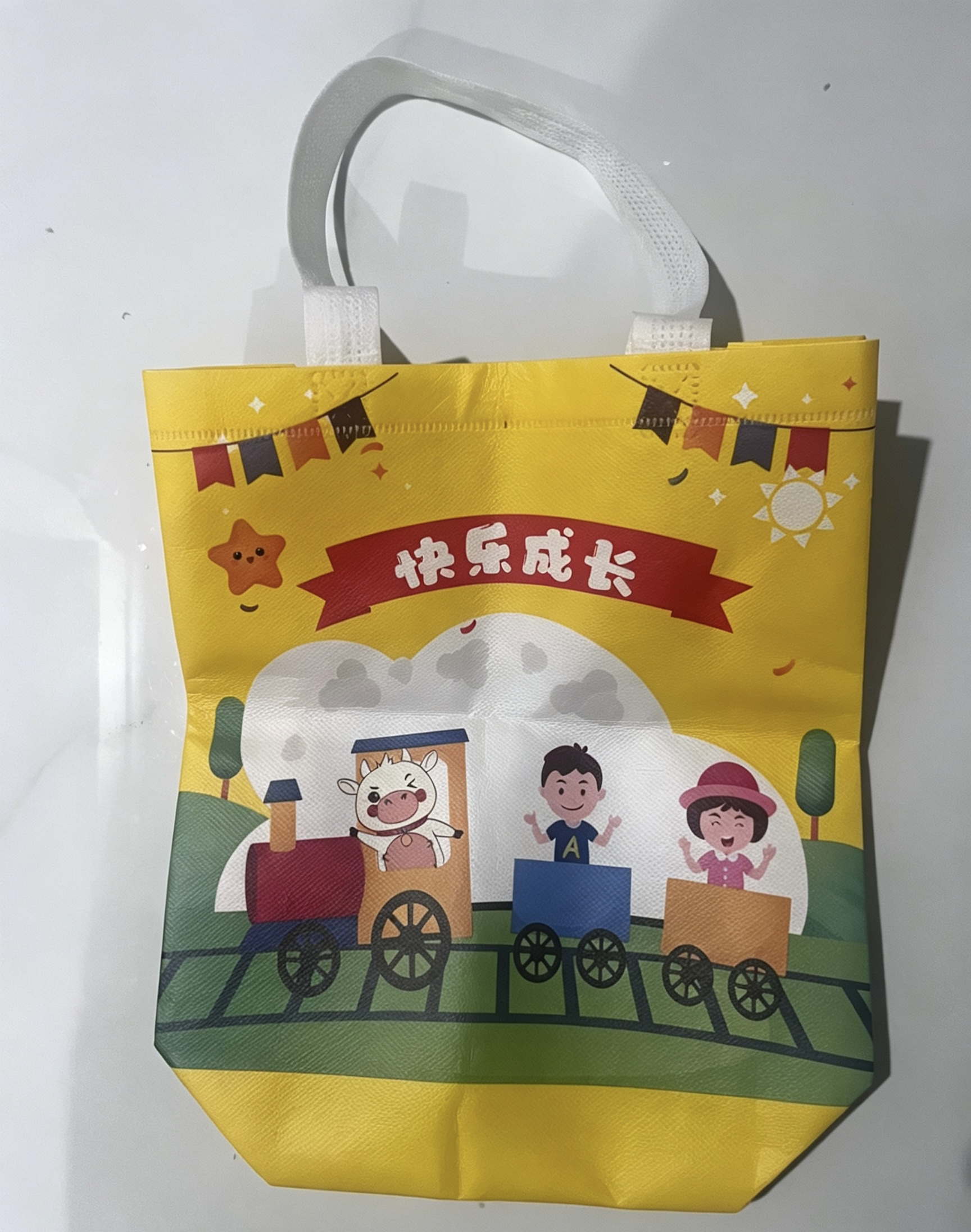
Most giveaways die a quiet death because they ask nothing of the person who receives them. A stress ball shaped like a logo, a keychain too bulky for a pocket, a pen that skips after two signatures—these things don't solve a problem, so they get dropped into the nearest drawer and forgotten. The issue isn't that people dislike free stuff. It's that the item has no job to do once the event ends.
This one is built around a daily habit instead of a brand moment. It's light enough to carry, useful enough to reach for on a regular basis, and finished well enough that it doesn't feel disposable. Because it earns a spot in someone's routine, it stays visible without being loud. It doesn't rely on a logo to justify its existence; it would still be worth keeping even if it were blank.
That shift changes how long it survives. A drawer item gets kept out of guilt. A useful item gets kept because choosing anything else would be less convenient. When the object is genuinely better at what it does, your name gets to stay in the room—not buried under old cables and expired coupons.
The Understated Durability of Non-Woven Fabric
Many people associate light, inexpensive materials with short lifespans, but non-woven fabric quietly challenges that assumption. Its strength does not come from visible interlocking threads; instead, fibers are bonded or entangled in a way that spreads stress over a wide area. This gives the material a surprising resistance to tearing even when it is thin enough to feel almost weightless.
In daily use, the durability shows up in small but meaningful ways. Non-woven fabric does not fray at the edges the way woven textiles do, so cuts and punctures tend to stay localized rather than spreading. It also holds its shape through repeated handling, moisture exposure, and temperature shifts, which makes it a practical choice for packaging, medical barriers, and filtration layers that have to keep performing without drawing attention to themselves.
What really sets it apart is that it lasts without needing to look tough. Beneath its soft surface there is a reliable resistance to abrasion and chemical breakdown, especially in polypropylene-based grades. That combination of low weight and long-term stability is why the material often ends up in places where failure would be costly but nobody notices it until it is gone.
Design Choices That Make People Want to Carry Your Logo
People carry things that say something about them before they speak. A logo earns that job when it stops acting like a sticker and starts behaving like a detail: small enough to feel private, sharp enough to survive a thumbnail, and quiet enough to sit next to other brands without shouting. The moment someone folds your tag into their daily routine, the design has to reward that closeness instead of interrupting it.
That usually means ignoring the urge to enlarge. A mark on a tote, cap, or notebook works best when it feels like a signature rather than a billboard. Matte finishes, tonal embroidery, and slightly off-center placements give the object a sense of being owned, not issued. Color matters less than contrast; a logo in an unexpected tone can make a familiar item feel like a find.
Durability is part of the decision too. If the print cracks after three washes or the tag scratches the neck, no amount of clever geometry will save it. People carry logos that age well, because they are not just carrying a brand—they are carrying a small proof of taste they trust.
One Tote, Dozens of Errands, Countless Brand Sightings
The same canvas tote that carries a laptop to a morning meeting also holds a last-minute grocery run, a damp swimsuit after the gym, and a stack of library books on the way home. Every stop puts the bag in front of a different set of eyes—baristas, coworkers, commuters, neighbors—so the logo gets the kind of quiet repetition paid ads rarely buy.
Because the bag is constantly in motion, it starts to feel like part of the neighborhood rather than another giveaway. That familiarity builds without a hard sell: someone sees it slung over a shoulder at the farmers market, then again near the train platform, and eventually the brand becomes a background detail they recognize without thinking.
One well-made tote ends up doing more than holding things. It turns ordinary movement into a steady trickle of impressions, giving a brand a small but persistent presence in someone else’s daily routine.
High Visibility Without the Heavy Price Tag
Most reflective gear on the market comes with a premium price that doesn't always match the build quality. You end up paying for brand markup, not for better visibility or longer-lasting materials. This lineup flips that pattern by focusing on what actually matters: glass-bead reflective coatings, wide-angle light return, and fabric that holds up after repeated washes. The result is gear that keeps you seen during early morning commutes or late-night walks without forcing you to spend triple digits.
Instead of adding bulky panels or stitching on cheap strips that peel after a month, the design uses a tight weave that spreads reflective elements evenly across the surface. That means no hot spots, no sudden dark zones when a car's headlights hit from the side. The material stays breathable, so you don't trade comfort for safety on sweaty rides or long shifts outdoors.
What really sets it apart is the price-to-performance ratio. You get the same visibility range as gear costing twice as much, but without the fragile zippers, stiff collars, or logos that scream "advertisement." It simply does the job: keeps you visible, stays comfortable, and leaves enough budget for the rest of your gear.
FAQ
It feels noticeably lighter on the shoulder but still carries a surprising amount, so people are more willing to take it along instead of leaving it in a closet.
Most suppliers use screen printing or heat transfer that bonds into the fibers, which means logos stay crisp through regular stuffing and folding.
Unit costs stay low enough to order in bulk without cutting elsewhere, and because the bags get reused often, the cost per impression drops below many short-lived ad formats.
Yes, the fabric's web-like structure distributes weight evenly, and reinforced seams keep the base from splitting when someone packs cans or bottles.
Bookshops, fitness studios, farmers markets, real estate offices, and clinics all find they suit different customers because the bag is neutral enough to fit any brand style.
Check the fabric weight, usually measured in grams per square meter, and ask for a sample before committing. A thicker cloth with double-stitched handles tends to feel far more substantial.
Not at all. People appreciate them for convenience first, and the reusable angle becomes a bonus that quietly aligns your brand with less waste.
Keep the logo modest and lean into one strong color block or a simple line illustration. Recipients are more likely to carry a bag that looks like an accessory rather than an ad.
Conclusion
Most giveaways fade into the back of a closet, but a non-woven tote earns a place by the door because it fits daily routines too easily. It gets folded into a work bag, stashed in a car, or hooked near the keys, and before long it becomes the default option for groceries, gym clothes, library runs, and weekend errands. That kind of repeated use is exactly what makes the branding stick: your logo is not shouting from a shelf or screen. It moves through parking lots, train cars, sidewalks, and checkout lines with a quiet consistency that feels natural rather than forced.
The fabric itself does more work than people expect. It handles weight, shrugs off daily scuffs, and holds its shape longer than flimsy plastic alternatives, while still being light enough to carry anywhere. When the design is simple enough to fit someone’s day and practical enough to hold real items, the bag stops being a promotional product and becomes part of a routine. That shift is what keeps a brand visible for months—not through large spending, but through a useful object people genuinely want to keep using.
Contact Us
Contact Person: Shelly
Email: [email protected]
Tel/WhatsApp: 86-577-64286522
Website: https://www.topmovingpad.com/