

Custom Badminton Socks for Players Who Demand Grip, Comfort, and Style
2026-10-21
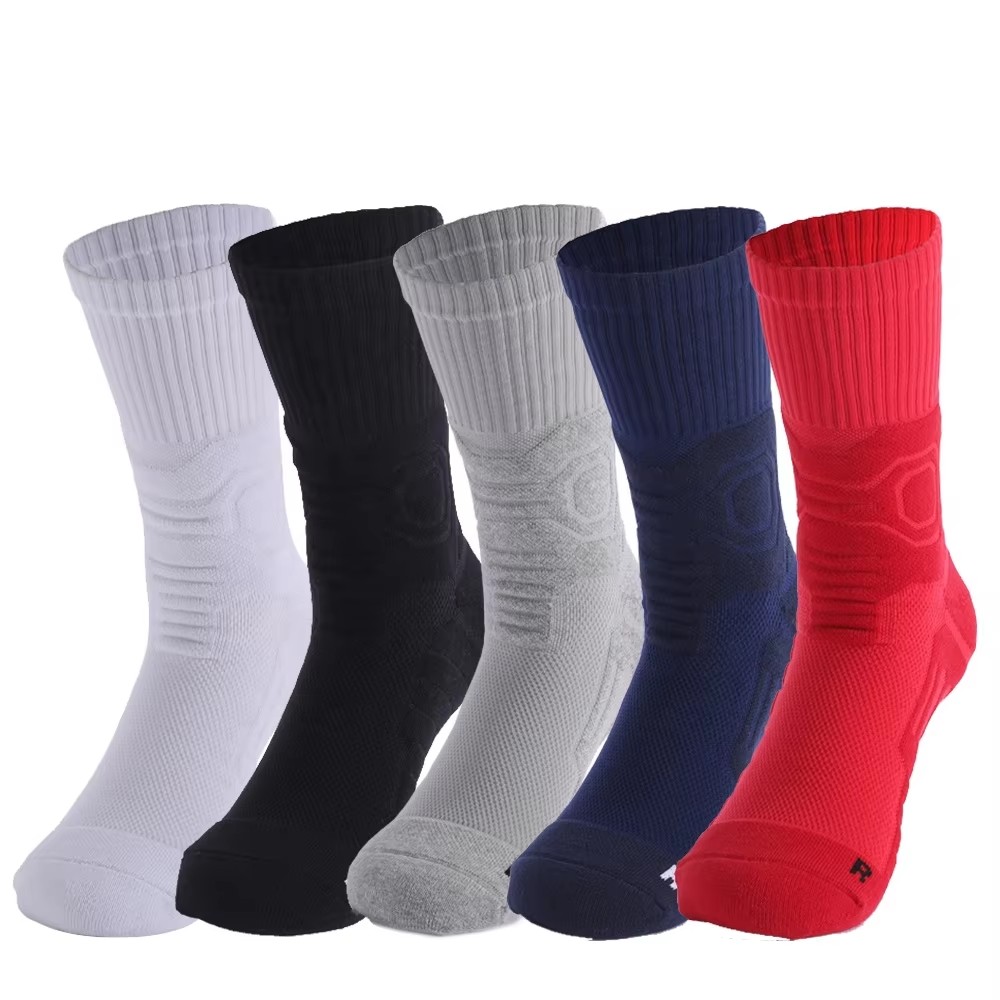
Badminton is a game of abrupt stops, sharp cuts, and explosive push-offs. If your socks can’t keep up, you’ll feel it in every lunge. Generic athletic socks slip and bunch just when you need stability. That’s where custom badminton socks from Mingjun change the equation—built for players who demand grip, comfort, and style on every point. From tailored cushioning to anti-slip zones and colors that match your kit, you can dial in the details that matter. Here’s what to know before you design your perfect pair.
The Sock Sole That Mimics Your Shoe's Tread
The bottom layer of these socks doesn't rely on the usual silicone dots or fuzzy yarn grip. Instead, it's cast with a tread pattern that closely follows the lug layout and flex grooves of a trail shoe. On hardwood, tile, or polished concrete, that shape creates edges your foot can push against in every direction—something flat grips never quite manage. You notice it most when you stop short or twist to grab something off a high shelf; the sock holds its line instead of skidding.
The pattern also changes how pressure sits under your foot. Taller blocks under the heel and ball absorb the initial impact of each step, while the narrower channels between them let the fabric flex without folding under your arch. It's a small difference in thickness, but it stops the sock from bunching inside a slipper or sliding forward when you walk down stairs. After repeated washing, the tread stays bonded to the knit rather than cracking off like printed rubber does.
What separates this from typical non-slip socks is the zoning. The heel uses deeper, wider grooves to catch your weight when you brake, while the forefoot switches to tighter ridges for springing off the toes. That uneven pattern matches the way your foot naturally rolls, so it doesn't feel like you're stepping on a sticky mat. It feels more like a very thin, flexible shoe sole that happens to be made of sock.
Sweat Wicking That Doesn't Quit in the Third Set
Most moisture-wicking claims fall apart right when the match gets interesting. You start the third set feeling fresh, but by the fourth game your shirt is clinging in all the wrong places, and every swing feels like you're dragging a damp towel across your back. This fabric doesn't do that. It keeps pulling sweat away from your skin and pushing it to the surface long after other shirts have given up and turned into wet blankets.
The magic isn't just in the fiber—it's in the way the knit opens up under heat and movement. Think of it like a thousand tiny vents that only activate when your body temperature spikes. That's why it stays calm and breathable during a changeover, then kicks into high gear the moment you start sprinting for a drop shot. The sweat doesn't pool or soak in; it spreads thin and evaporates fast, leaving you dry enough to focus on your next point instead of your clothes.
By the time you're staring down a third-set tiebreak, the shirt still feels almost as dry as when you walked on court. No heavy hems, no cold patches on your lower back, no need to wring it out between games. It's the kind of quiet performance you don't notice until someone else complains about their soaked gear—and you realize you've been playing for two hours without thinking about sweat once.
Padding Where Your Heel and Forefoot Take a Beating
Most shoe padding gets crammed into the midfoot, but that's not where the real abuse happens. Every stride drives your heel into the ground first, and just before push-off, your forefoot takes the full load of your body weight. Padding concentrated only under the arch does little for either of those impact zones.
If you run or stand for hours, check the shoe's interior under the heel and the ball of the foot. You want a slightly denser foam there—not just extra gel dots that flatten after two weeks. The heel area should absorb that initial slam without feeling squishy, while the forefoot padding needs enough resilience to spring back before the next step.
Shoes that truly get this right often use different materials in those two spots. A firmer crash pad under the heel and a more responsive layer under the metatarsals can make a bigger difference than max cushioning everywhere else. Once that localized padding thins out, the shoe may still look fine but stop protecting where you actually hit hardest.
Personalized Sock Art Without Slowing Down Production
Most custom sock programs force a trade-off between creative freedom and line speed. Here, the printing setup reads each design file on the fly, so a batch can jump from a geometric pattern to a photo print to a one-off doodle without pausing for plate changes. Operators stay on schedule because the transition happens in seconds, not shifts.
The trick sits in how the artwork gets mapped to the knit. Instead of requiring flattened, pre-approved templates for every variation, the system accepts gradients, irregular shapes, and full-bleed images directly. That means a single production run can carry dozens of unique pairs while the machines keep their normal pace. The only real limit is how fast someone can upload the next design.
For brands and print shops, this removes the old batch-size penalty. Small runs of personalized socks no longer carry a hidden surcharge for downtime, because the downtime simply doesn't exist. Customers get their own art on a pair of socks, and the floor keeps humming along.
A Fit That Holds Through Every Lunge and Pivot
The waistband doesn’t slide when you drop into a deep lunge. It sits flat against the lower back, moves with your hips, and snaps back without rolling. No adjusting between sets, no tugging at the hem.
Through side pivots and quick direction changes, the fabric stays put. There’s enough give in the thighs to let you sink low, but the compression around the glutes and quads keeps everything supported. The seams are placed away from high-friction zones, so nothing digs into the skin.
After an hour of lunges, squats, and floor work, the fit still feels the same. The knees don’t bag out, and the ankle cuffs stay snug without leaving marks. It’s the kind of hold you stop noticing after the first rep.
Washing Machine Survival for Tournament-Level Wear
Tournament jerseys and base layers take a beating that casual laundry never sees. Grass stains, sweat salts, and the occasional blood smear from a sliding tackle all find their way into the drum. If your machine is going to survive a season of this, it needs more than a gentle cycle and hope. Start by turning every item inside out, fastening zippers, and securing hook-and-loop closures. Loose straps and drawstrings become whips inside the drum, slowly shredding both the fabric and the machine’s seals.
Most damage to washing machines doesn’t come from the clothes themselves but from what’s left in them. A single forgotten mouthguard can crack a plastic outer tub, while metal cleat tips can chip the enamel off the drum. Before loading, shake out each piece and check pockets and cuffs. Use a mesh laundry bag for smaller items like socks, wristbands, and compression sleeves. This not only protects the machine but also keeps elastic from stretching into uselessness.
Detergent choice matters more than most players realize. Heavy-duty sport detergents with enzymes break down protein-based stains, but they can also leave residue that eats away at rubber door gaskets over time. Use the recommended amount, never more, and run an extra rinse cycle when the load is heavily soiled. Every few weeks, run an empty hot cycle with a cup of white vinegar or a washing machine cleaner to clear out odor and buildup. Your machine will thank you by not dying mid-season.
FAQ
Most athletic socks treat badminton as an afterthought. These are built around the sport's specific demands: reinforced heel and toe zones for abrupt stops, a midfoot compression band that keeps the arch from collapsing during lunges, and grip patterns placed exactly where your foot meets the insole during split steps. You notice the difference the first time you push off sideways and your foot doesn't slide half an inch inside the shoe.
You can go as loud or as restrained as you want. We work from any color code, logo, or motif you send, and there's no forced template. Teams often add player numbers on the cuff, a subtle gradient along the sole, or a custom toe cap color. The only limit is what you're willing to dream up, really.
The grip comes from silicone-based traction zones printed on the sole and heel. They make contact with your insole, not your skin, so there's no sticky feeling inside the sock. During a quick shuffle or a deep lunge, that extra friction keeps your foot from floating inside the shoe, which means less wasted energy and more stable landings. It's most obvious on dusty or worn court surfaces where ordinary socks let the foot shift.
They use strategic cushioning rather than just piling on fabric. The forefoot and heel get dense, low-profile padding that absorbs impact from repeated jumps, while the top of the foot and ankle stay thin for breathability and a close fit. You end up with something that feels snug and responsive, not like you're wearing two pairs.
The base is a blend of nylon and spandex with a brushed inner wicking layer. Instead of soaking through, moisture gets pulled away from the skin and spread across a larger surface to evaporate. The toe and heel sections use a slightly different knit that stays surprisingly dry even when your shoes are soaked. By the third set, your feet might be damp, but not pruned or sliding around.
There's a wide ribbed cuff that sits just below the calf, plus a silicone dot band on the inside of the cuff for extra hold. They're designed to stay put through deep knee bends and shoe changes. If you prefer a lower cut, we can do a no-show version with a heel grip tab instead, but it won't ride down as long as the shoe collar isn't too low.
A lot of clubs go with a dark base color, a sharp contrast stripe along the Achilles, and the club emblem on the outer ankle. It reads professional from across the gym but doesn't scream 'template.' Some teams add a subtle pattern in the knit itself, like diagonal ribs or a honeycomb texture, so the socks look custom even from a distance. Matching warm-up socks is also possible, but the court version gets the grip treatment.
Conclusion
Most badminton socks treat your foot like an afterthought, but the moment you push off for a deep lunge, you feel every ridge and groove working against the inside of your shoe. Our custom socks flip that relationship. The sole is engineered with a tread pattern that mirrors the outsole of a typical court shoe, so instead of sliding on a flat knit, your foot locks into the same directional bite you'd expect from the rubber beneath you. That translates into fewer micro-slips on split drops and a cleaner recovery out of the backhand corner. Under the forefoot and heel, we've layered dense, low-profile padding exactly where repeated smashes and jump-outs punish the metatarsals and calcaneus. It's not a bulky sponge; it's targeted cushioning that keeps its shape deep into the third set. Pair that with a moisture-wicking yarn blend that moves sweat off the skin before it pools, and you'll finish a deuce at 19-all without that clammy, blistered feeling that derails your footwork.
Style doesn't take a back seat, either. Because the socks are made to order, you can put your club crest, initials, or a full-color pattern on the leg without adding weeks to the turnaround. The print process bonds directly into the fibers rather than sitting on top, so designs won't crack or fade after the first tournament weekend. Meanwhile, the fit is cut with a slight compression through the arch and a heel pocket that stays put when you pivot to retrieve a cross-court drop. No bunching at the toe, no sagging at the ankle after a sweaty hour. And when the match is over, they go straight into the washer without special handling—the yarns are pre-shrunk and the elastic is tested to survive repeated spin cycles, so a pair that costs a little more than off-the-shelf actually lasts three times as long. For players who expect their gear to perform as hard as they do, that's not a luxury. It's the only way to build a sock.
Contact Us
Contact Person: Tiga
Email: [email protected]
Tel/WhatsApp: 8613058331729
Website: https://www.china-socksfactory.com/