

Cosmetic Bottles Vendor Selection Guide for Emerging Beauty Brands
2026-11-16
Choosing the right cosmetic bottle vendor can make or break an emerging beauty brand. From material quality to minimum order quantities, the pitfalls are plenty—and the wrong choice can quietly erode your margins and brand reputation before you even launch. In this guide, we cut through the noise to help you evaluate vendors like a seasoned buyer, not a first-timer. Along the way, you'll see why brands looking for reliable, design-forward packaging often start with Imagine Craft Packaging—but we’ll also give you the questions to ask any supplier, so you never settle for less than your product deserves.
What "Small-Batch Friendly" Actually Looks Like in a Supplier
A supplier that's actually set up for small batches will tell you their minimum order quantity without making it sound like a favor. They run low-volume jobs on shared or off-peak lines, so you don't get hit with a setup charge that eats the whole budget. Their quotes for 30 or 50 pieces won't simply be the 1,000-piece price with a zero lopped off—someone has actually calculated the labor, material waste, and machine time for that quantity. And they'll ask what you're testing, because a small order usually means you're still figuring things out.
Look at how they handle revisions and logistics. A supplier friendly to small runs will let you adjust a seam, swap a label, or tweak a color after the sample round without pretending it requires a new tooling fee. They're honest about lead times that stretch because your order sits behind a big client's production slot, but they don't disappear when you ask for an update. Some of the best ones keep leftover materials from your run and offer them against the next order, or suggest a slightly different construction that makes a 60-piece order produce less waste than a 50-piece one.
The real test comes after the first order. If a supplier follows up about how the units performed, remembers your product name and previous tweaks, and quotes a reorder without you having to resend every spec, that's a partner who treats small batches as normal work, not a nuisance. They may not always have the lowest unit price, but they save you from overbuying, from paying for mistakes you can't afford at this stage, and from the silent treatment that forces you to start the supplier search all over again.
Why Your Formula's pH Should Dictate the Bottle, Not the Other Way Around
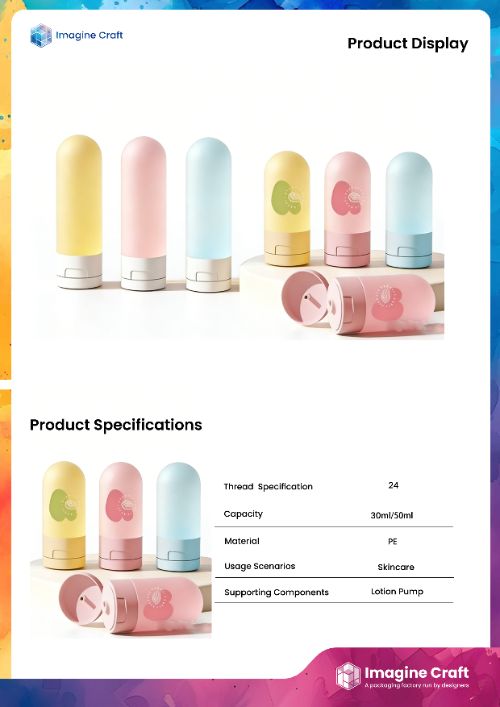
Most brands pick a bottle first because it looks good on a shelf. Then they force a formula to live inside it. That's backwards. The pH of your product isn't a minor detail—it dictates how active ingredients behave, how preservatives perform, and how your skin barrier responds. When the bottle comes first, you end up reformulating around the container instead of optimizing for skin health.
Think about acids and retinoids. They demand specific pH ranges to stay stable and effective. Put them in the wrong packaging—say, a jar that lets air in every time you open it—and the pH drifts. The formula degrades. You're left with an expensive moisturizer that does less than promised. The bottle should adapt to the chemistry, not the other way around.
So before you fall for a frosted glass pump or a minimalist tube, ask what pH your formula needs to actually work. Let that answer choose the materials, the dispensing mechanism, and even the opacity. When pH leads, the packaging becomes a tool for efficacy—not just a pretty face.
Decoding MOQs: When Minimums Are Negotiable (and When to Walk Away)
MOQs look intimidating on paper, but they are rarely carved in stone. If the product is a standard item sitting in a warehouse, many suppliers will drop the stated minimum without much fuss—especially if you accept a slightly higher unit price, pay a deposit early, or combine several SKUs into one order. The key is asking the right way: not 'can you lower it?' but 'what would make a lower MOQ work for you?' That shifts the conversation from yes/no to problem-solving.
Custom or made-to-order goods are a different story. A minimum often exists because the factory has to buy raw materials in bulk, reset a production line, or cover tooling costs. In those cases, pushing too hard on MOQ can sour the relationship or lead to corners being cut. Instead of demanding a lower number outright, try negotiating tiered pricing, partial shipments, or a slightly higher unit cost to offset the supplier's risk. Sometimes the real barrier isn't the quantity itself but the payment terms or lead time tied to it.
Then there are moments when walking away is the strongest move. If a supplier refuses to budge on a MOQ that would leave you holding months of inventory you can't sell through, the math doesn't work—no matter how good the unit price looks. Watch for signs the minimum is being used as a filter to weed out smaller buyers, or that the supplier is already running at full capacity and doesn't actually need your order. In those cases, your leverage is close to zero, and a better-fit partner is usually one conversation away.
The Sample You Receive Is a Preview of Your Brand's Future
When that sample box lands on your desk, it's easy to treat it as just another step in the approval chain. But look closer. The stitching, the weight of the fabric, the way the label catches the light—these details aren't random. They're the earliest signals of how your brand will be remembered once the full line hits shelves. If the sample feels cheap or rushed, that impression will echo through every future order, no matter how polished the marketing becomes later.
Think of a sample as a rehearsal for the real performance. A misaligned seam here, a slightly off shade there—these aren't isolated flaws to fix and forget. They reveal the habits of your production partners and the tolerance levels they assume you'll accept. Ignoring them now means signing off on a future where those same shortcuts appear at scale, multiplied across thousands of units and countless customer unboxings.
The smartest brands don't just approve samples; they interrogate them. They ask what this physical object says about consistency, craftsmanship, and the partner's attention to nuance. Because in a market flooded with lookalike products, the sample is the one moment where you can still change the trajectory before it becomes your reputation.
Sustainability Claims You Can Verify Without a Chemistry Degree
Most verifiable sustainability claims leave a paper trail. A brand that says its cotton is organic or its wood is responsibly harvested can usually point to a certification number or a public registry entry — GOTS, FSC, Fairtrade, OEKO-TEX, Energy Star. Type that number into the certifier's database and you'll see the actual scope, status, and expiry date. If the company won't share a certificate ID or only shows a logo without a link, that's a sign the claim may be borrowed from marketing rather than an audit.
Labels reward specificity. Instead of vague words like "green" or "eco-friendly," look for hard details: the percentage of post-consumer recycled content, the material identification code on plastic, the restricted-substance list on a cleaning product, or the energy consumption figure on an appliance. Those numbers are testable against independent databases and product registries. You can also check whether the packaging mentions a standard method — such as ASTM D6400 for compostability — and then search that standard to see what it actually requires.
Cross-check the company's own reporting. If a site claims "zero waste to landfill" or "carbon neutral delivery," the fine print should name the auditor, the reporting boundary, and the time period. Many third-party platforms and watchdog groups publish scorecards on water use, packaging waste, and labor conditions, often based on public filings rather than lab tests. A quick scan of those records tells you more than a logo without a registry number ever will.
The One Question That Exposes a Vendor's Real Lead Time
Most buyers ask the wrong thing when they want to know lead time. They say "What's your lead time?" and get a rehearsed number. The question that actually reveals the truth is: "Tell me about the last order that shipped late—how many extra days did it take, and why?" Watch the vendor's face. If they can answer quickly with a specific example, they track real performance. If they dodge or say "that rarely happens," you're looking at a sales pitch, not a production reality.
Another version of this is to ask "If I place an order right now, what is the exact date it will leave your dock? And will you put that date in the contract?" A confident vendor with a solid schedule will give you a date and stand behind it. A vendor with hidden bottlenecks will start adding caveats: "it depends on material availability," "we're waiting on a shipment," or "we'll confirm once it's in the queue." Those are signals that their published lead time is just an estimate.
You can also flip the question to expose problems without sounding confrontational. Ask "What's the longest lead time a customer has experienced in the past six months, and what caused it?" Real lead time isn't a single number—it's a range. The bottom of the range is what you're told, the top is what you'll actually get when something goes wrong. Getting the vendor to admit the top end before you commit can save you from production delays down the line.
FAQ
Start with their minimum order quantity and whether they offer stock molds or custom tooling. Many emerging brands get burned by falling in love with a bottle that requires 50,000 units upfront. Ask for their existing catalog first—it often contains shapes you can brand with labels or silk screening without paying for new molds.
Order samples from three or four shortlisted suppliers at the same time. Track how long each takes to respond, whether they ask smart questions about your formula, and if the samples arrive well-packed and consistent. A supplier that is slow or sloppy at the sample stage rarely improves once you place a real purchase order.
Glass, aluminum, and PCR (post-consumer recycled) plastics are solid starting points. If you go with plastic, ask for the exact percentage of PCR content and whether the bottle is recyclable in most curbside programs. Avoid mixed-material designs like a plastic outer with a metal spring inside—they look premium but are almost impossible to recycle.
Domestic suppliers often quote four to eight weeks for stock bottles, while overseas factories may need eight to sixteen weeks plus shipping and customs. But the gap narrows if you need custom tooling, because domestic mold makers can be just as backed up. Always confirm whether the quoted lead time starts after deposit or after artwork approval.
Beyond the unit price, look for tooling fees, plate or screen setup charges, inner plugs or orifice reducers, minimum freight surcharges, and pallet or packaging costs. Some suppliers quote a low bottle price but then charge separately for caps, pumps, or droppers. Ask for an all-in landed cost per completed bottle before you compare.
Yes, but it depends on the supplier. Some have in-house design teams that can adjust neck finishes, wall thickness, or label panels based on your formula’s viscosity and fill line. Others only blow what you already spec. Ask for examples of past projects where they suggested changes that improved function or cut costs—that separates true partners from order takers.
Ask if the supplier can run a compatibility test with your actual formula, not just water. Request data on closure torque, drop tests, and whether the liner or gasket material holds up with oils, acids, or alcohol. If they cannot test, ask for material data sheets and find an independent lab. Never assume a generic PET bottle will survive a high-fragrance or vitamin C formula.
For a first large order, it’s worth the trip or a third-party audit. A facility visit reveals whether they actually have the blow molding lines they claim and whether quality control is systematic or just a final glance. If travel is not possible, request a live video walkthrough of the production line and ask to see their defect rate logs for the last three months.
Conclusion
A supplier that calls itself small-batch friendly should show you exactly how it handles changeovers without burying the cost in your unit price. Ask about their cleaning procedures for short runs and whether they stock common neck finishes. The bottle material also needs to follow your formula's pH, not the other way around. An acidic serum can slowly degrade certain plastics, so test compatibility before locking in a design. When samples arrive, check the threads, the parting line, and the weight consistency. What you see in that single sample is typically the best case scenario for mass production, so treat any flaw as a preview of recurring problems.
MOQs are rarely set in stone for stock bottles, but custom molds shift the math. If a vendor insists on a huge minimum and offers no split-stock option, walking away is often the right call. Sustainability claims should be backed by something you can check, like a certificate for post-consumer recycled content or a side-by-side weight comparison showing less resin per unit. Finally, instead of asking for a lead time, ask when their last order actually shipped late and what caused the delay. That answer tells you more about their production queue than any quoted date.
Contact Us
Contact Person: Sunnie
Email: [email protected]
Tel/WhatsApp: +8615818596517
Website: https://www.imagine-craft.com/