

Cleanroom Equipment Supplier Shares Top Contamination Control Strategies for Pharmaceutical Cleanrooms
2026-09-01
Pharmaceutical cleanrooms run on trust — trust in your air handling, your gowning protocols, and above all, your equipment. But when contamination risks evolve faster than standard operating procedures, where do you turn for strategies that actually hold up? GENO Pharmatech, a cleanroom equipment supplier with hands-on industry experience, recently shared the top contamination control strategies they see making a real difference in pharmaceutical facilities. From smarter airflow design to stricter material transfer checks, these aren't theoretical tips — they're field-tested moves that can protect your next batch.
Airflow Patterns You Should Rethink for Unseen Particle Control
Most cleanroom and controlled environment designs still lean on the old laminar-versus-turbulent dichotomy, assuming that once air is filtered and pushed downward, submicron particles obediently ride the stream out. In practice, that tidy picture collapses the moment you introduce equipment, people, or even a slight temperature difference. The actual airflow around a tool or a workbench is a messy mix of separation bubbles, corner vortices, and low-velocity dead zones where particles linger for minutes longer than any exchange-rate calculation predicts. Relying on average air changes per hour tells you almost nothing about these local pockets.
One pattern worth rethinking is the supposedly protective downward unidirectional flow. In a real fab or lab, a person standing at a bench creates a thermal plume that rises at roughly 0.2 to 0.5 meters per second, easily overpowering a gentle 0.3 m/s downflow. The result is a recirculation cell in front of the operator where particles shed from gloves or sleeves get trapped and repeatedly swept across the product. Similarly, the gap between adjacent fan filter units often produces a slight upward current at the seams, channeling particles from floor level back toward the work surface. These are not hypothetical edge cases; they show up in smoke studies and particle count maps on nearly every installed system.
Instead of chasing a single ideal pattern, a better approach is to map the actual airflow using neutrally buoyant fog or low-speed anemometry, then deliberately add small disturbances—like a moving arm or a door opening—to see where particles pool. Often the fix is not more airflow but a slightly angled supply, a partial curtain, or relocating a return grille a few centimeters. The key is to treat airflow as a set of local, competing forces rather than a global specification. Until you see where the unseen particles actually stall and swirl, any control strategy remains an educated guess.
Gowning Protocols Often Ignore Equipment Surface Risks
Walk through any gowning area and the checklist is exhaustive: bouffant, coverall, boots, second pair of gloves, face mask fitted just so. What rarely makes that list is the cart wheel that rolled across the hallway before entry, or the stainless steel handle last touched by a delivery driver. Equipment surfaces enter the same controlled space as people, but they don't get the same scrutiny.
Swab results from routine monitoring tell the story. Casters, power cords, and control panels often carry higher bioburden than a properly gloved hand, yet wipedowns—if they happen at all—take place outside the gowning line without a defined pass/fail step. A fully gowned operator can pick up contamination from an equipment touchpoint and carry it into critical areas within minutes. Treating equipment surface disinfection as part of the gowning sequence, with the same documentation and visual cues, closes a gap that sterile garments alone cannot cover.
One practical shift is to create a dedicated equipment transfer zone between the uncontrolled and controlled areas. In that zone, wheels are cleaned with sporicidal wipes, cords and handles receive proper contact time, and results are checked with ATP or contact plates before entry. Without this, gowning protocols remain a one-sided ritual: they protect the product from people but forget the equipment that people bring along.
Disinfection Gaps in High-Traffic Pharmaceutical Cleanrooms
High-traffic areas inside pharmaceutical cleanrooms rarely receive the same disinfection scrutiny as primary processing zones. Door handles, interlock buttons, transfer hatch rims, and equipment control panels are touched dozens of times per shift, yet they often fall outside the routine spray-and-wipe cycle or get cleaned only at shift end. The result is a steady accumulation of microbial load on surfaces that repeatedly contact gloved hands, garments, and mobile carts. A gap this predictable should not be treated as an unexpected deviation; it is a direct consequence of focusing disinfection efforts on floors, walls, and large stainless-steel surfaces while overlooking the small, frequently handled interfaces that actually move contamination through the suite.
Contact time is another weak point that gets quietly ignored under production pressure. Disinfectant labels specify a wet contact time of several minutes, but in a busy cleanroom, operators often wipe a surface and immediately resume use because the line cannot wait. The chemical is applied, smeared, and effectively removed before it has a chance to inactivate spores or vegetative cells. Repeated over weeks, this practice creates a false sense of control: logs show that disinfection was performed, but the actual kill step was incomplete. High-traffic zones amplify the problem because the same surfaces are recontaminated within minutes of being wiped, making the gap between label instructions and real-world application even more pronounced.
Environmental monitoring programs also tend to miss these gaps. Sampling locations are usually fixed and based on historical data, not on current traffic patterns or the latest material flow changes. A settle plate placed near a door may capture airborne particles, but it will not reflect what is growing on the underside of a cart handle or inside a pass-through interlock. When monitoring results stay within limits, the disinfection program is assumed to be working, even though the high-touch surfaces remain a reservoir. Closing the gap requires shifting from a checklist mentality to a risk-based review of what actually gets touched, how often, and whether the disinfectant is given enough time to work before the next hand or wheel makes contact.
Humidity Control: The Overlooked Contamination Trigger
Humidity often gets dismissed as a comfort issue, but in many facilities it quietly drives contamination events. When relative humidity climbs beyond 60%, condensation forms on cooler surfaces—pipes, ceilings, equipment housings. Those droplets become highways for microbes, pulling airborne spores and bacteria onto surfaces that were previously dry. The result isn't always visible mold; sometimes it's a subtle biofilm building inside a vent or a spike in particulate counts that no one links back to moisture.
What makes humidity control so tricky is that it doesn't act alone. High moisture amplifies the effect of other contaminants—dust sticks more readily, chemical residues absorb water and become reactive, and even cleanroom garments lose their electrostatic shielding when damp. A room that passes particle counts at 40% RH can fail badly at 65% RH, simply because the physics of particle adhesion and microbial survival changed. Yet many monitoring plans only check temperature, leaving humidity as an afterthought.
The fix usually isn't a bigger dehumidifier; it's about mapping cold spots, understanding process moisture loads, and setting control bands that reflect actual risk rather than generic guidelines. Facilities that treat humidity as a critical parameter often find their contamination events drop without any other major change. The air doesn't feel different to people, but the surfaces stay dry, the microbes starve, and the data finally makes sense.
Real-Time Monitoring That Prevents Contamination Escalation
Sensor arrays track particle counts, humidity, and pressure differentials around the clock, flagging subtle deviations before they compound. Instead of waiting for periodic swab results, operators watch live trends on a dashboard, so a small spike in airborne microbes triggers an alert while it is still confined to one zone. That early warning window is what keeps a minor upset from turning into a full batch loss.
Automated responses go a step further by adjusting air handling or pausing production the moment thresholds are crossed, with no lag for a manual check. The system builds a baseline for normal conditions per shift and season, so alarms reflect what actually counts as routine in that specific facility. This context reduces false alarms while making sure genuine risks get immediate attention.
Designing Cleanroom Equipment to Resist Biofilm Formation
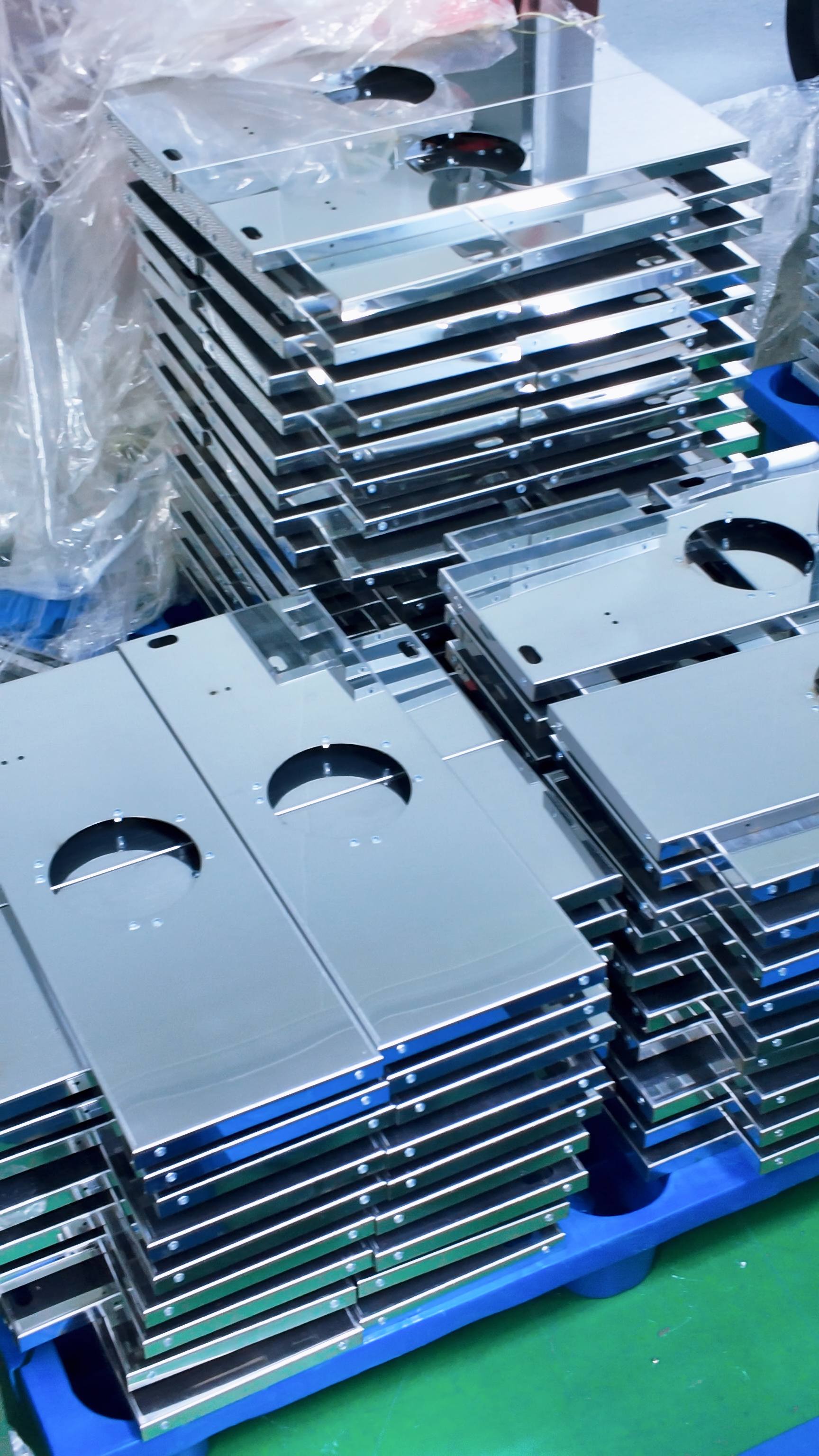
Biofilms thrive where microscopic crevices, rough welds, or stagnant water give microorganisms a foothold. In cleanroom equipment, the first design priority is to eliminate these hiding spots entirely. Surfaces specified for product-contact zones should be electropolished to a roughness average (Ra) below 0.4 micrometres, while joints are continuously welded and ground flush rather than sealed with gaskets or overlapping plates. Every corner is given a radius instead of a sharp 90-degree angle, and horizontal ledges are sloped to prevent pooling. This approach treats surface finish and geometry as a single system, not as separate checkboxes on a specification sheet.
Beyond initial construction, the way equipment drains and dries between production cycles has a direct effect on biofilm resistance. Tanks, transfer lines, and housings are pitched toward low-point drains with no dead legs longer than a few pipe diameters. Valves and sample ports are positioned so that residual liquid cannot collect in crevices after cleaning. Where possible, components are designed for easy removal and inspection, allowing operators to verify that no residue or moisture remains. This practical focus on drainage often matters more in day-to-day operations than adding antimicrobial coatings or other surface treatments that sound impressive but may degrade under repeated sterilization.
Material selection also plays a quieter role in resisting biofilm. Austenitic stainless steels such as 316L remain common because they tolerate frequent passivation and hold a smooth finish over years of use. However, more advanced designs may pair stainless steel with suitable elastomers only where flexibility is truly needed, and they avoid threaded connections in wetted areas. The goal is not to create a sterile surface in some absolute sense, but to make equipment that can be reliably cleaned, inspected, and returned to a dry state between uses. When these design principles are applied consistently, biofilm formation becomes a manageable engineering challenge rather than a recurring contamination source.
FAQ
In my experience, it's usually the human factor. No matter how advanced the HVAC or pass-through chambers are, most contamination events trace back to something simple: a torn glove, a gap in the gown, or someone touching their face. You can install the best equipment in the world, but if the gowning protocol isn't treated as a critical process, particles will find a way in. Regular practical retraining and candid observations on the floor make a bigger difference than another spec sheet.
Look for smooth, crevice-free surfaces with radiused corners—no exposed threads, no rough welds, no moving parts that shed. Stainless steel with an electropolished finish is great for durability and cleanability, but even polymer components should be low-outgassing and low-particulate. Equipment that's easy to wipe down without needing to disassemble half the unit saves time and reduces contamination risk during maintenance.
Airflow patterns aren't set-and-forget. Filters load, fans drift, and diffusers get blocked. We recommend quarterly smoke studies in critical zones, not just at commissioning. Pay attention to pressure cascades—cleanrooms should always be positive to less clean areas, but too much pressure can create turbulence. Also, avoid placing equipment or carts in the first air stream from HEPA filters; that's the cleanest air and should reach the product first.
Use interlocked pass-through chambers or material airlocks. Remove outer packaging—cardboard is a notorious particle factory—before anything crosses into the clean zone. Wipe down containers with a validated disinfectant and let the contact time actually elapse. If possible, use double-bagging so the outer bag is removed inside the airlock. Discipline here beats fancy automation.
Base it on a written risk assessment, not just regulatory minimums. Sample where the product is exposed, where operators work, and where materials transfer. In critical zones, continuous viable and non-viable monitoring is worth the cost. For surrounding areas, weekly or daily sampling may be enough. The key is to review trends, not just snapshots—gradual increases in counts often signal a failing filter or a bad cleaning habit before an excursion occurs.
Stop using generic rags or household cleaners. Use cleanroom-grade wipes that are low-lint and pre-wetted with the right disinfectant. Wipe in one direction, from cleanest to dirtiest, and don't go back over a cleaned surface with the same wipe. Rotate disinfectants to avoid microbial resistance. Also, clean the cleaning tools themselves—mops and buckets can become reservoirs if not sanitized after each use.
Complacency. People stop checking pressure gauges, skip the daily wipe-down because 'it looks clean,' or let maintenance intervals slide. Equipment drifts—HEPA filters develop tiny leaks, gaskets compress, and airflow velocity drops. That's why we emphasize continuous monitoring with alarms and a formal change control process. A small drift left unchecked for a month is much harder to correct than catching it in the first week.
Conclusion
In pharmaceutical cleanrooms, the most persistent contamination risks are rarely in plain sight. Rethinking airflow patterns matters because turbulent zones near equipment can trap unseen particles even when room-level certifications look fine. Gowning protocols also deserve a harder look: they often ignore how gloves, sleeves, and shared tools transfer residues onto equipment surfaces. High-traffic areas add another layer, with routine disinfection missing door handles, cart edges, and transfer ports that carry bioburden from one suite to another. An equipment supplier sees these gaps clearly, because contamination control has to work at the interface between people, surfaces, and airflow, not just on paper.
Humidity control is frequently treated as a comfort issue, yet swings above or below a narrow band can trigger static, condensation, or microbial growth that quietly undermines cleaning efforts. Real-time monitoring changes that dynamic: instead of reacting to failed settle plates, teams can catch particle or pressure drift early and stop contamination before it escalates. Equipment design is the final layer, with smoother finishes, fewer dead legs, and materials that hold up under repeated disinfection to resist biofilm formation. Suppliers who combine these strategies help pharmaceutical manufacturers cut risk in spots that audits rarely inspect but contamination always finds, turning everyday hygiene into a more reliable barrier.
Contact Us
Contact Person: Amy Yang
Email: [email protected]
Tel/WhatsApp: 008619330882686
Website: https://www.genopharmatech.com/