

Bidirectional Power Modules: Unveiling Known Technologies and Future Applications
2026-05-17
Bidirectional power modules are quietly reshaping how energy flows in everything from solar inverters to EV fast chargers—yet their full potential remains largely untapped. At TPS, we cut through the complexity to reveal the established technologies driving today's designs and offer a peek at emerging applications that could redefine power electronics in the coming years.
Understanding Bidirectional Power: A Technical Primer
Bidirectional power flow isn’t a new concept, but its relevance has surged with the rise of distributed energy resources. At its core, it describes a system where electrical energy can move in two directions—typically between a grid and a local source or load. Think of a solar-powered home: during sunny hours, excess generation flows back to the utility, while at night, the house draws from the grid. This dual-path behavior fundamentally changes how we design and manage electrical infrastructure.
The technical underpinnings rely on advanced power electronics capable of converting and conditioning electricity for two-way travel. Inverters, for instance, must not only turn DC into AC but also synchronize with grid frequency and voltage, adjusting output in real time. Protective schemes become more complex, too. Traditional overcurrent relays, designed for unidirectional faults, can misoperate when current can come from multiple directions. Engineers now incorporate directional relays, communication-based protection, and adaptive settings to maintain stability. Moreover, bi-directional systems demand careful coordination of voltage regulation—what happens when a feeder’s load flow reverses seasonally and pushes voltages beyond limits?
Practical deployment brings its own set of challenges. Legacy transformers and switchgear were rarely built with two-way power in mind, leading to thermal and insulation stress under reverse flow. Utility interconnection standards, such as IEEE 1547, have evolved to mandate ride-through capabilities and grid-support functions, but the retrofit process is gradual. On the user side, battery storage and electric vehicles amplify the bidirectional paradigm—your car might one day serve as a mobile power plant. Getting the control algorithms right, so that millions of endpoints behave predictably, requires a blend of real-time monitoring, machine learning, and robust communication networks. The intersection of physics and policy will define how quickly we embrace this more dynamic grid model.
Real-World Deployments: Automotive and Beyond
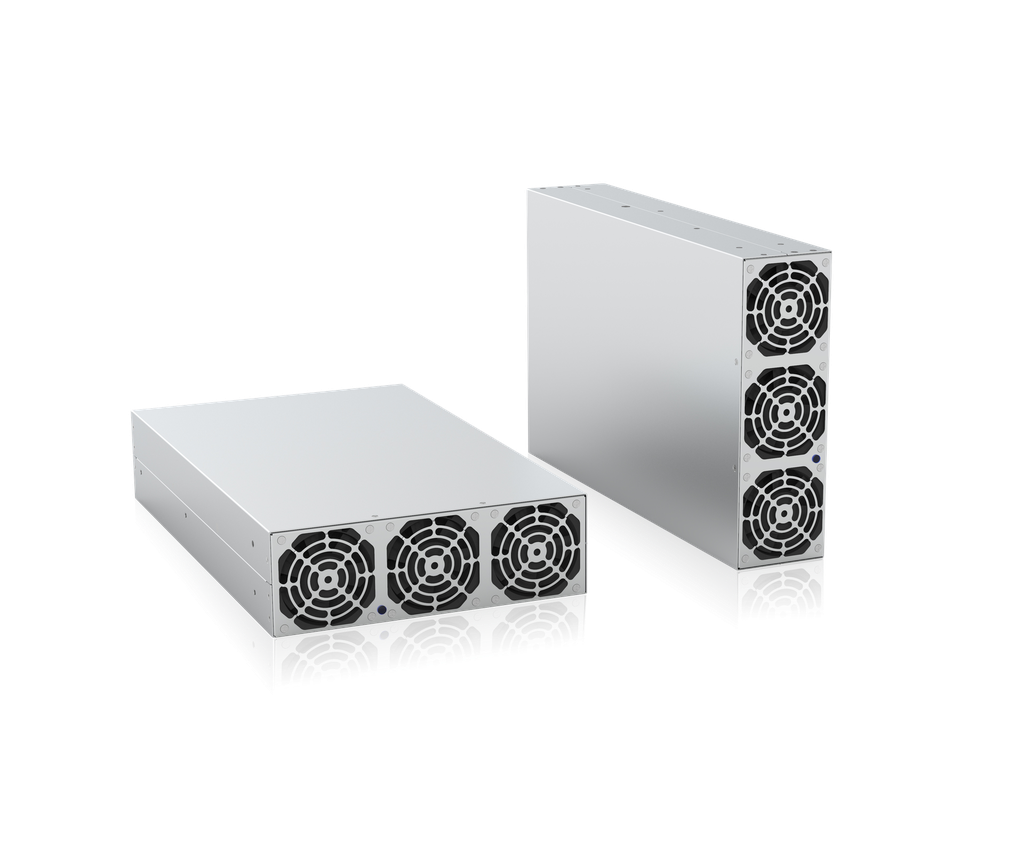
The shift from controlled test environments to public roads has exposed autonomous systems to a staggering variety of edge cases, from black ice on rural highways to sudden sandstorms in desert regions. Automotive deployments now routinely log millions of miles across diverse climates, generating petabytes of sensor data that retrain perception models on phenomena no simulator could fully replicate. This continuous feedback loop has already halved the frequency of emergency disengagements in several commercial fleets.
Beyond passenger vehicles, the same stacks are being adapted for agricultural robots navigating uneven terrain, warehouse forklifts operating in dim lighting, and last-mile delivery drones dodging overhead cables. Each domain surfaces its own quirks—mud obscuring lidar returns, solar glare confusing camera arrays—forcing the underlying architecture to become more robust without hard-coded rules. The cross-pollination of failure data between these sectors has proven surprisingly effective, with a braking strategy refined for slippery factory floors improving wet-weather performance on city streets.
What ties these threads together is a quiet departure from map-heavy approaches. Early autonomous driving leaned heavily on high-definition pre-mapped routes, but off-road and unstructured environments have made that reliance impractical. Newer systems fuse real-time visual odometry with lightweight topometric maps, enabling a tractor in a vineyard and a shuttle in a temporary construction zone to share core navigation logic. This flexibility, born from solving real-world constraints far from Silicon Valley test tracks, is quietly reshaping what autonomy means in practice.
Wide-Bandgap Semiconductors: The Efficiency Enablers
Silicon has long been the backbone of power electronics, but it’s reaching its physical limits. As devices shrink and power demands grow, the material’s narrow bandgap leads to excessive heat, switching losses, and voltage constraints. This isn’t just an incremental problem—it’s a wall that stifles innovation in sectors like electric vehicles and renewable energy. Wide-bandgap semiconductors, such as silicon carbide and gallium nitride, tear down that wall. Their inherently wider bandgap allows operation at higher temperatures, voltages, and frequencies with far less energy wasted as heat.
The practical impact is profound. In an EV inverter, swapping silicon IGBTs for silicon carbide MOSFETs can extend driving range by up to 10% simply by reducing conversion losses. Data centers, which consume about 1% of global electricity, are turning to gallium nitride transistors in power supplies to slash cooling needs and pack more servers into the same footprint. Even consumer electronics benefit: GaN chargers now deliver laptop-level power from adapters small enough to fit in a pocket. These aren’t futuristic concepts; they’re happening because the efficiency gains directly translate to real-world savings and functionality.
What often goes unnoticed is how wide-bandgap materials reshape design philosophy. Engineers accustomed to designing around silicon’s thermal and frequency limits suddenly have headroom to simplify topologies, shrink magnetics, and eliminate cooling fans. A solar inverter using SiC can operate at higher switching speeds, reducing the size of passive components and enabling a more compact product that installs faster on a rooftop. This cascading effect means the semiconductor choice ripples through the entire system, unlocking not just a few percent of improvement but an entirely new performance class.
Navigating Design Hurdles in Bidirectional Systems
Building bidirectional systems often feels like orchestrating a delicate dance between two independent entities that must constantly synchronize. The first major hurdle surfaces when data flow conflicts arise—when both sides attempt to update the same record simultaneously, you need robust conflict resolution strategies that go beyond simple last-write-wins semantics. Real-world scenarios demand domain-specific merge logic, such as preserving user intent through operational transformation or leveraging CRDTs for automatic convergence, all while keeping the system responsive under high contention.
Another subtle challenge lies in the asymmetry of capabilities between source and target. One side might support rich data modeling while the other operates with flat structures, forcing developers to design lossless mapping layers that respect semantic boundaries. The temptation is to impose the richer model everywhere, but that path leads to brittle integrations. Instead, successful systems embrace the constraints, using minimal canonical representations and gradual feature degradation to maintain coherence without drowning in transformation complexity.
Finally, debugging bidirectional flows introduces a unique cognitive overhead. A change that propagates back-and-forth can amplify small inconsistencies into systemic failures, especially when triggers and side effects intertwine. Instrumenting the propagation chain with clear causal breadcrumbs—not just logs but lightweight tracing that links actions across system boundaries—turns a chaotic troubleshooting process into a systematic diagnosis. Without this visibility, teams often resort to disabling bidirectional features entirely, undermining the very value the design was meant to deliver.
The Role of Bidirectional Modules in Sustainable Energy
Bidirectional modules are reshaping the landscape of sustainable energy by enabling seamless power flow between generation sources, storage systems, and the grid. Unlike traditional unidirectional converters, these modules allow energy to be transferred in both directions, which is essential for applications like vehicle-to-grid (V2G) technology and residential battery storage. This flexibility not only enhances the efficiency of renewable integration but also empowers consumers to become active participants in the energy market, selling excess power back during peak demand.
At the heart of modern bidirectional systems lies advanced power electronics capable of handling high frequencies and voltages while minimizing losses. Silicon carbide and gallium nitride semiconductors have pushed the boundaries, reducing thermal stress and extending the lifespan of converters in solar inverters and electric vehicle chargers. These innovations translate into lower maintenance costs and greater reliability, making decentralized energy architectures more viable for widespread adoption.
Beyond hardware, intelligent control algorithms optimize the bidirectional flow based on real-time data, such as grid load, weather forecasts, and electricity pricing. By dynamically adjusting charge and discharge cycles, these modules help stabilize microgrids and reduce reliance on fossil-fuel peaker plants. In essence, they act as the nervous system of a resilient energy ecosystem, balancing supply and demand while cutting carbon footprints at every node.
Roadmap to 2030: Future Trends and Possibilities
The decade ahead promises a profound reshaping of how we live, work, and interact with our environment. By 2030, artificial intelligence will have moved beyond simple automation, weaving itself into the fabric of decision-making across industries. We'll see personalized medicine becoming the standard, with treatments tailored to individual genetic profiles. Smart cities will leverage IoT to optimize energy use and traffic flow, while the line between physical and digital realities blurs through augmented experiences that feel almost second nature.
Climate resilience will drive innovation at an unprecedented scale. Expect breakthroughs in carbon capture, decentralized energy grids, and lab-grown materials that reduce our reliance on traditional manufacturing. The workforce will undergo a radical shift, with remote collaboration tools evolving into immersive, holographic environments. Education systems will adapt, emphasizing creativity and critical thinking over rote learning, preparing a generation to tackle problems we can't yet foresee.
Perhaps the most intriguing development will be the redefinition of human identity and community. As digital avatars and synthetic media become ubiquitous, questions of authenticity and trust will take center stage. We'll navigate a landscape where shared virtual spaces foster global collaboration, yet the craving for tangible, local connection will spark a renaissance of physical gatherings and artisanal craftsmanship. The road to 2030 isn't just about technology—it's about crafting a future that amplifies the best of humanity.
FAQ
Bidirectional power modules are advanced electronic devices that allow electric power to flow in both directions—from source to load and vice versa—within a single compact unit. Unlike conventional converters that only handle one-way power transfer, these modules integrate bidirectional switching and control circuitry to seamlessly switch between charging and discharging modes. This makes them essential in applications where energy needs to be stored and retrieved, such as in battery energy storage systems, vehicle-to-grid (V2G) setups, and renewable energy integration.
Silicon carbide (SiC) and gallium nitride (GaN) wide-bandgap semiconductors are at the forefront. They offer superior efficiency, higher switching frequencies, and better thermal performance compared to traditional silicon-based devices. These materials reduce switching losses and enable more compact, lighter module designs, which is crucial for applications like electric vehicle on-board chargers and aerospace power systems.
They are pivotal in several sectors: electric vehicles use them for both motor drive and regenerative braking, allowing kinetic energy to be converted back into stored battery power. In renewable energy, they interface solar inverters and wind turbines with battery storage, smoothing out intermittent generation. Uninterruptible power supplies (UPS) rely on them for seamless switching between grid and battery power. Emerging applications include solid-state transformers and aircraft power distribution systems.
Advanced cooling techniques are employed, such as direct liquid cooling using dielectric fluids or enhanced air cooling with optimized heatsink geometries. Some designs embed microchannel coolers directly into the module substrate. Additionally, wide-bandgap semiconductors generate less heat per unit of power processed, alleviating thermal stress. Integrated temperature sensors and adaptive gate driving also prevent hotspots and ensure reliable operation.
They are the core hardware that allows an electric vehicle to not only charge from the grid but also discharge stored energy back to the grid or to power a home. The bidirectional module in an on-board charger manages the complex AC-DC and DC-DC conversion with synchronization to grid frequency and voltage. This turns EVs into distributed energy resources that can help stabilize the grid during peak demand or emergencies.
Beyond current uses, they will be key in developing smarter microgrids, where multiple distributed sources and loads must be balanced dynamically. In aerospace, more electric aircraft will use them for high-voltage DC distribution and to manage energy storage for emission-free taxiing. Robotics and portable medical equipment will benefit from high-efficiency power conversion that extends battery life. Wireless bidirectional power transfer systems are also an emerging frontier, potentially enabling dynamic charging of electric vehicles on highways.
Bidirectional design requires symmetrical voltage blocking and current conduction in both directions, which complicates the topology. For example, switches must have anti-parallel diodes capable of carrying full load current during reverse conduction, and control algorithms need to seamlessly transition between rectification and inversion modes. Parasitic inductances and electromagnetic interference must be carefully managed to ensure stability in both directions. Reliability concerns like cycle life under frequent mode switching also become critical.
Engineers should look at voltage and current ratings, switching frequency range, and efficiency curves for both directions of power flow. Thermal resistance and cooling requirements are crucial, as is the module's power density if space is limited. Control interface compatibility (analog vs. digital) and protection features like overcurrent, overvoltage, and short-circuit handling in both modes are essential. Long-term reliability data and manufacturer support for application-specific optimization also weigh into the decision.
Conclusion
Bidirectional power modules represent a fundamental shift in how energy flows between sources and loads, moving beyond simple one-way conversion to enable truly interactive systems. At their core, these modules leverage advanced topologies and control algorithms to manage power in both directions with minimal losses, a capability that has become essential as electrification penetrates automotive traction inverters, vehicle-to-grid setups, and industrial motor drives. The adoption of wide-bandgap semiconductors like silicon carbide and gallium nitride has been pivotal, slashing switching losses and allowing higher frequencies that shrink passive components. Yet designing these systems is not without headaches: engineers must contend with complex thermal management, electromagnetic interference, and the need for robust bidirectional control strategies that maintain stability across varying load conditions.
Beyond technical hurdles, bidirectional power modules are quietly reshaping sustainable energy infrastructure, serving as the backbone for energy storage systems that buffer intermittent renewables and feed power back when the grid demands it. Real-world deployments now extend from residential solar-plus-battery setups to heavy-duty applications like electric ferries and construction machinery, where regenerative braking and peak shaving yield tangible efficiency gains. Looking toward 2030, the roadmap points to even greater integration of intelligent power modules with digital twins and AI-driven predictive maintenance, alongside emerging standards that will streamline interoperability. As costs fall and reliability climbs, these modules will likely become invisible enablers in everything from smart buildings to microgrids, quietly orchestrating energy flows behind the scenes.
Contact Us
Contact Person: Lily
Email: [email protected]
Tel/WhatsApp: +49 (0) 2161 49526-0
Website: https://tps-elektronik.com/en/