
3-in-1 Filling Machine Supplier: How to Find a Reliable Partner for Your Packaging Needs
2026-10-25
When your production line stalls because a 3-in-1 filling machine can't keep up, the search for a supplier gets serious fast. You need more than a catalog listing—you need a partner who understands your packaging challenges, delivers consistent quality, and responds when something goes wrong. That's exactly what Wanying Machinery brings to the table. In this guide, we'll cut through the noise and show you how to evaluate a 3-in-1 filling machine supplier, from technical capabilities to after-sales support, so you can make a confident decision without wasting time on suppliers that overpromise and underdeliver.
Look Beyond the Sales Pitch and Check Their Production Floor
Anyone can polish a pitch deck, but the real story lives on the factory floor. A quick walk-through reveals whether the operation runs on careful planning or last-minute scrambling. Look for stations laid out with clear intent, tools within easy reach, and calibration records that aren't just dusty binders. When the team can explain why a step happens in a certain order, you're seeing process discipline, not just a tidy workspace.
Pay attention to how workers handle the unexpected. Do they pause to log a deviation, or quietly improvise and move on? Scrap bins tell their own truth, whether they're overflowing with the same flawed part or nearly empty thanks to real-time checks. Ask to see recent maintenance logs and the spot where incoming material gets inspected. If the answers get vague or the floor suddenly gets a hasty sweep, that hesitation is data too.
Production floors also expose the gap between the brand story and the daily grind. Are job instructions laminated and current, or held together with old tape and crossed-out revisions? Do shift handovers include actual notes, or just a nod at the door? The best operations don't need a guided tour; they let the workflow speak for itself. When every measurement has a name attached and every delay gets a root cause, you're not just buying a product, you're buying the system behind it.
Zero In on Filling Accuracy and Changeover Speed
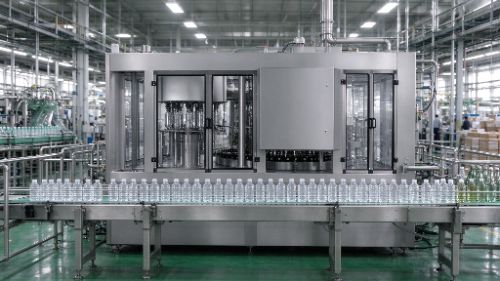
Precision in filling isn't just a spec on a datasheet—it's the difference between a line that runs profitably and one that leaks margin with every container. For liquids, pastes, or granules, even a 1% overfill across a million units translates into thousands of dollars in lost product. Modern systems tackle this with closed-loop feedback that monitors flow rate, viscosity, and nozzle position in real time, adjusting on the fly rather than relying on periodic manual checks. This approach keeps fill weights within tight tolerances even when product temperature or batch consistency shifts.
Changeover speed, on the other hand, is where many lines quietly bleed hours. The old way—swapping parts, resetting timers, and running trial fills after every product switch—can eat a full shift. Newer machines cut this to minutes with tool-less change parts, recipe-driven setups that recall valve timing and fill volumes for each SKU, and quick-release manifolds that need no wrenches. The result is less downtime, fewer rejected containers during startup, and the ability to run smaller batches without penalty.
The real trick is making these two priorities reinforce each other. A filling system that can self-correct for drift during a run also tends to validate faster after a changeover, because it doesn't depend on an operator perfectly dialing in every setting. Look for equipment that logs fill data by product and lot, so you can spot trends before they become defects. When accuracy and changeover speed are built into the same control architecture, the line becomes adaptable enough to handle seasonal demand without sacrificing consistent fill quality.
Map Out Customization Options Before You Commit
Before you commit to a customized order, get every option onto a single page. Finishes, dimensions, add-ons, and hardware swaps all carry different costs and lead times. Circle the ones that affect how you'll actually use the item, then cross out the rest. A quick paper map stops you from paying for details that fade into the background within days.
Some custom shops keep their real price list hidden until you ask. Request the standard build sheet first, then compare it against the upsell options they mentioned. If a modification isn't written down, assume it's not included. Verbal promises around a color tweak or an extra shelf tend to disappear once the invoice is printed.
Think about what happens if you change your mind mid-production. Custom work often becomes non-refundable at a certain point, and even small revisions can reset the clock. Confirm that the shop's change policy is clear before you sign off. Mapping options now means fewer surprises when the order is already in motion.
Read Between the Lines of Their Warranty and Support Terms
Most companies put the bold promises up front but leave the real story in the margins. A five-year warranty sounds impressive until you discover it only covers the parts that almost never fail. The labor charges, return shipping, and diagnostic fees often fall on you. Some brands quietly reduce coverage after the first year, shifting to prorated reimbursement that shrinks faster than the product's resale value.
Support terms carry their own tripwires. Phone lines might close at 4 p.m. in a time zone you'll never visit, or chat agents are trained to steer you toward self-help articles before committing to a replacement. The best approach is to request a sample of the full terms before buying. If a company hesitates to share the complete document, that hesitation tells you everything.
Test Their Response to Technical Questions Early
You can learn a lot from how someone handles a technical question they weren't expecting. Throw a realistic problem at them before the interview gets too comfortable—not a textbook puzzle, but something close to what they'd actually face on the job. Watch how they break it down. Do they ask clarifying questions, sketch out an approach, or admit what they don't know? That early reaction often tells you more than a polished resume ever will.
A candidate who freezes or gets defensive under mild pressure might struggle when real deadlines hit. But someone who stays curious, thinks out loud, and adjusts their answer as they go is showing you how they'll collaborate and debug in a live environment. Make it a low-stakes conversation, not a trap. You're not trying to stump them—you're trying to see if they can reason through unfamiliar territory without falling apart. That signal is hard to fake and easy to miss if you wait until the final round.
Weigh Energy Use and Maintenance Costs Over the Machine’s Life
A machine that looks cheap on the invoice can quietly drain your budget through years of electricity bills and service calls. Instead of comparing only the sticker price, ask for the machine's expected energy consumption per cycle or per hour, then multiply it by your local utility rate and your projected operating schedule. Even a modest difference in motor efficiency or standby power can add up to thousands of dollars over a decade. Pair that with a realistic look at maintenance: how often do belts, filters, bearings, or software licenses need replacing? Are parts readily available, or will you face long lead times and premium shipping costs? These ongoing expenses rarely show up in marketing brochures, yet they define the true cost of ownership.
Many buyers focus on initial performance specs and ignore the slow burn of maintenance contracts, lubrication, calibration, and unexpected downtime. A machine that needs a technician every six months may cost far more than one with a slightly higher purchase price but a proven record of running for years between interventions. Look for user reviews and case studies that mention real-world maintenance intervals rather than the manufacturer's idealized schedule. Also consider energy-saving features like variable frequency drives, automatic sleep modes, or heat recovery systems—these can cut consumption significantly in high-utilization environments. If the machine runs 24/7 in a production line, even a 5% efficiency gain pays for itself quickly.
To make a smart decision, build a simple lifecycle cost model before you buy. Start with the purchase price, then add projected energy costs over the machine's expected service life, plus estimated maintenance parts and labor based on typical usage patterns. Don't forget to factor in inflation for energy and labor, as well as the cost of downtime if the machine fails unexpectedly. A machine with a higher upfront cost but lower energy draw and a longer interval between failures often comes out ahead after three to five years. Conversely, a bargain machine may end up costing double once you account for repeated emergency repairs and wasted energy. Only by weighing these factors together can you avoid a purchase that looks good on paper but becomes a financial liability on the factory floor.
FAQ
It combines rinsing, filling, and capping in one compact unit, so bottles move through a single automated sequence instead of three separate stations. This reduces floor space, cuts transfer time, and lowers the chance of contamination between steps.
Look beyond the sales pitch. Request a detailed video of the machine running with your bottle type and cap size, ask for at least three clients in your region who bought the same model, and check how quickly the supplier responds to technical questions after the first quote. Real reliability shows up in post-sale communication, not just pre-sale promises.
Match the machine to your actual production speed and container range. Key specs include filling accuracy (aim for ±0.5% or better for liquids), capping torque consistency, changeover time between bottle sizes, and air consumption. If you run multiple SKUs, a machine with tool-free changeover will pay for itself quickly.
Yes, they often matter more than the initial price. A filling line stops production when a sensor or sealing jaw fails. Ask the supplier to show their spare parts inventory list and typical delivery time for critical components. A good partner will have a local distributor or remote diagnostic support to reduce downtime to hours, not weeks.
You should be able to request adjustments like dosing volume range, bottle height and neck size compatibility, capping head type (screw, snap, or press-on), and integration with existing conveyors or labelers. Avoid suppliers who only offer fixed models with no flexibility—your packaging line is not identical to everyone else’s.
Break down each quote into machine frame material, brand of key components (PLC, sensors, motors), included spare parts, installation support, and warranty period. A cheaper machine often uses softer stainless steel or unbranded electronics that fail sooner. Ask for the full bill of materials before comparing.
Typically 30-60 days for a standard model, plus 2-4 weeks for shipping depending on your location. Installation usually takes 3-7 days with a supplier technician on site or remote guidance. Be skeptical of suppliers who promise delivery in two weeks for a custom-configured machine—it often means they cut corners on testing.
Absolutely, and you should insist on it. Send sample bottles, caps, and a few liters of your actual liquid to the supplier. Ask them to run a trial and record fill accuracy, capping torque, and any foaming or dripping issues. A supplier that refuses or charges a high fee for testing is not interested in your long-term line performance.
Conclusion
Finding a reliable 3-in-1 filling machine supplier goes far beyond glossy brochures and confident sales calls. The real story emerges when you walk their production floor unannounced, watching how they assemble, test, and handle quality control. Ask to see a machine running your actual product viscosity—not just water trials. Filling accuracy and changeover speed aren't just spec-sheet numbers; they determine whether your line hits daily targets or bleeds downtime. A supplier worth trusting will openly discuss tolerances, show you nozzle designs, and walk you through a complete format change while you time it yourself.
Customization is where many partnerships quietly fail. Map out every requirement—cap types, fill volumes, CIP access, even future container shapes—before signing anything. Then scrutinize the warranty language: does it cover wear parts, software updates, and travel time for technicians, or does it hide behind vague exclusions? Send a batch of technical questions before your first meeting. A supplier that answers promptly with specifics, not deflections, is already proving their post-sale behavior. Finally, run the lifetime math: energy draw per fill, air consumption, and typical maintenance intervals. A cheaper machine can cost double over five years. Choose the partner who treats your production line as their own, not a one-time sale.
Contact Us
Contact Person: Tyson
Email: [email protected]
Tel/WhatsApp: +8613396971296
Website: https://www.wanyingmachinery.com